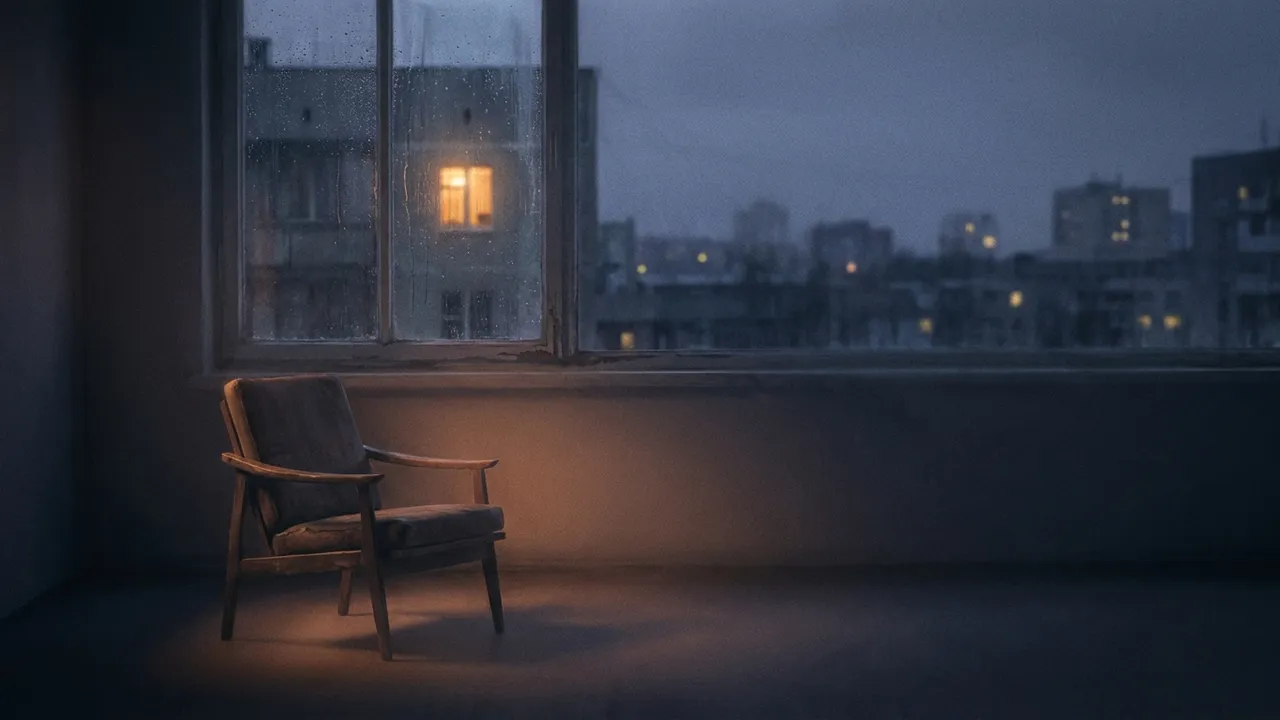
Feeling Fragile the Day After a Bad Night: A Letter for the Morning After
10 min read
Feeling fragile the day after a bad night can make morning feel like tissue paper: light too bright, voices too loud, your eyes wet for no reason. This is not failure. It’s the body asking softly for repair.
You stand in the doorway of your own morning like someone who has survived a small weather, blinking at the ordinary light that now seems sharpened to points. The kettle hiss feels like a crowd. Even the buttered knife sounds too bright against the plate. You are not dramatic; you are simply closer to the surface than usual, the membrane between you and the day as thin as an eggshell.
Sleep left you half-shut, half-open. The body can be faithful in strange ways; it stays awake to keep you alive, then asks you to live inside its wakefulness. You try to name it—the paper-thinness, the glassiness of the eyes, the way a question from someone you love blooms into a whole vine of feelings you didn’t mean to water. The street is its usual street. The clock is its usual clock. But you are the soft place today, and everything else is a thumb pressed gently, then not so gently, against it.
Maybe this is you, feeling fragile the day after a bad night.
The tenderness you feel is not a defect. It is evidence that you are a living thing that has done its best to go on doing its living.
Why You Feel Emotionally Fragile After No Sleep
There are names for all kinds of hurts, and yet there is a particular un-naming to this one. Not quite sadness, not illness, not even the pure arithmetic of fatigue. More like walking through a museum without glass in the frames. You feel everything. The dishwasher’s hum turns confessional. A headline catches your ankle. Someone laughs two rooms away and you can’t tell if you want to join them or be alone in a quiet, unlit stairwell where the air is both cool and merciful.
When Even Good News Feels Like a Wave
You drop a spoon and it sounds like you’ve broken a promise. You reread a text three times because your eyes are filmy with the remnants of a night that would not turn itself off. You apologize for nothing in particular. Sometimes this is the day when even good news feels like a wave you can’t quite ride. And you wonder if you’re weak, if everyone else has found some secret knack for powering through, if this is what adulthood demanded and you missed the lesson.
You are not failing; you are un‑slept.
Let that be the sentence that steadies you. The night asked your body to keep vigil, and it did. It hummed a low, ceaseless song of alertness, a needle kept warm in its coil. Now the needle cools. Wires buzz. Circuits recalibrate.
The Body's Quiet Alarm
If you could see it, if the body could write you a note, it might say: I was looking out for you. I kept the windows cracked, the porch light burning. And in the morning, when the neighborhood turned back into a place you recognize, I needed time to exhale.
There are reasons you feel this skinned. A night spent awake is rarely a neutral night; something in you took the job of lighthouse, slow circles of brightness trying to keep the rocks from surprising the hull. Maybe it was the catalog of tomorrow’s tasks clicking like beads between your fingers. Maybe a memory that prefers the dark carried its little lantern back and forth across your chest. Sometimes the mind won’t dim because the body won’t, and sometimes the body won’t because the mind can’t. They worry for each other. They’re loud about their love.
Why Small Things Arrive Louder
The day after, small things arrive louder. Hunger feels like a siren; a loose sleeve, like sandpaper; the late bus, like an omen—what researchers describe as amplified sensory processing after sleep loss. Your whole system is tuned to the emergency band. Even if you know this, you step into the city or the house like a deer who’s learned the wind too well—ears catching at every bit of air, legs not sure where to put their certainty. The science has its own patient language for this—how the night’s alertness lingers, how the body’s alarm system declines to be switched off at dawn—but you don’t need the terms to recognize the sensation. If you want them later, if that steadies you, there are kind explanations of how vigilance keeps watch in the dark, how the body pulls the world into close focus and then takes a while to widen the lens again.
The day after is not a test. It is the body’s aftersong.
When the Mind Is Too Busy Loving You
Some nights the mind is simply too busy loving you to let you sleep. It runs the inventory. It checks the locks. It recites names in case you need them. And on the morning after, it hums at a frequency you hear in your teeth. This is why even the quiet room can seem crowded. This is why a simple choice—blue shirt or green—can feel like being asked to redraw a coastline from memory. This is why the piece of dust on the stair becomes a whole archeological site, because your attention can finally land, and it lands too hard.
There are nights when none of the tricks work, when the book becomes a tunnel that delivers you back to your own bright thoughts, when counting breaths is like counting plates dropping in the next room. If you have ever wanted to know why your mind refuses to cool, why it hums and sparks like a phone that won’t power down, you are not alone in that question. Others have written to the problem with tenderness: the night thoughts that refuse to end, the brain’s reluctance to dim just because the sky does. Your morning fragility is part of that story, a postscript written in soft pencil.
A Day Meant for Soft Edges
Powering through has its own brisk music. Today asks for a different score. The day after a bad night is not a referendum on your grit. It is a recovery hour stretched across waking, an invitation to make gentleness the metric by which you tell the truth about yourself.
Move Through It Without Bumping the Vase
Imagine the day as a small room with long curtains. Imagine moving through it without bumping the vase. You can still do the things—the emails like small birds that need guiding out a window, the commute that shuffles you into the long river of other lives, the task half-finished that wants your attention the way a child asks for a story—but you can do them differently. Turn down the brightness on everything. Talk to yourself the way you talk to a trembling dog on the Fourth of July. Call yourself home with the slow assurance that there is home to come to.
This is not about doing less to prove a point to your body; it is about doing what you must while loosening your grip on the story that says you must be relentless. Let the coffee be a warmth you hold, not a fuel you burn. Let the walk to the train be a path with trees on it, even if there are no trees. The mind’s meadow is a real place. You have been there before by accident. Today, take the long way past it.
How Kindness Alters Physics
The strange miracle is how much kindness alters physics. A soft word changes the weight of the bag on your shoulder. A moment at the window changes the length of the afternoon. A hand on your own sternum—the old metronome of your breath tick-tocking against your palm—changes the pitch of the room. When someone asks for more of you than you have, it is not a crime to say, in whatever language is available, that you contain weather today and must move accordingly.
If you need an image to carry, let it be this: you in a shallow cove, the water hardly moving, sunlight doing its old work on the skin. That is a way to live a day, too. That is a way to be a person who honors the body that kept watch, and now wants to rest in public without apology.
What the World Looks Like From Thin Skin
At the office, the cursor blinks like a lighthouse you’re swimming toward. The sentences you usually catch with your bare hands slide away into the water. A colleague asks a simple thing and your voice goes high for a moment, like a balloon someone let go of by mistake. You tell yourself it’s fine, and strangely, it almost is: words have their tidal flats; sometimes they’re out of reach for a while.
On the Subway, Everything Gets In
On the subway, a child narrates the stations as if naming stars. You catch yourself wanting to cry—not because you are sad, but because your membranes are open and everything is getting in: the banana on the child’s chin, the woman’s gentle correction, the conductor’s practiced monotone full of human weariness and human endurance. Fluorescent light makes a field of your skull. You negotiate a truce with the day that looks like sitting very still and letting cars go by in your peripheral vision.
In the grocery store, you are tender in the bread aisle. The plastic doilies on the cakes look like snow caught in midair. Someone is talking about dinner in a way that sounds like a future, and you feel both outside of it and painfully present. You carry the bag home in your arms instead of your hand, as if it is a small animal who won’t settle unless it can feel your heart ticking.
You avoid mirrors; or you look into them the way you would look into a pond—sideways, gently—because what you need from your reflection is not precision but permission: yes, that is you, all of you, even today, especially today. A love song comes on in a café and you don’t remember loving anyone that way lately and yet your eyes are wet. You have always been a porous thing. Sleep usually does the sealing. Today, without it, is your chance to see how rich the world is when every note gets through.
When Someone Asks What's Wrong
Someone you care about asks, What’s wrong? You think of saying, Nothing. Then you think of saying, Everything. What you find is the seam between those: A night happened and I am very thin right now. Often that is enough. People know this place; they’ve stood in the pantry or the stairwell of it. They’ve squinted their way through the day after, the bright of it, the hum. You may be surprised by how tenderly they place their words down near you, by how slowly they move, by how keenly they understand your choice to go home a little early, or speak a little less.
Evening Returns, and So Do You
By dusk the world remembers to dim. Leaves are all lowercase. Streets turn to sentences you can read at a kinder pace. The sky thinks in longer thoughts. This is the hour that recognizes you again, the hour when you don’t have to press your face against the glass to see your own outline. The day’s edges round off. The chair decides to be a chair; the room, a room. You are not braced anymore. A bit of night wind gets under your shirt and you say thank you.
What Felt Like Failure Was Recovery
What felt like failure in the morning reveals itself as a kind of recovery that did not look heroic because it wasn’t loud. You carried yourself, carefully, across the hours. If you did a little less, you did it with more attention. If you told the truth about your tenderness, you practiced the oldest skill there is: the one where a creature tells the world, I am small right now, and the world, astonishingly often, makes a small place for it.
A Voice in the Dark
Some evenings you may want a voice in the dark that won’t ask you to be braver or faster or fixed, only present; a companion who sits beside the hum and nods, Yes, I hear it too. Tonight can be that kind of company, not therapy, not a prescription, just a carefully crafted voice that knows the pace of a long evening and the patience of a kettle taking its time.
And then bed is there like a shore you know by heart. You don’t have to swim to reach it; you can simply float. The sheet has cooled. The pillow remembers your face. If sleep comes softly, let it. If it wanders, let it wander. You’ll be there when it returns. The night will close its door a little more gently. And on some near morning, light will be only light again, and you will stand in it as if it were made for you.
Frequently asked questions
Why do I feel so fragile the day after a bad night?
Feeling fragile the day after a bad night is often the body still running the alertness it kept up while you were awake. The night's watchfulness does not switch off at dawn, so light, sound, and feeling all arrive a little louder than usual. It is the body asking for repair, not a sign that anything about you is broken.
Why am I so emotionally fragile after no sleep?
Being emotionally fragile after no sleep usually means the membrane between you and the day has gone thin. Without rest to do its quiet sealing, your feelings sit closer to the surface, so a small question or a love song in a café can bring tears you did not expect. The tenderness is real, and it tends to soften as the body catches up on rest.
How can I get through a day when I feel this thin?
A thin-skinned day tends to respond to gentleness more than to force. Turning down the brightness on everything, moving a little more slowly, and telling the people near you that you are tender today can make the hours feel kinder. The aim is not to power through, but to carry yourself carefully until the evening returns.
Is feeling overly sensitive after a bad night normal?
For many people, feeling overly sensitive after a bad night is a common part of the morning after. The body has spent the night on guard, and it needs time to widen its focus and let the world feel ordinary again. It is the aftersong of a sleepless night rather than a flaw in how you are built.
What is Tonight?
Tonight is a digital sleep ritual that helps you clear your mind and decompress. Through structured reflection and personalized, synthetic audio guidance, we provide a quiet, private space to help you find closure before you sleep. Private, ephemeral, and designed to help you rest.
The quiet list
Notes for a quieter mind.
Join the newsletter for occasional, thoughtful notes on sleep, emotional regulation, and building a calmer life. We only write when there’s something genuinely worth your while.