Why Do I Dread Going to Bed? Reclaiming Your Night
8 min read
If you dread going to bed, the problem is not weakness. Your bed may have become linked with pressure, wakefulness, and fear. Learn how to gently rebuild bedtime as a place of rest.
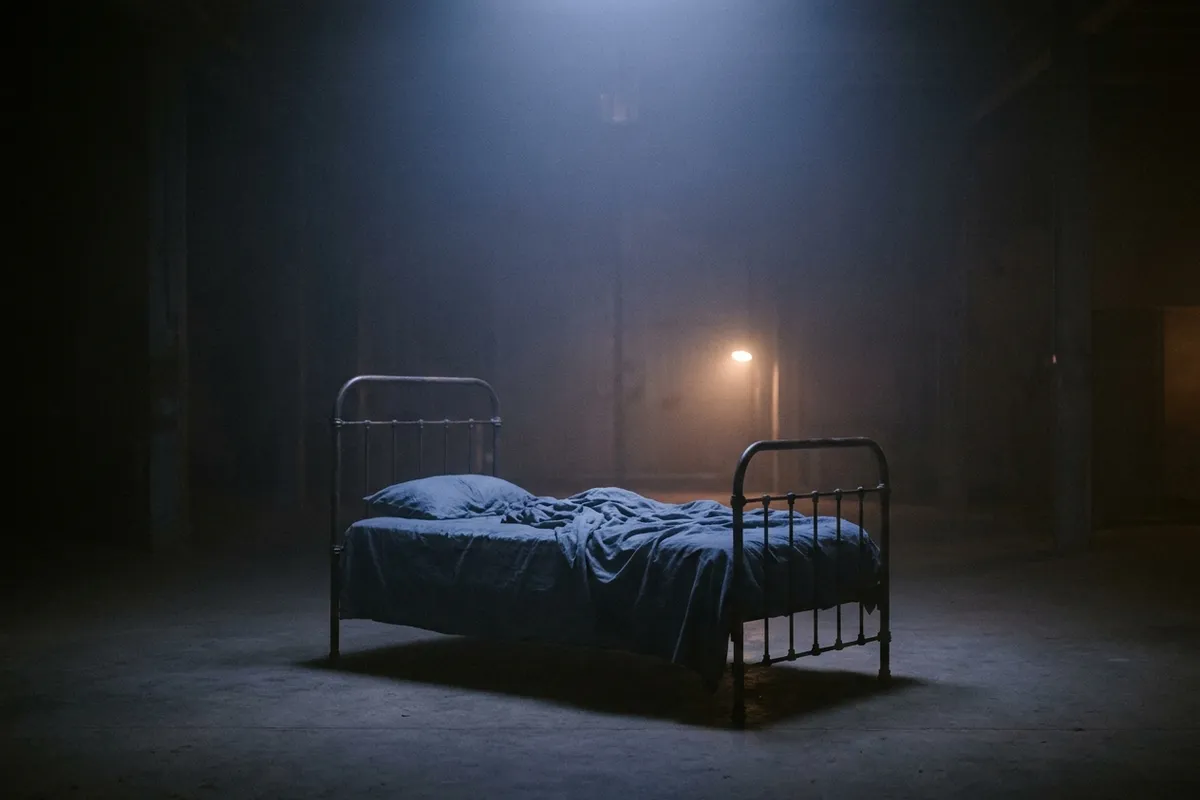
The bedroom waits at the end of the hall like a small weather system. The sheets are clean. The lamp is soft. Maybe there is a glass of water on the nightstand, a book turned face-down, a sweatshirt slung over the chair. Nothing is wrong, exactly. And still, as the evening thins out, your chest tightens.
You may find yourself lingering in the kitchen after the dishes are done. Opening one more tab. Folding laundry that could have waited. Watching the credits roll into another episode because the alternative is the quiet room, the dark ceiling, the test you did not ask to take.
This is the strange grief of bedtime anxiety: the place meant to receive you begins to feel like a place you must survive.
But dread is not a moral failure. It is a signal. Your body is not being dramatic. It is remembering something.
Your Bed Should Be a Haven, But It Feels Like a Threat
The Private Dread That Blooms at Night
If you have typed "why do i dread going to bed" into a search bar, you may already feel embarrassed by the question. Bed is supposed to be simple. Children are tucked into it. Lovers return to it. Hotels advertise it with white duvets and heavy curtains. Yet you approach yours with a heavy heart, as if some bad news is waiting under the blanket.
There can be loneliness in this. During the day you may look functional, even cheerful. You answer messages. You buy groceries. You make jokes. Then night arrives with its blue shadows and the private dread blooms again. You think, I hate going to sleep, and then you feel guilty for hating what your body needs.
When the Bed Becomes a Witness
Maybe it remembers nights of staring at the ceiling while your thoughts circled like moths against a lamp. Maybe it remembers the hot face, the loud heartbeat, the way the clock became cruel. Maybe it remembers waking at 3 a.m. with the room too still and your mind suddenly full of unsorted fear. Over time, the bed stopped being only a bed. It became a witness.
The work is not to shame yourself into calm. The work is to teach the room a new story.
How Your Brain Learned to Dread Bedtime
Conditioned Arousal: The Body Learns by Association
There is a name for this pattern: conditioned arousal, a concept central to cognitive behavioral therapy for insomnia. It sounds clinical, but the idea is very human. Your brain learns by association. If you repeatedly lie in bed feeling anxious, frustrated, sad, or trapped awake, the bed itself can become a cue for alertness.
At first, the bed meant sleep. Then there were difficult nights. Then more difficult nights. Your body began to prepare for the difficulty before it even happened. You walked toward the bedroom and cortisol, the body's stress hormone, rose a little. Your default mode network, the part of the brain that wanders through memory and self-talk, grew louder in the dark. Your vagus nerve, which helps regulate calm and safety, could not quite convince the rest of you that the danger had passed.
Here We Go Again
So now the pillow touches your cheek and your nervous system whispers, Here we go again.
This is why anxiety about going to bed can feel so immediate. It does not always begin with a clear thought. Sometimes it arrives as heat in the ribs, a clenched jaw, a sour stomach. You may not be afraid of sleep itself. You may be afraid of not sleeping. You may be afraid of lying there with no distractions, alone with the unfinished pieces of the day. You may be afraid of the morning consequences: the headache, the fog, the fragile mood, the sense that you are already behind.
Avoidance Is What Mammals Do Around Pain
Sleep Anxiety often grows from experience. One terrible night does not usually change everything. But weeks or months of tossing, clock-checking, bargaining, and bracing can train the brain to treat bedtime like a threat. This is why the question "why do i avoid going to bed" has an answer that is not laziness. Avoidance is what mammals do around pain. The mind delays the place where it expects discomfort.
If your brain is too active at night, it is not because you lack discipline. It may be because the quiet gives your mind the first open field it has had all day. We wrote more about that restless mental weather in Why You Can't Shut Your Brain Off at Night.
For now, it is enough to know this: your brain learned the dread. Which means it can learn something else.
The Invisible Pressure to 'Perform' at Sleeping
When Sleep Becomes a Score to Manage
Sleep used to be a shore you drifted toward. Now, for many people, it has become another score to manage.
Eight hours. Deep sleep. REM. Sleep debt. Recovery score. Optimal bedtime. Perfect temperature. No blue light. No caffeine after noon. No mistakes.
Sleep Is Shy Around Force
Some of this knowledge is useful. Some of it can help. But in a worried mind, sleep advice can harden into a nightly exam. You get into bed and feel the invisible clipboard appear. How fast will you fall asleep? How many hours can you still get if you fall asleep right now? What if you ruin tomorrow? What if this happens again?
This is Sleep Performance Anxiety — what the American Academy of Sleep Medicine's clinical guidelines identify as a key perpetuating factor of chronic insomnia. It is the fear that you will fail at sleeping, paired with the exhausting effort to do it correctly. The harder you try, the more awake you become. Sleep is shy around force. It does not arrive because you command it. It arrives when the body senses enough safety to let go.
When you are trying to sleep, you are often not sleeping. You are monitoring. You are calculating. You are listening for the first sign of success. You are checking whether your breathing feels calm enough, whether your thoughts are quiet enough, whether your body is heavy enough. Every check wakes the system a little more.
You Can Set the Table, Not Force the Guest
This is where Locus of control becomes tender and complicated. There are things you can influence: light, rhythm, the boundary around your bed, the way you meet yourself in the dark. But you cannot directly make sleep happen. You can set the table. You cannot force the guest through the door.
Dreading bed is a natural reaction when bed has become the place where you feel judged by an outcome you cannot fully control. It is not simply a fear of not being able to sleep. It is a fear of being trapped inside the effort.
Feeling sad before bed can be part of this too. At night, the day's defenses loosen. The room grows quiet. Your phone stops offering newness for a moment. What you have been carrying becomes audible. The sadness may not be a problem to solve before you deserve rest. It may be a visitor that needs a softer threshold. We explored that after-dark ache in Why We Feel Lonelier After the Sun Goes Down.
You do not need to win the night. You need to stop making the bed the arena.
A Gentle Way to Reclaim Your Bed: Create a Boundary
The One Boundary That Changes Everything
One of the clearest tools for this is Stimulus Control Therapy, a part of CBT-I, or cognitive behavioral therapy for insomnia. The phrase may sound stern. The heart of it is simple: help your brain associate the bed with sleep again.
The core boundary is this: your bed is for sleep and intimacy. Not work. Not scrolling. Not worrying on purpose. Not answering emails with one eye closed. Not watching one more video until your arm goes numb. Not lying there for hours practicing despair.
This boundary is not a punishment. It is sanctuary building.
Your Bed Is Not a Worry Chapel
Think of the bed as a small sacred place you are trying to protect. Not precious in a fussy way. Sacred like a bowl of soup when you are cold. Sacred like a porch light left on. You are not forbidding yourself comfort. You are clearing away the things that taught your body to stay alert there.
Many people use the bed as the last remaining private space. It becomes office, theater, confessional, dining room, argument chamber, news desk, and worry chapel. No wonder the nervous system is confused. The mattress has received too many signals. It does not know whether to prepare for rest, vigilance, comparison, problem-solving, or grief.
Give Each Feeling a Place to Go
A Bedtime Routine helps because it gives each kind of energy a place to go before you lie down. The plan for tomorrow can go into a notebook at the table. The ache in your chest can go into a few lines of honest writing in a chair. The need for comfort can go into a warm drink, a blanket, a low voice, a ritual that begins before the pillow.
If you are used to doing everything in bed, this may feel awkward at first. That is okay. New boundaries often feel unnatural before they feel kind. You are changing the meaning of a room, one evening at a time.
The question is not "How do I force myself to sleep?" It is "How do I make the bed trustworthy again?"
Trust returns through repetition. Low light. Same sequence. Less negotiation. A body learns safety the way it learned fear: through cues, repeated gently.
How to Make Your Bedroom a Sanctuary Again
The Steps That Un-Link Bed From Wakefulness
The classic steps of Stimulus Control Therapy are practical, but they work best when held with compassion. They are not rules for becoming a perfect sleeper. They are a way of un-linking the bed from anxious wakefulness.
Here is the simple version. 1. Go to bed only when you are sleepy, not merely when you are scared it is getting late. 2. Use the bed for sleep and intimacy only. 3. If you cannot sleep after about twenty minutes, or if you feel yourself becoming tense and watchful, get out of bed. 4. Go to a quiet, dim place and do something gentle. 5. Return to bed when sleepiness comes back. 6. Wake at roughly the same time each morning, so your body has a rhythm to lean on.
Getting Out of Bed Is a Rescue, Not a Failure
The most misunderstood step is getting out of bed. It can feel like failure. It is not. It is a rescue.
You are not exiling yourself to the couch because you did something wrong. You are saying to your nervous system, We do not suffer here for hours anymore. You are protecting the bed from becoming the place where panic rehearses. You are moving wakefulness to another small, safe location so the bed can remain a clean signal.
Build a Wind-Down Nook
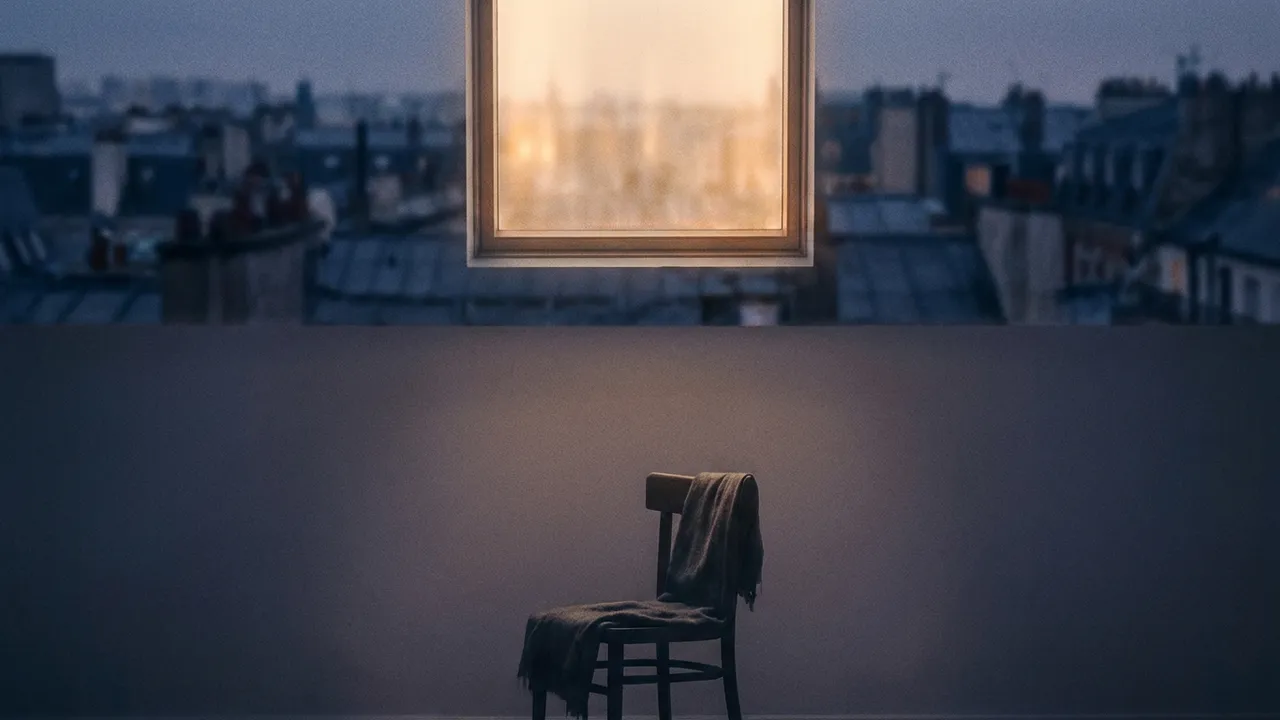
This is where a wind-down nook can help. It does not need to be beautiful enough for a photograph. It can be one chair with a blanket over the arm. A corner of the couch. A cushion near a lamp. The important ingredients are dim light, warmth, and low stimulation. No bright screen. No work. No dramatic plot twist at 12:40 a.m.
In the nook, you might read something familiar. Listen to a quiet voice. Breathe with a hand on your ribs. Write the repeating thought once, so your mind does not have to keep shouting it. If your heartbeat feels loud when trying to sleep, you might place your feet on the floor and lengthen the exhale, not to silence the heart, but to remind the body that it is held. Nighttime hyper-vigilance has its own fierce logic; we wrote about that body-on-guard feeling in The Science of Nighttime Hyper-Vigilance.
The bedroom itself can become simpler. Cool air. Soft textures. A lamp that does not glare. A scent you use only at night, if scent comforts you. A glass of water. A charger outside the bed's reach. The absence of work materials. The absence of the phone's little electric hunger.
Sanctuary building is not decoration. It is nervous system communication. Every object says either stay alert or you can soften now. Choose what speaks softly.
A Bedtime Ritual You Can Look Forward To
Let Bedtime Begin Before the Bed
To learn how to look forward to sleeping again, you may need to stop making bedtime begin at the bed.
Let bedtime begin earlier, in the small chosen ritual before sleep. Not a list of optimizations. Not a moral performance. A passage. A way of crossing from the lit world into the dark one without being shoved.
A good ritual has texture. The click of the lamp. The weight of socks pulled over cold feet. Steam rising from tea. The phone placed face-down in another room. The same chair. The same blanket. A voice speaking slowly enough that you do not have to chase it. The sense that nothing is being demanded of you for a few minutes.
A Threshold Instead of a Dreaded March
This is where Tonight belongs: not as another thing to achieve, but as the centerpiece of a ritual you can actually want. An AI-guided evening ritual with carefully crafted voices, shaped by humans for warmth. Screen-free. Low-light. Made for the hour when you are too tired to be improved and too awake to be left alone with the ceiling.
The aim is not to knock you out. That language is too violent for what sleep really is. The aim is to make the lead-up to bed feel safe, beautiful, and chosen. To give your mind a path other than dread. To create a reliable place for the thoughts to loosen their grip before you ask your body to lie down.
If your current evening feels like a dreaded march — couch, phone, panic, bed, ceiling — a ritual changes the shape of it. It gives you a threshold. You are not going straight from stimulation into silence. You are stepping into a small ceremony of return.
Maybe you begin with a low lamp and a blanket in your wind-down nook. You start Tonight and hear a voice you have chosen. The room does not flash or scroll. There is no feed, no streak, no chart waiting to tell you who you are. The ritual guides you through a soft descent: out of the day, into the body, toward bed. If sleep comes quickly, good. If it does not, you have still spent the hour kindly. That matters.
You Are Allowed to Want the Night Back
This is how the Locus of control becomes sane again. You cannot control the exact minute sleep arrives. You can control how you accompany yourself to the edge of it. You can make the pre-sleep hour less lonely. You can make the bed a place you enter only when your body is ready, instead of a place where you go to wrestle.
Over time, the brain notices. The chair means slowing down. The voice means you are not alone. The lamp means the day is ending. The bed means rest again.
There may still be difficult nights. Healing a conditioned association is not a straight line. Some evenings you will feel the old dread in your throat. Some nights you will get out of bed, sit in the dimness, and wonder if anything is changing. But every time you refuse to turn the bed into a battlefield, something is changing. Every time you meet wakefulness somewhere other than the pillow, you are teaching your body a new map.
You are allowed to want the night back.
Not perfect sleep. Not a flawless routine. Just a gentler hour. A room that does not feel like a threat. A bed that can become ordinary again, and then maybe even beloved.
If you are rebuilding that relationship with sleep, Tonight is being made for you: an AI-guided evening ritual with carefully crafted voices, shaped by humans for warmth, screen-free and low-light, designed for the cozy wind-down nook before bed. You can join the waitlist and begin, softly, before your head ever reaches the pillow.
If you dread going to bed, it often means your bed has quietly become linked with wakefulness, pressure, or fear rather than rest. Through repeated difficult nights, the brain can learn to treat bedtime as a threat, a pattern sometimes called conditioned arousal. The dread is not a flaw in you; it is a body remembering and trying to protect you.
Why do I avoid going to bed even when I'm tired?
Avoiding bed when you are tired is a very human response to a place where you expect discomfort. The mind tends to delay whatever it associates with pain, so lingering in the kitchen or starting one more episode can be a way of postponing the dark, quiet room. It is rarely about laziness or a lack of discipline.
Is bedtime anxiety a sign that something is wrong with me?
Bedtime anxiety is usually a learned association rather than a sign that anything is broken in you. When nights have been hard for weeks or months, the nervous system can begin bracing for difficulty before it arrives. Because the dread was learned through repetition, it can also be gently unlearned through new, calmer cues.
How can I stop dreading bedtime?
Easing bedtime dread tends to come from rebuilding a sense of safety around the bed rather than forcing sleep. Keeping the bed mainly for sleep, softening the light, and following a gentle, repeated wind-down ritual can slowly teach the body that the room is a place of rest. Change usually arrives through patient repetition rather than in a single night.
What is Tonight?
Tonight is a digital sleep ritual that helps you clear your mind and decompress. Through structured reflection and personalized, synthetic audio guidance, we provide a quiet, private space to help you find closure before you sleep. Private, ephemeral, and designed to help you rest.
The quiet list
Notes for a quieter mind.
Join the newsletter for occasional, thoughtful notes on sleep, emotional regulation, and building a calmer life. We only write when there’s something genuinely worth your while.