← Journal

The Restless Mind

Wake Up Anxious in the Middle of the Night?

Do you wake up anxious in the middle of the night? Learn why your body can jolt into alarm at night, and a simple low-stimulation protocol for easing back into rest.

The room is still. The street is quiet. Nothing has happened, and yet your body has arrived at the edge of terror.

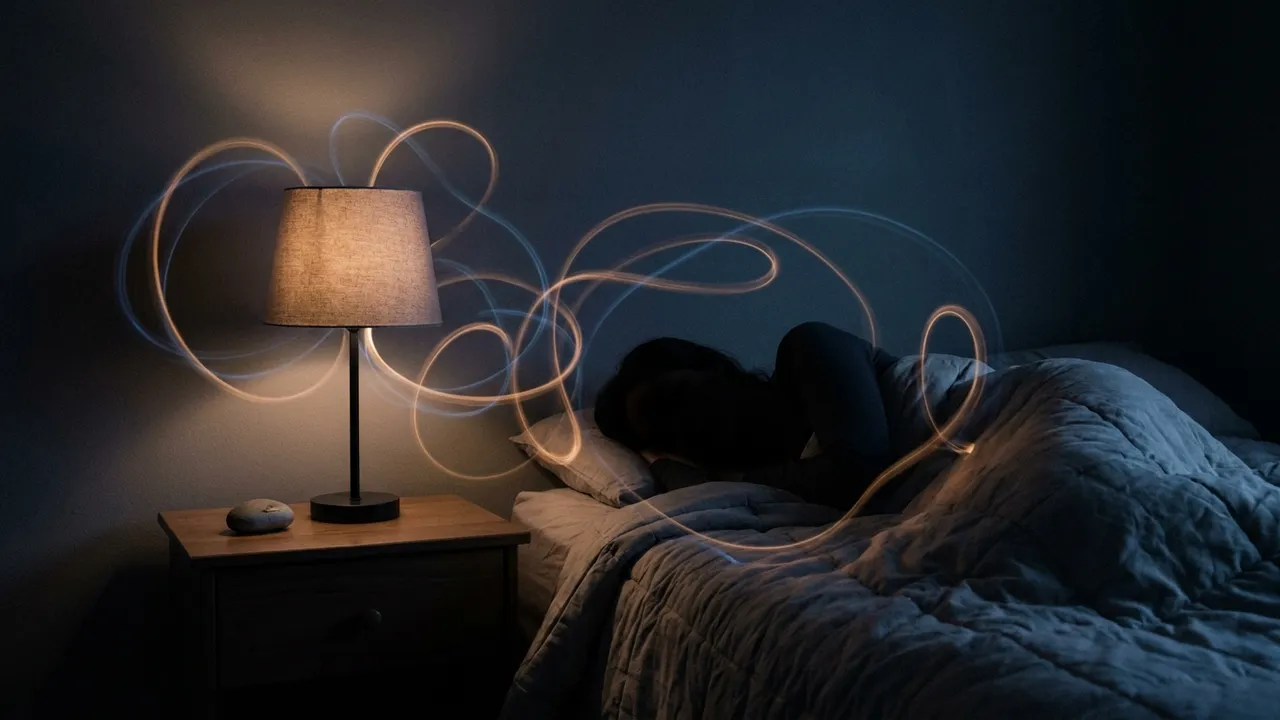
You wake all at once. Not gradually, not with the soft confusion of morning, but with a jolt. Your heart is hammering against your ribs. Your mouth is dry. The air feels too thin. There may be heat in your chest, a sourness in your stomach, a pressure behind your eyes. You lie there in the dark trying to understand why your body is acting as if someone has shouted your name.

Waking up anxious in the middle of the night often starts in the body, not the mind.

It can be triggered by a physical shift—like a dip in blood sugar, a mistimed spike of the stress hormone cortisol, or a natural transition between sleep cycles—which activates your nervous system's alarm. Your brain then wakes up into this state of alarm and scrambles to find a reason, latching onto any available worry and creating a feedback loop of anxiety.

And still, something important is true: a night jolt is not always a sign that something is wrong with your mind. Often, it begins in the body.

Waking from a Deep Sleep into a State of Panic?

Why It Feels Like It Comes From Nowhere

This is the question many people type into a phone at 3:17 a.m., squinting through the brightness: why do i wake up anxious in the middle of the night? Sometimes it comes with another question underneath it: am I safe?

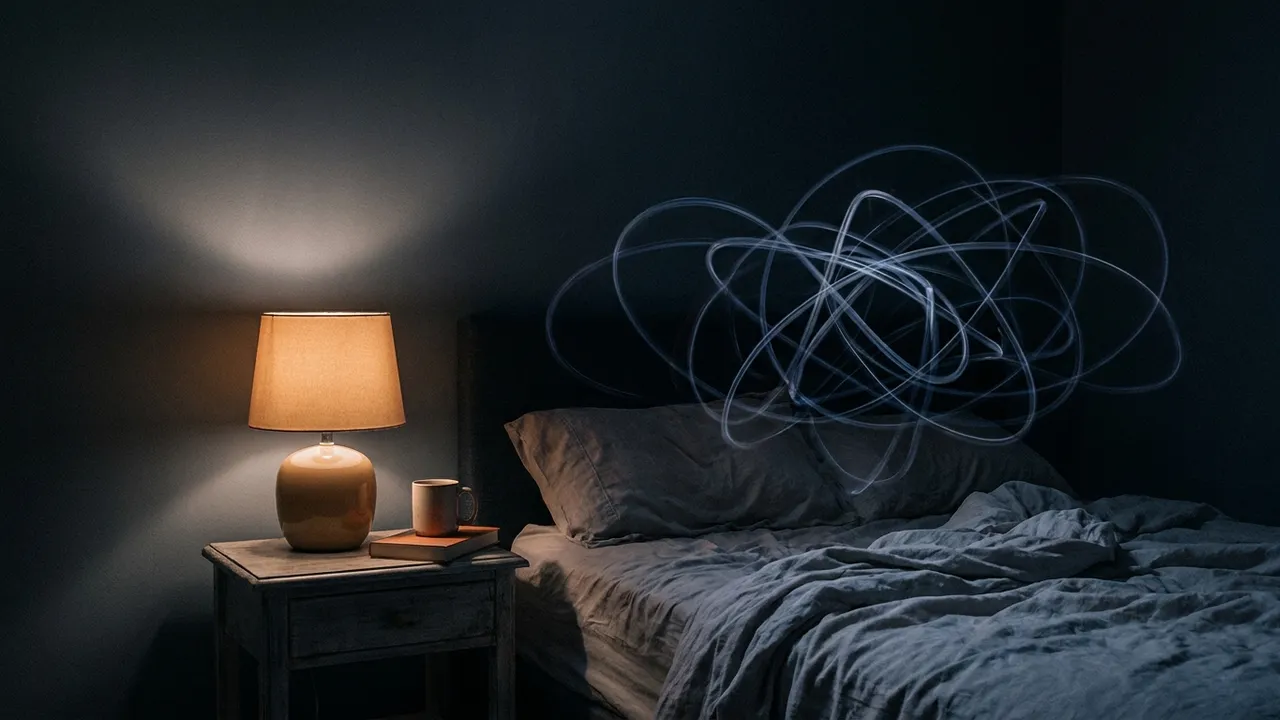
Waking up in a panic can feel more frightening than daytime anxiety because there is no runway. During the day, worry usually gathers itself. You notice a thought, then a tension, then the spiral. At night, the body seems to skip the beginning. You open your eyes already flooded.

You may think, I was just asleep. I was not worrying. I was not doing anything wrong. This is what makes waking up with anxiety for no reason feel so uncanny. It seems to come from nowhere, like weather inside the body.

When Panic Rises Straight From Sleep

Some people wake with a racing heart and a clear sense of doom. Some wake gasping, sitting upright before they know they have moved. Some feel the need to escape the bed, the room, their own skin. These episodes are sometimes called nocturnal panic attacks: panic that rises from sleep rather than from an obvious waking trigger, a phenomenon reviewed extensively in Sleep Medicine Reviews.

The words sound clinical, but the experience is intimate. It is you in a dark room with your pulse too loud. It is the ceiling above you, the blanket twisted at your knees, the strange feeling that the night has turned against you.

What Wakes Your Body Up in Alarm Mode?

Sleep Moves in Cycles, Not a Straight Line

Sleep is not one long river. It moves in cycles. Through the night, your body passes between deeper sleep and lighter sleep, between slow waves and dreaming, between being far away and nearly at the surface. These sleep cycles are ordinary. Most of the time, you drift through their borders without memory.

But sometimes, at one of those borders, the body misreads a signal.

Your autonomic nervous system is the part of you that manages things you do not consciously control: heart rate, breathing, digestion, sweating, the widening and narrowing of attention. It has a protective side. It can turn up the alarm quickly if it thinks there is a threat.

Blood Sugar, Cortisol, and the False Alarm

A few different things can nudge that alarm at night. A dip in blood sugar, called hypoglycemia, can happen if you have gone a long time without eating, drank alcohol before bed, exercised hard, or your body is simply sensitive to overnight changes. Low blood sugar can prompt a release of adrenaline, which may feel like shaking, sweating, hunger, dread, or a pounding heart.

Cortisol can also be involved. Cortisol is a stress hormone, but it is not evil. It helps you wake in the morning. A normal cortisol awakening response rises before dawn, helping the body move toward daylight. But a mistimed cortisol spike can feel like an alarm bell in the wrong hour. People sometimes call this a cortisol awakening response in the middle of the night, though what you may feel is simply the body being pulled upward too early, too hard.

Then there are nocturnal panic attacks, which can happen without a remembered nightmare or a clear thought. Your body surges into panic while you are asleep, and your mind wakes up inside the aftermath.

When the Body Surges Before the Mind

If you wonder, why do i wake up with my heart racing, one answer is this: your body may be responding to a physical shift first, then handing the scene to your mind afterward. A change in breath, a transition into lighter sleep, a cortisol spike, a blood sugar dip, a sound in the room, even reflux or pain can trigger a protective jolt.

This does not mean the fear is imaginary. It means the fear may be a real body sensation with a mistaken message attached to it.

The Anxious Brain's Scramble for a Story

Why Your Reasoning Brain Lags Behind

The hardest part is what happens next.

Pulled drawers

Your body wakes in alarm. Your heart is fast. Your breath is short. Your skin is listening. Then the thinking brain comes online, late to the scene, and tries to explain the sirens.

The prefrontal cortex, the part of the brain that helps with reasoning and perspective, is not at its brightest in the middle of the night. Research using PET imaging published in Brain has shown that prefrontal regions reactivate slowly after waking, a lag scientists call sleep inertia. Meanwhile, the older threat-detection systems are loud. The default mode network, the brain system that wanders through memory and self-related thought, may begin pulling files from every open drawer: the unpaid bill, the medical test, the message you forgot to answer, the meeting tomorrow, the conversation from six years ago that still has teeth.

How a Surge Becomes a Story

The body says danger. The mind asks, from where?

And because the mind hates an empty space, it grabs the nearest worry and holds it up as evidence.

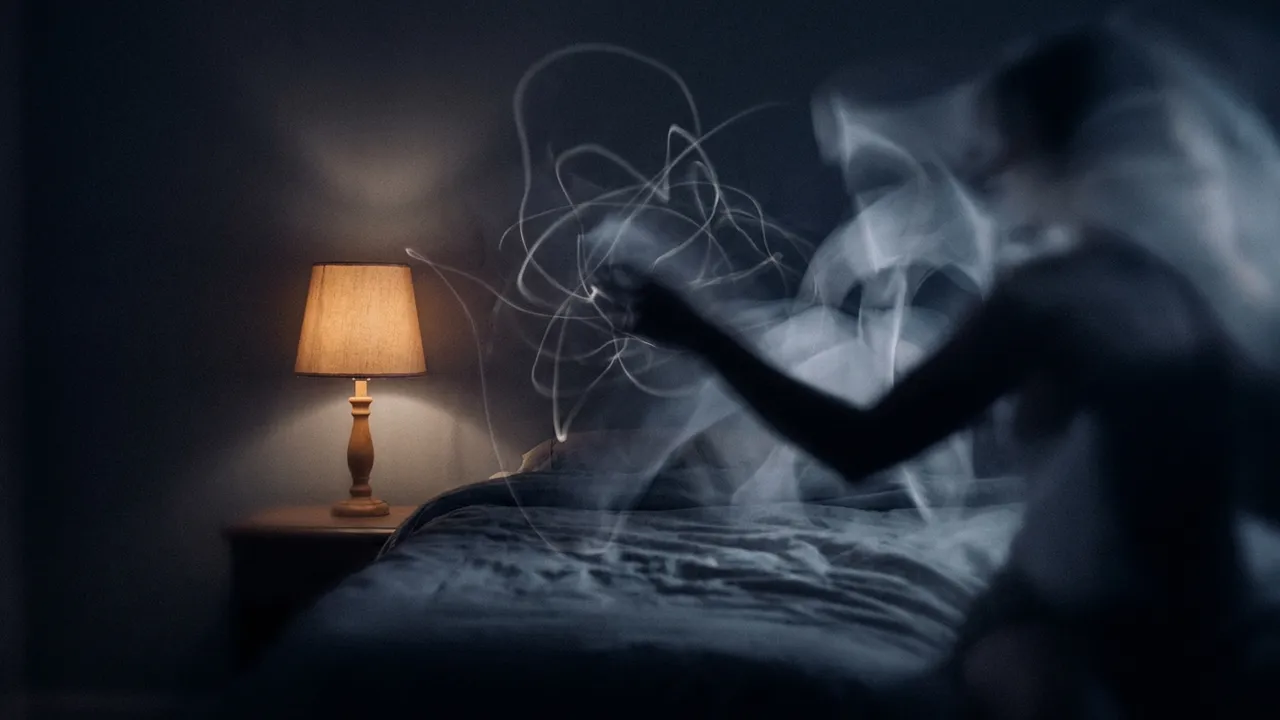
This is how a physical surge becomes a story. You wake with adrenaline, then remember the deadline. Now the deadline seems like the cause. You notice your heartbeat, then worry about the heartbeat. Now the heartbeat gets faster. You feel alone in the dark, then think about everything that could go wrong. Now the room feels even smaller.

This loop can be especially sharp during 3am wake up anxiety, when the world outside offers no correction. No kettle boiling. No ordinary light on the floor. No friend texting back. Just you, your body, and the mind trying to turn sensation into prophecy.

Speaking to the Body First

If this pattern is familiar, you may also know the companion experience of a mind that refuses to power down at bedtime. We wrote more about that in Why You Can't Shut Your Brain Off at Night, because the same systems that rehearse and scan before sleep can reappear when you wake in the dark.

But the midnight panic loop has its own particular cruelty. It makes you argue with thoughts while your body is still flooded. You try to think your way out of a state that began below thought.

This is why the first move is not to solve your life at 3 a.m. The first move is to speak to the body in a language it understands.

A Low-Stimulation Protocol for Midnight Wake-Ups

Everything You Do Becomes a Message

When you wake anxious in the middle of the night, everything you do becomes a message to the nervous system.

Bright light says morning. A phone says information, decisions, time, other people. Sitting upright too fast can say emergency. Searching symptoms can say danger is near. Even checking the clock can sharpen the story: I only have three hours left. I will be ruined tomorrow. Why is this happening again?

Refusing to Add Fuel

A low-stimulation protocol is a way of refusing to add fuel. It is simple, almost plain. You keep the room dark. You keep your eyes soft. You do not reach for the blue-white square of the phone if you can help it. You do not begin a full investigation of your past, your future, your health, your worth.
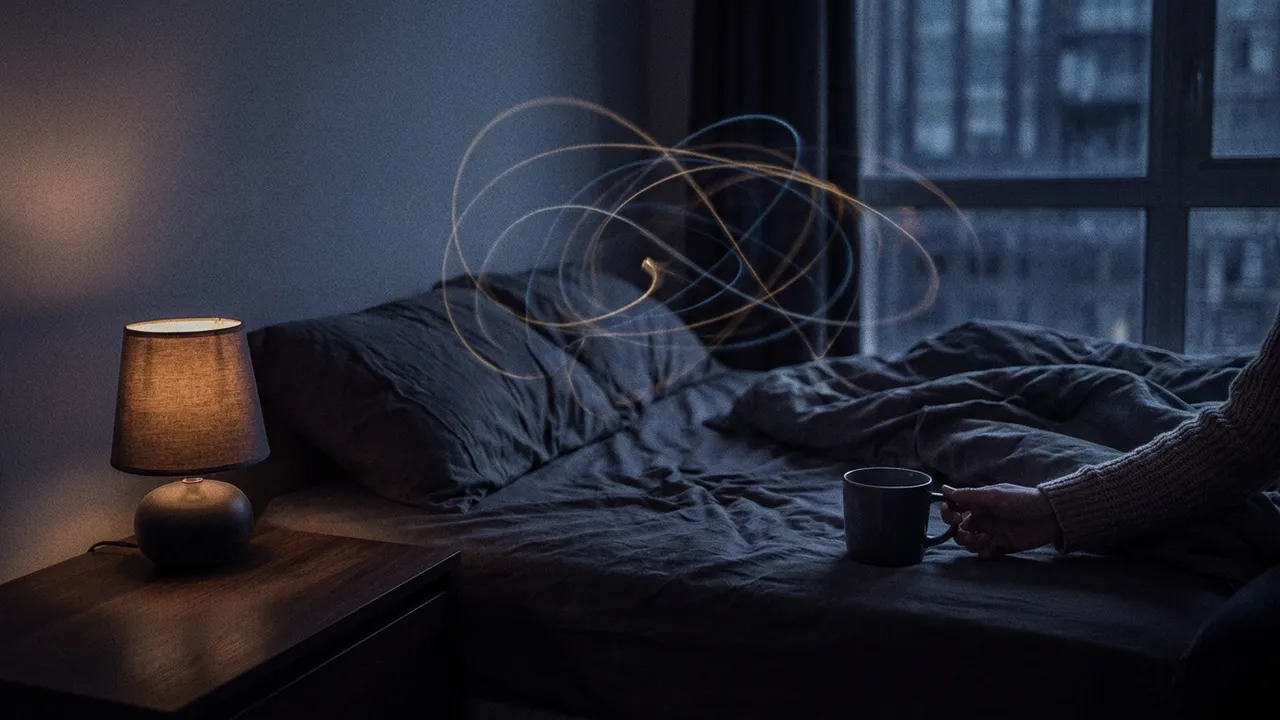
You treat the moment as a nervous system event first.

This matters because the autonomic nervous system can be influenced from the bottom up. The vagus nerve, a long nerve connecting the brainstem with the heart, lungs, and gut, helps regulate calm states. Slow exhaling, gentle orientation, and familiar sensory cues can tell the body: there is no predator here. There is a pillow. There is a room. There is breath leaving.

A Dim Path Back to the Body

The aim is not to force yourself back to sleep. Force is too bright a word for this hour. The aim is to reduce the alarm enough that sleep can find you again.

You may still have thoughts. Let them be in the room without becoming the room. The protocol is not a debate club. It is a dim path back to the body.

If you often wake at the same time, especially around three or four, it can help to understand the rhythm of those hours. We explore that pattern more in Why You Wake Up at 3 AM Every Night. But in the moment itself, you do not need a theory. You need fewer signals. Less light. Less language. A smaller task.

So the sequence is this: orient, breathe, reassure.

Three steps. No phone. No bright lights. Nothing to perform. Just a way to meet the jolt without letting it become the night.

Your 3-Step Plan to Calm the Jolt

Begin Before the Story Begins

When you wake in alarm, begin before the story begins. Or, if the story has already started, begin anyway.

  1. Orient. Keep your body where it is, if you can. Feel the weight of the blanket over your legs. Notice the mattress under your shoulder blades. Let your eyes find one soft shape in the room: the darker square of the window, the outline of a chair, the faint line where the ceiling meets the wall. This is the orienting response. Animals do it after a sound in the woods. Humans do it too. You are letting the nervous system gather evidence from the present room instead of from the imagined threat.

Say silently: this is my room. This is my bed. It is night.

Do not scan for danger. Receive what is already here. The sheet is cool at your ankle. The pillow has a crease. The house has its ordinary hum. Your body may still be afraid, but it can begin to learn that the fear has surroundings.

  1. Breathe. Use the physiological sigh. Take one inhale through the nose, then a second small inhale before you exhale. Then let a long exhale leave through the mouth. It is like topping off the lungs, then emptying them slowly. Do this three to five times.

The physiological sigh has been studied as a fast way to reduce arousal. In plain terms: the long exhale helps slow the heart rate and shift the body away from alarm. You do not need to breathe perfectly. You do not need a special posture. Two short inhales. One long exhale. Again.

If your breath catches, make the exhale smaller. If your nose is blocked, breathe however you can. The body is not grading you.

  1. Reassure. Once your body has a little more room, give the mind one sentence to hold. Not a grand affirmation. Not a speech. Something simple enough for midnight.

Try: You are safe. This is a feeling. It will pass.

Or: My body is having an alarm. I do not have to solve it.

Repeat it slowly. The point is not to convince yourself that life is perfect. The point is to stop the mind from building a courtroom around a heartbeat.

If the Heart Stays Loud, You Are Not Failing

This is how to calm anxiety after waking up: you address the physical surge, then give thought a soft boundary. You do not chase every worry down the hall. You do not open every door.

If the heart remains loud, you are not failing. Some bodies take longer to come down. If panic is frequent, severe, or new for you, or if you have chest pain, fainting, or symptoms that concern you, please seek medical care. Tenderness is not a substitute for support. It is a bridge toward it.

For the ordinary terror of waking up in a panic, though, these steps can help you stay close to yourself until the wave passes.

A Calm Voice to Guide You Back to Rest

The Cruelest Instruction: 'Calm Down'

The cruelest instruction at night is often the most common one: calm yourself down.

It sounds simple in daylight. In the dark, with your heart racing, it can feel like being asked to build a fire with wet hands. You know what might help, but you cannot quite reach it. You forget the breathing pattern. You forget the sentence. You forget that this has happened before and ended before.

That is why a calm voice can matter.

Borrowing Steadiness From Another Voice

Not a video. Not a feed. Not a screen full of choices. Not another bright app asking you to manage your own rescue. A voice. Low, human, close enough to follow but not so interesting that it wakes you further.

Tonight is being made for this exact kind of hour. It is an AI-guided evening ritual with carefully crafted voices, shaped by humans for warmth, designed to be used without flooding your eyes with light. The idea is not to entertain you, analyze you, or turn your bed into a project. It is to offer a presence in the dark: a whisperer who can guide your breathing, help you orient to the room, and give your mind one gentle thread to follow back toward rest.

There is something ancient about this. A nervous system borrowing steadiness from another nervous system. A voice saying, softly, stay here. The danger has passed. Let the breath go.

We have written before about The Voice You Chose, because voice is not decoration at night. It is texture. It is trust. It is the difference between being instructed and being accompanied.

A Ritual Ready Before Fear Decides

If you wake anxious in the middle of the night, the goal is not to become a flawless sleeper. It is to have a ritual ready before fear starts making decisions. A way to keep the lights low. A way to speak to the body first. A way to remember that a racing heart can be a wave, not a warning.

Tonight is not another meditation app asking for your focus when you have none left. It is a screen-free, low-light nighttime ritual, held by carefully crafted AI voices, for the moments when you need a gentle way back. If that sounds like something you would want beside your bed, you can join the waitlist.

Related reading: heart is fast · protective side

Frequently asked questions

Why do I wake up anxious in the middle of the night?

Waking up anxious in the middle of the night often begins as a physical event rather than a worry. A shift like a dip in blood sugar, a mistimed rise in cortisol, or a transition between sleep cycles can nudge the nervous system into alarm before you are fully awake. The mind then arrives late, finds the body already flooded, and reaches for the nearest worry to explain the feeling.

Why do I wake up with my heart racing?

A racing heart on waking is usually the body responding to a physical change first, then handing the scene to the mind. A shift in breath, a lighter stage of sleep, a cortisol spike, or a blood sugar dip can prompt a protective surge of adrenaline. The sensation is real, but it is often a false alarm rather than a sign that something is wrong.

What is 3am anxiety and why does it happen?

3am wake up anxiety describes that loop of jolting awake in the small hours with a fast pulse and a busy mind. The quiet world offers no correction, so a physical surge can feel louder and the mind can turn sensation into prophecy. It tends to feel sharper because the reasoning brain reactivates slowly after waking, while older threat-detection systems are already awake.

How do you calm anxiety after waking up at night?

A wired body tends to respond to gentle signals rather than commands. Keeping the room dark, orienting to the present surroundings, lengthening the exhale, and offering the mind one simple sentence to hold can ease the alarm. The aim is not to force sleep, but to reduce the surge enough that rest can find you again.

What is Tonight?

Tonight is a digital sleep ritual that helps you clear your mind and decompress. Through structured reflection and personalized, synthetic audio guidance, we provide a quiet, private space to help you find closure before you sleep. Private, ephemeral, and designed to help you rest.

The quiet list

Notes for a quieter mind.

Join the newsletter for occasional, thoughtful notes on sleep, emotional regulation, and building a calmer life. We only write when there’s something genuinely worth your while.

No spam · no ads · nothing kept past sunrise