Why We Feel Lonelier After the Sun Goes Down (And It's Not Just in Your Head)
7 min read
You can be surrounded by people all day and still feel a sudden, sharp pang of isolation the moment you turn off the lights. Nighttime loneliness is a biological signal, not a weakness. Learn why your brain craves human presence after dark.
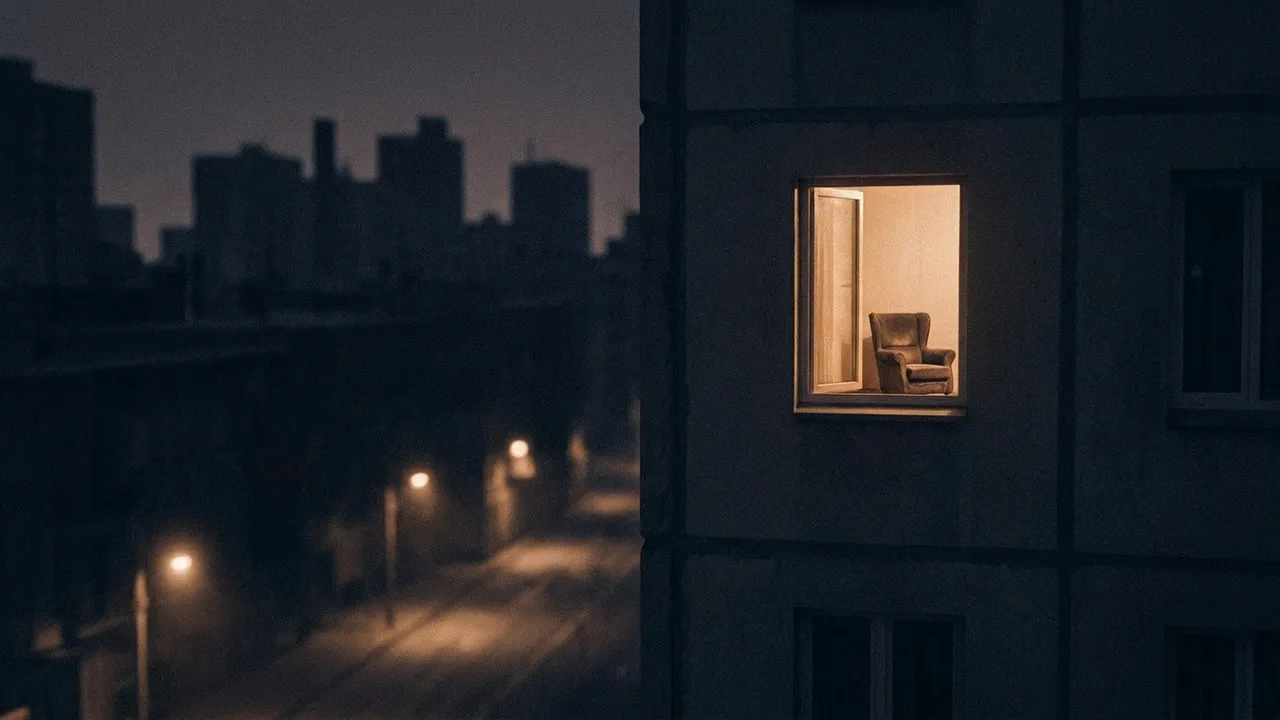
You can be surrounded by people all day—coworkers, family, friends—and still feel a sudden, sharp pang of isolation the moment you turn off the lights.
During the day, you were fine. More than fine. You were busy. You were needed. You were distracted enough to forget about the hollow feeling that lives somewhere behind your sternum.
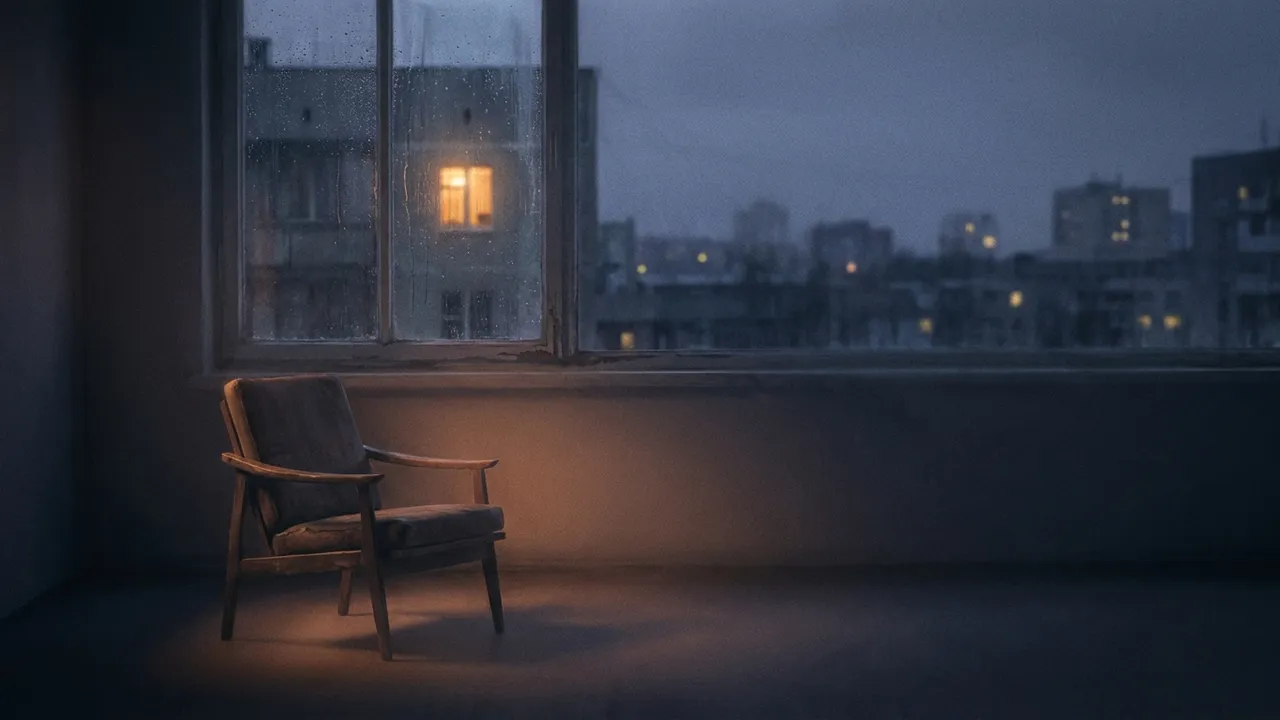
But now it's 11 PM. The texts have stopped. The emails have gone quiet. Everyone you know is either asleep or absorbed in their own lives. And suddenly, without warning, the loneliness arrives.
Not the soft, poetic kind. The physical kind. The kind that makes your chest ache. The kind that makes you reach for your phone—not because you want to see anything, but because you need proof that the world still exists.
Nighttime loneliness is not "just in your head."
If you've ever found yourself googling "why am I so lonely at night" while the rest of the world seems to be sleeping peacefully, you are not broken.
You are not dramatic.
You are experiencing something your body was designed to feel — what the late John Cacioppo, in his decades of research on social isolation, called a hardwired biological alarm.
The Biology of Nighttime Loneliness
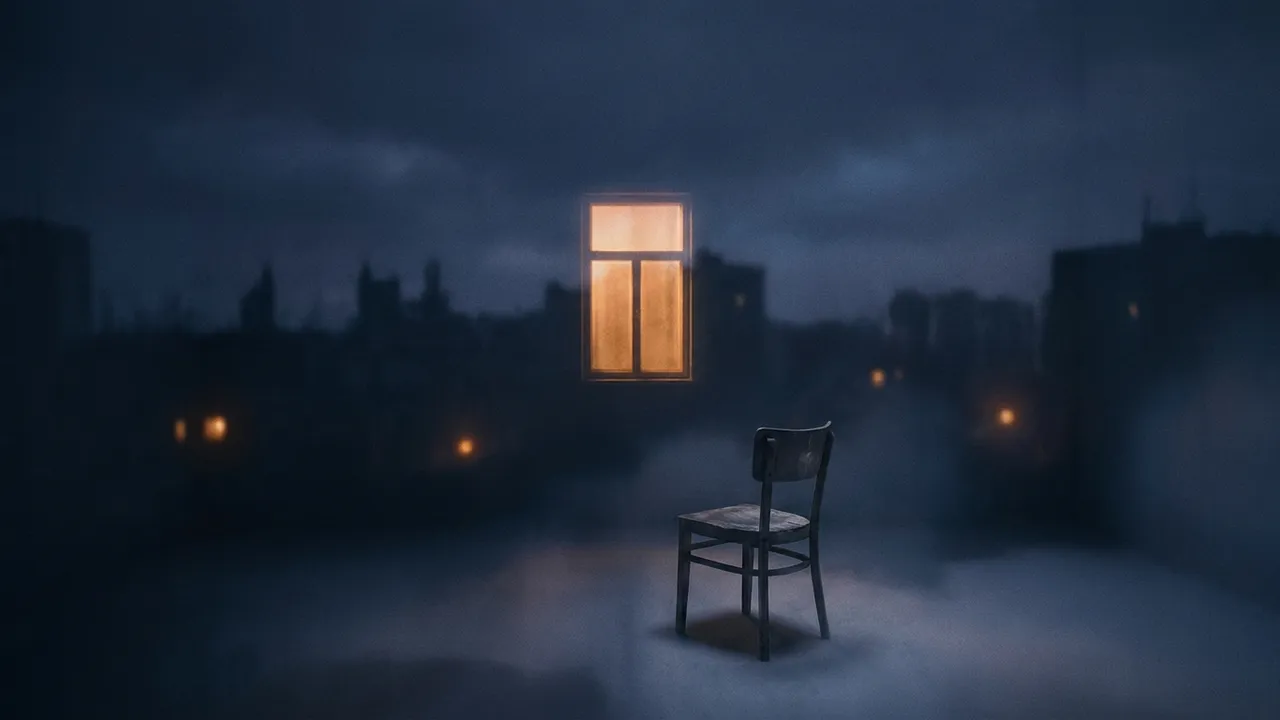
For our ancestors, nighttime was the most dangerous time.
Predators hunted in the dark. Threats were invisible. Survival depended entirely on one thing: being near the tribe. Sleeping in proximity to others. Hearing breathing in the dark.
Evolutionarily, your brain associates "being alone in the dark" with "being at risk" — a vigilance pattern that sleep researchers trace back to our earliest ancestors, who survived only by sleeping in groups.
Why Night Feels Different From the Day
This is why nighttime loneliness feels different from daytime loneliness. During the day, you can rationalize it away. You can distract yourself. You can run errands or scroll through feeds or bury yourself in work.
But at night, the distractions fall away. The emails stop. The chores are done. The noise of the world fades. And you are left alone with your own thoughts in a silent room.
If there is no one there to witness those thoughts—to hold them with you, even from a distance—your brain triggers a stress response.
This is not weakness. This is biology.
Your nervous system is scanning for proof that you are not alone. When it doesn't find any, it sounds the alarm. Heart rate rises. Thoughts begin to loop. The silence becomes unbearable.
It is a survival mechanism misfiring in a world that was never supposed to leave you alone in the dark.
The Difference Between Solitude and Loneliness
They sound similar. They are not the same.
Solitude is being alone and feeling peaceful. It is chosen. It is restorative. Some people thrive in it.
Loneliness is being alone and feeling unheld. It is not about the absence of people. It is about the absence of presence. Of being seen. Of mattering to someone in real time.
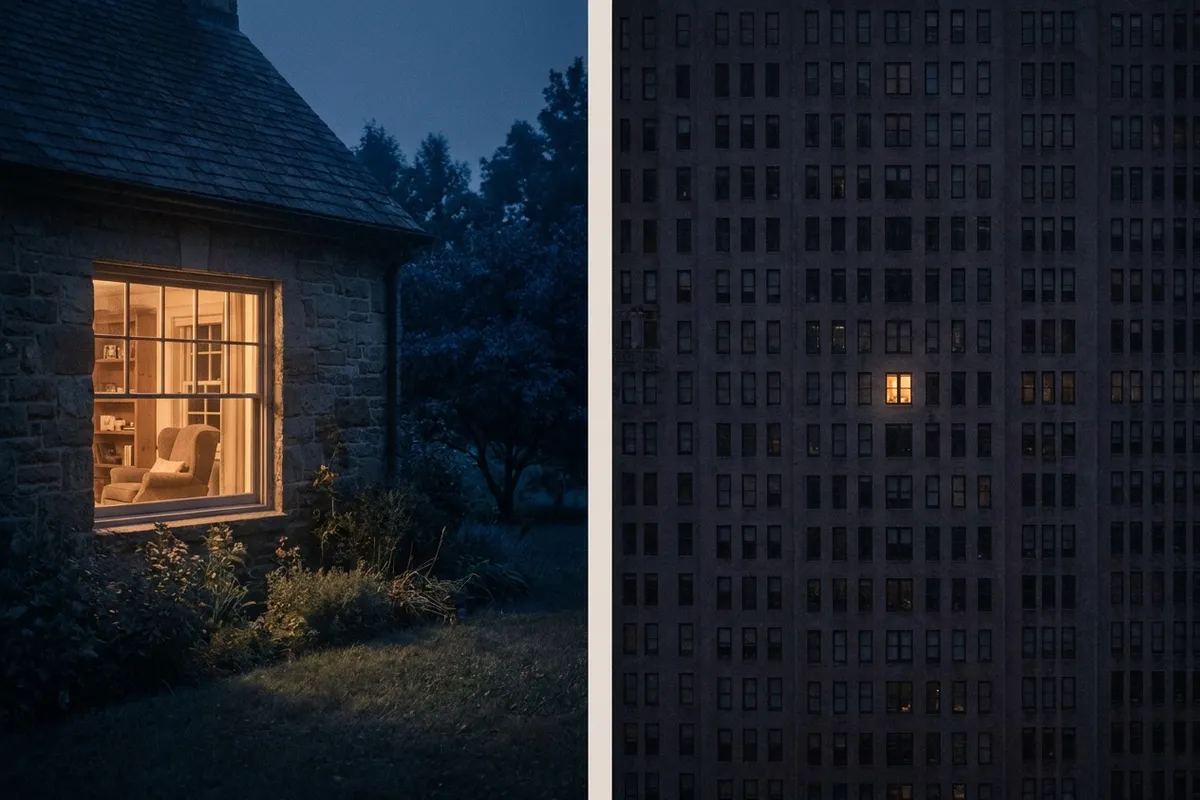
You can feel solitude in an empty house and sleep like a child.
You can feel loneliness in a crowded city and lie awake until dawn.
The difference is not circumstance. The difference is whether your nervous system believes someone is keeping watch.
This is why you can spend all day with people and still feel the ache at night. Proximity is not presence. And your body knows the difference.
Why Self-Help Apps Often Make It Worse
Most apps designed for sleep or mental health are tools.
They give you a task: Breathe. Count sheep. Listen to this recording of rain falling on a cabin roof. Complete this meditation streak. Track your mood so we can show you a graph of your sadness.
But if you are feeling invisible at night, a tool is the last thing you need.
A tool is a solo instrument. You and an algorithm, performing an optimized routine, alone in the dark. It reinforces the very isolation it claims to solve.
What you actually crave is not optimization. It is co-regulation.
What You Actually Crave Is Co-regulation
Co-regulation is the phenomenon of your nervous system calming down because it detects the presence of another calm human — what neuroscientists call Social Baseline Theory. It is not about what they say. It is about the simple biological fact of their existence alongside yours.
This is why a podcast doesn't quite work. Why ASMR leaves you feeling emptier. Why the meditation app's soothing voice somehow makes the silence feel louder.
Those are not for you. They are content. They are broadcasts. They would exist whether you were listening or not.
What your nervous system is searching for is something different: proof that, tonight, something has been prepared with you in mind. That your one line did not vanish into a void.
That is what a carefully crafted ritual — even a digital one — can offer, when it is honest about what it is.
The Power of Being Witnessed
There is a concept in psychology called emotional containment.
It is the experience of having your internal world held by someone else. Not fixed. Not solved. Just acknowledged. Held.
When you were a child and couldn't sleep, a parent didn't give you breathing exercises. They sat with you. They said your name. They stayed until your body believed it was safe to let go.
This is what we lose as adults. Not the ability to self-soothe—but the permission to be soothed by someone else.
We are told that needing another person at night is weakness. That we should be able to handle the dark alone. That "independence" means never admitting you want someone to notice you exist.
But your nervous system did not get the memo.
It still searches for the tribe at midnight. It still listens for breathing in the dark. And when it finds only silence, it assumes the worst.
Two Small Rituals That Help
Before you reach for an app, try one of these:
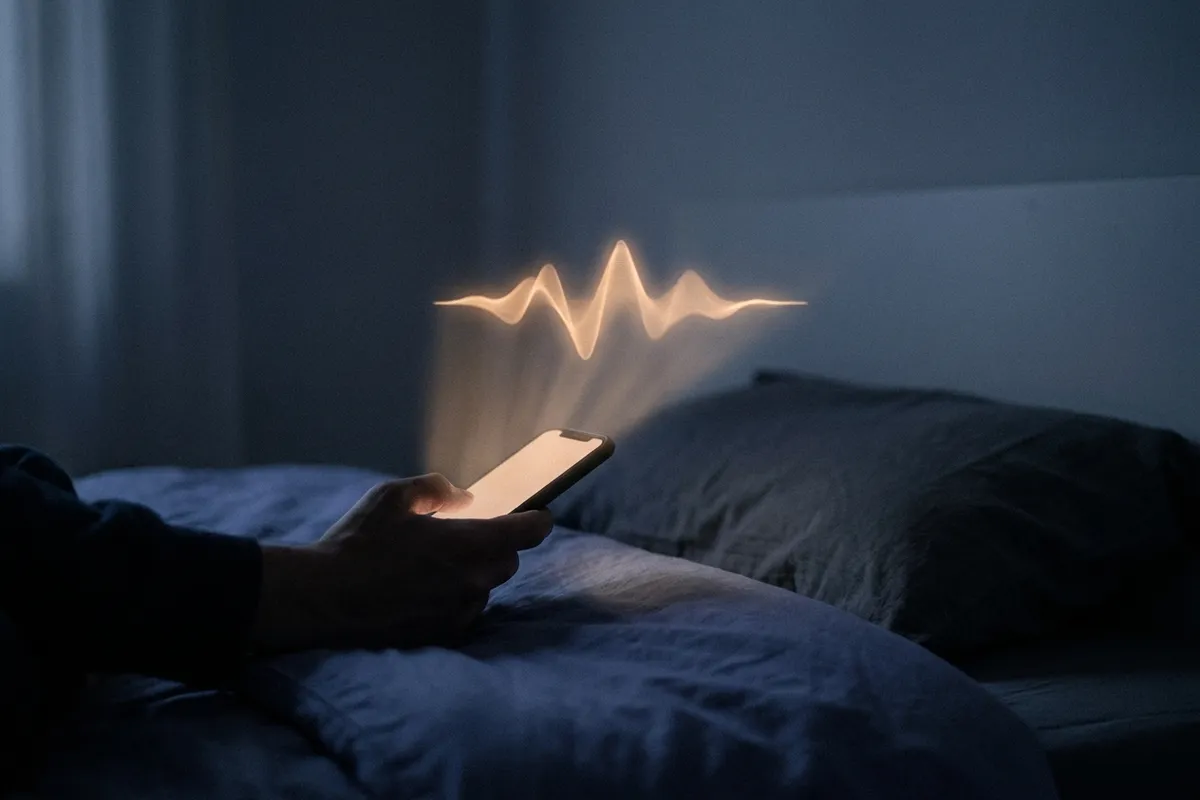
A voice note instead of a scroll. Send a 30-second voice message to one person you trust. Even un-replied, the act of speaking to someone real can help quiet the alarm.
A short, named acknowledgment. Write one line about what you're carrying and read it aloud — to yourself, to a journal, or to a real listener. Naming what hurts almost always loosens it — a phenomenon researchers call affect labeling.
When a voice — carefully crafted, AI-guided, shaped with human care — reads what you wrote and speaks your name back to you, the loneliness loosens its grip.
Not because the problem is solved. But because you are no longer alone with it.
The weight is shared. And shared weight is lighter.
If you are struggling with that deep, physical sense of being unseen at night, you do not need another app that tracks your sleep.
You do not need to optimize your bedtime routine.
You do not need to journal into a void, talking to yourself in the dark.
You need to be accompanied.
Not Another Meditation App
This is why we built Tonight.
It is not another meditation app. It is not a library of generic content designed for no one in particular. It is an AI-guided evening ritual, honest about what it is — and shaped, line by line, by humans who care how it lands.
It is a ritual of presence.
You write one line. The thing you're carrying. The thing you didn't say out loud today. The small victory. The quiet grief. The fear.
An AI voice — carefully curated, given human qualities by the team behind it — receives what you wrote and prepares something just for you.
It speaks your name. It acknowledges what you wrote. It stays with you — a voice in the silence — until you drift off.
No tracking. No streaks. No gamification of your loneliness.
Just one carefully crafted ritual, shaped around what you wrote. Just one night at a time.
You Were Not Meant to Carry the Night Alone
The modern world has convinced us that needing people is a flaw to be engineered away. That with the right app, the right routine, the right supplements, we can become perfectly self-sufficient islands.
But you are not an island. You are a human being. And human beings were designed to sleep knowing someone is keeping watch.
The loneliness you feel at night is not a sign that something is wrong with you.
It is a signal. A biological request. A reminder that you are built for connection, even in the dark.
Especially in the dark.
If you are tired of feeling invisible at 2 AM—if you are tired of scrolling for proof that the world exists—there is another way.
You can be witnessed.
Tonight is for people who don't need another tool. They need a presence. No tracking. No streaks. Just an AI-guided evening ritual, shaped by humans, that will say your name and stay with you until you sleep.
Frequently asked questions
Why do I feel lonelier at night?
Nighttime loneliness tends to intensify because the day's distractions fall away and the world goes quiet, leaving you alone with your own thoughts. Your nervous system scans for proof that someone is near, and when it finds only silence, it can sound an ancient alarm. It is less a personal failing than an old survival pattern surfacing in the dark.
Is feeling lonely at night a sign that something is wrong with me?
Feeling lonely at night is not a flaw or a weakness; it is a biological signal that you are built for connection. For most of human history, being alone in the dark meant being at risk, so the body learned to crave the presence of others after sunset. The ache is your nervous system doing exactly what it evolved to do.
What is the difference between solitude and loneliness?
Solitude is being alone and feeling peaceful, while loneliness is being alone and feeling unheld. The difference is not how many people are nearby, but whether your nervous system believes someone is keeping watch. This is why you can feel calm in an empty house, yet feel lonely at night in the middle of a crowded city.
Why don't meditation or sleep apps ease my loneliness at night?
Most apps hand you a task to complete alone, which can quietly reinforce the very isolation you are trying to escape. What a lonely nervous system is searching for is co-regulation: the calming sense that another presence has been prepared with you in mind. A broadcast or generic recording exists whether you are listening or not, so it rarely answers that deeper need to be witnessed.
What is Tonight?
Tonight is a digital sleep ritual that helps you clear your mind and decompress. Through structured reflection and personalized, synthetic audio guidance, we provide a quiet, private space to help you find closure before you sleep. Private, ephemeral, and designed to help you rest.
The quiet list
Notes for a quieter mind.
Join the newsletter for occasional, thoughtful notes on sleep, emotional regulation, and building a calmer life. We only write when there’s something genuinely worth your while.