If you can't sleep because of sensory overload, your nervous system may be asking for less, not more. Here is how to build a gentle sensory cocoon for night.
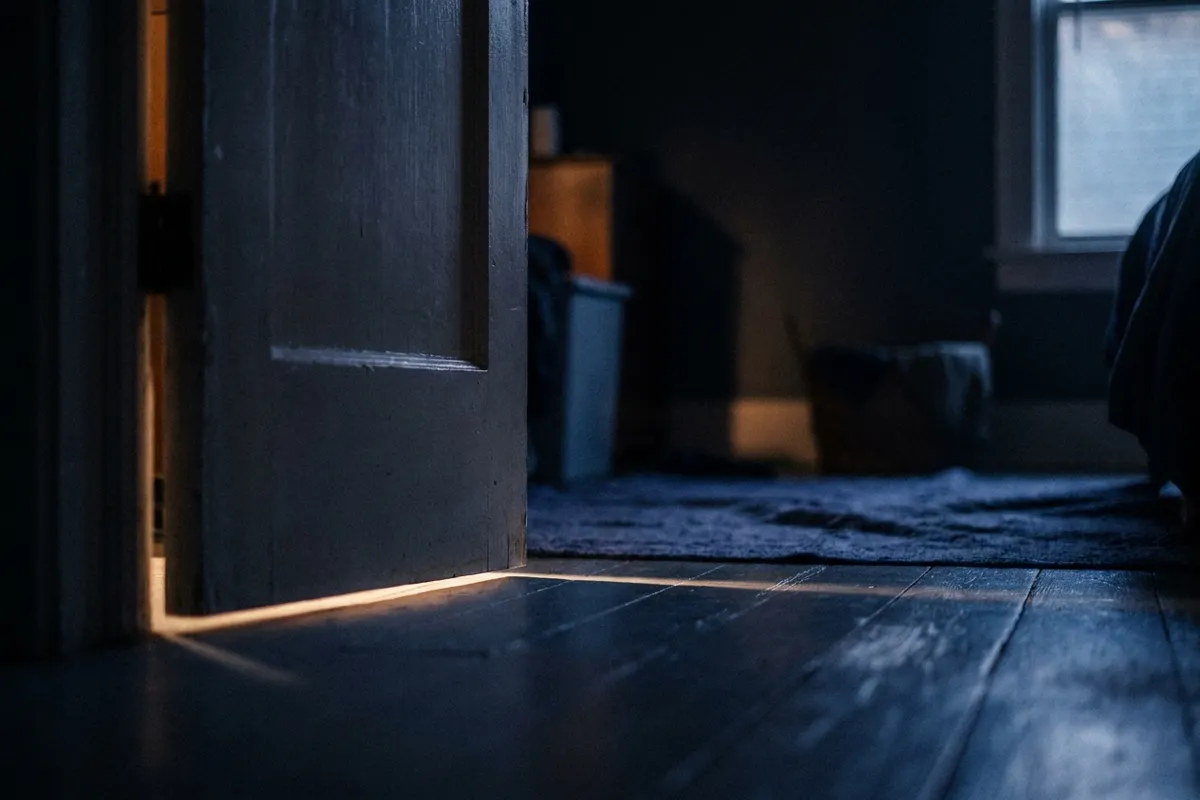
The bedroom is dark enough for someone else, but not for you. A slice of hallway light falls under the door and it feels sharp, almost hot. The refrigerator clicks on in the kitchen and the sound seems to travel through the walls and settle behind your eyes. The tag at the back of your shirt becomes a small animal with claws. The sheet is wrinkled in one exact place. Your hair touches your cheek. Your own breathing is too loud.
This is the hour when a tired body can feel surrounded. You may be bone-weary and still too overstimulated to sleep. You may close your eyes and find that your skin has not closed. Everything is arriving. Light. Sound. Texture. Temperature. The pressure of the mattress. The little pulse in your wrist. The soft electronic whine from a charger across the room.
If you can't sleep because of sensory overload, it is not a failure of character.
It is not you being difficult, precious, dramatic, or "too sensitive." Sensory overload at night is a real physiological state: your nervous system is taking in more than it can comfortably sort, and sleep asks for the opposite. Sleep asks the body to loosen its grip. Overload asks the body to keep scanning.
For a highly sensitive person who can't sleep, the world may come in with fewer curtains. For someone with autism and sensory overload at night, or ADHD sensory overload sleep struggles, the ordinary bedtime environment can feel crowded with signals. Sensory Processing Disorder sleep problems can make this even more pronounced. A room that looks calm to another person can still be loud to your body.
There is relief in naming it. Not insomnia as a vague enemy. Not "I'm bad at sleep." Something more precise: I am feeling overstimulated before bed. My system needs less. My system needs safety in a language it can understand.
Why Your Sensory Dial Is Turned to Maximum
All day, your body has been filtering. The brightness of the grocery store. The scrape of chair legs. Slack pings. Traffic. Perfume in an elevator. A conversation where you had to read someone's face while pretending you were fine. Even pleasure can be input. Music. Laughter. A beautiful loud dinner. The nervous system does not only count danger. It counts intensity.
When the Sensory Dial Is Turned All the Way Up
By night, the sensory dial may be turned all the way up. The sympathetic nervous system, the part that helps you mobilize for threat or demand, can stay switched on long after the day is done. This is sometimes called fight-or-flight, but it does not always feel like panic. Sometimes it feels like being unable to tolerate a sock seam.
Cortisol is one of the body's alertness hormones. The vagus nerve helps the body find its way back toward rest. The default mode network is a brain system that gets busy when the outside world gets quiet. A tired person can read that sentence at midnight and know: my body has levers, and tonight they are not moving easily.
How the Parasympathetic System Actually Arrives
The parasympathetic nervous system is the branch associated with settling, digestion, and repair. It does not usually arrive because you command it to. It arrives through cues. Dimness. Warmth. Predictable rhythm. A feeling of being held. Fewer decisions. Fewer surprises.
When Your Baseline Filter Is More Sensitive
Some people have a more sensitive baseline filter. The term Highly Sensitive Person, or HSP, describes people who tend to process sensory and emotional input deeply — a trait researchers now call sensory processing sensitivity (Philosophical Transactions of the Royal Society B, Acevedo et al., 2018). Sensory Processing Disorder, or SPD, can involve difficulty organizing sensory information in ways that feel manageable. ADHD can make filtering and switching attention harder. Autistic people may experience input as especially intense, cumulative, or painful, particularly after a day of masking.
None of these mean you are broken. They mean your sleep needs may be more specific. Your night may require less brightness, less friction, less improvising, and more respect for the body that carried you through the day.
The Myth of 'One Size Fits All' Relaxation
Advice often arrives wearing soft clothes. Take a bath. Listen to white noise. Try a meditation app. Do a body scan. Breathe deeply. Turn on a sleep story. For many people, these are kind suggestions. For an overloaded nervous system, they can feel like someone adding furniture to a room you are trying to empty.
When Soothing Becomes More Stimulation
A meditation app may begin with a bell that lands like a spoon dropped in a sink. A voice may be too bright, too close, too cheerful, too wet at the edges. White noise may not feel like a blanket; it may feel like static poured into your skull. A guided body scan can ask you to notice your toes, your knees, your chest, and suddenly interoception — your sense of the body from the inside — becomes too vivid. Your heartbeat steps forward. Your stomach gurgles. Your jaw aches. You were trying to relax, and now you are aware of every room inside the house of you.
This is why generic sleep advice can be so maddening. It assumes that relaxation is universally relaxing. It assumes the same sound, same voice, same breathing pattern, same blanket, same darkness, same ritual will soothe every body. But if you are already feeling overstimulated before bed, the wrong soothing tool is still stimulation.
The Loneliness of Trying What Should Help
There is a particular loneliness in trying what is supposed to help and finding that it makes things worse. You may start to distrust yourself. You may think, Why can't I just do the normal thing? But the normal thing is often designed for a nervous system that is not currently bristling.
We have written before about why white noise and meditation apps fail, not because those tools are bad, but because bodies are particular. A sound can be medicine for one person and sandpaper for another. The question is not, "What should calm me?" The better question is quieter: "What does my system stop resisting?"
Crafting Your Sensory Cocoon: A Gentle Guide
A sensory cocoon is not a perfect bedroom. It is not expensive bedding, blackout curtains, and a personality transplant. It is a set of chosen cues that tell your body, again and again, there is less to process now.
The idea comes close to what occupational therapists may call a sensory diet: a planned pattern of sensory input that helps a person feel regulated. The phrase can sound clinical, but the practice can be tender. It means noticing what your nervous system is hungry for and what it has had too much of. Not less of everything. The right amount of the right thing.
Begin Like a Naturalist
For some bodies, total silence is not restful. It leaves every small sound exposed: the pipe, the neighbor, the cat moving in the hall. For others, any added audio is unbearable. Some people need weight. Some need loose fabric. Some need cool air on the face and warm socks. Some need the room to smell like nothing at all. Others need lavender, cedar, the faint mineral scent of clean sheets.
To learn how to calm sensory overload before bed, begin like a naturalist. Observe without scolding. Which light hurts? Which texture makes you clench? Which sound makes your shoulders rise? What kind of pressure helps you feel your edges? Proprioceptive input — the body's sense of pressure, position, and movement — can be deeply calming for many people. A systematic review in the American Journal of Occupational Therapy confirms the calming effects of deep-pressure stimulation, which is why a weighted blanket, firm hug, wall push, slow stretch, or heavy quilt may feel like a lighthouse. It gives the body a clear signal: here is where you are.
Boring in the Best Way
Your sensory cocoon should be boring in the best way. Predictable. Low-drama. Easy to repeat. The nervous system loves a pattern it does not have to solve. This is the heart of ritual and rhythm: not performance, but return.
You are not trying to become less sensitive. You are building a night that does not punish your sensitivity.
A Three-Step Approach to Sensory Calming
When you are already too overstimulated to sleep, a long checklist can feel insulting. Your plan should be small enough to do with a tired brain. Think of it as three movements: subtract, add, filter.
Subtract what is sharp. Lower the room by degrees. Dim the lights before you enter the bedroom, not after you are already irritated. Use dark mode or, better, put the screen down. Turn the clock away. Change the shirt with the tag. Smooth the sheet. Crack a window if the air feels stale, or close it if the street is needling you. Subtraction is not deprivation. It is mercy.
Add what gives your body edges. Choose one grounding sensation. Not five. One. A weighted blanket across the legs. A pillow pressed to the chest. Slow pressure from your palms along your arms. A few wall pushes in the bathroom before bed. Gentle stretching where the goal is not flexibility but contact. This is proprioceptive input, and for many sensitive or neurodivergent bodies it can help the parasympathetic nervous system come closer. The body feels itself, and because it feels itself, it may stop searching the room for every signal.
Filter what cannot be removed. If silence makes the house too detailed, choose sound with soft edges. White noise contains all audible frequencies in equal measure, which can feel bright or hissy. Pink noise lowers some of that high-frequency intensity; it can resemble rain or wind through leaves. Brown noise is deeper still, more like distant surf or a low engine far away. Some people do best with a single warm voice, slow and familiar, because the brain can follow one warm thread instead of a thousand loose ones.
This is not a prescription. It is a way to experiment without flooding yourself. Try one change for a few nights. Keep what softens you. Release what makes you brace.
When the Quiet Lets the Mind Race
If your mind also starts racing once the room is quiet, that may be another layer of the same nervous system story. The default mode network can grow louder when external input drops, which is why you might want to read about why you can't shut your brain off at night. Sensory calming and mental calming often need to meet each other at the bedside.
A Ritual for the Sensitive Soul
A ritual designed for a sensitive nervous system is not another demand placed on a day already full of them. It is a haven you can recognize in the dark.
The most soothing part may not be any single element. Not the blanket. Not the voice. Not the dim room. It may be the predictability. The sequence. The fact that you do not have to stand in the bathroom at 11:43 p.m. deciding who you are and what might fix you. Decision-making is input. Searching is input. Scrolling for the perfect sound is input. Even hope can become too bright when you are exhausted.
A Ritual Lowers the Cognitive Load
A ritual lowers the cognitive load. First this. Then this. Then nothing. The body begins to learn the path the way feet learn the route from bed to sink without turning on the light. Over time, repetition becomes a cue. The nervous system hears the first notes and starts to loosen its grip.
For the highly sensitive person who can't sleep, this kind of structure can feel like being taken seriously. For ADHD sensory overload sleep patterns, it can reduce the number of transitions that have to be invented from scratch. For autism and sensory overload at night, sameness and chosen sensory conditions may offer real safety. For sensory processing disorder sleep problems, it can create a gentler container around a body that has been asked to tolerate too much.
Your Ritual Might Be Small
Your ritual might be small. Wash your face in low light. Put on the shirt with no seams. Turn the lamp to amber. Press your feet into the floor for ten slow breaths. Let one voice speak, or let the room be quiet. Pull the blanket to the same place over your hips. No grand transformation. Just a set of cues that say: the day is no longer allowed to touch you so much.
You do not need to win sleep. You can make a place where sleep is less afraid to come.
Tonight is being made for this kind of threshold. An AI-guided evening ritual with carefully crafted voices, shaped by humans for warmth, screen-free and low-light, not another meditation app asking you to try harder. If your nights need a softer entrance, you can join the waitlist and be there when the door opens.
When you can't sleep because of sensory overload, your nervous system is taking in more than it can comfortably sort, and sleep asks for the opposite. Sleep wants the body to loosen its grip, while overload keeps the body scanning the room for every signal. It is a real physiological state, not a failure of character or a sign that anything is broken.
What does sensory overload at night feel like?
Sensory overload at night can feel like being bone-weary and still too overstimulated to sleep. Light, sound, texture, and temperature all seem to arrive at once, and even a sock seam or the tag in your shirt can become unbearable. The sympathetic nervous system has stayed switched on long after the day is done, so the body keeps treating ordinary input as something to brace against.
How can I calm sensory overload before bed?
A gentle way to calm sensory overload before bed is to subtract what is sharp, add one grounding sensation, and filter what cannot be removed. Dimming the lights, choosing a single weighted or proprioceptive cue, and softening any sound can tell the body there is less to process now. The aim is not to force sleep, but to build a night that does not punish your sensitivity.
Why does relaxation advice sometimes make sensory overload worse?
Generic relaxation advice assumes the same sound, voice, blanket, and ritual will soothe every body. For an already overloaded nervous system, the wrong soothing tool is still stimulation, so a bright voice or hissy white noise can add to the overwhelm rather than ease it. This is why the more useful question is not what should calm you, but what your system stops resisting.
What is Tonight?
Tonight is a digital sleep ritual that helps you clear your mind and decompress. Through structured reflection and personalized, synthetic audio guidance, we provide a quiet, private space to help you find closure before you sleep. Private, ephemeral, and designed to help you rest.
The quiet list
Notes for a quieter mind.
Join the newsletter for occasional, thoughtful notes on sleep, emotional regulation, and building a calmer life. We only write when there’s something genuinely worth your while.