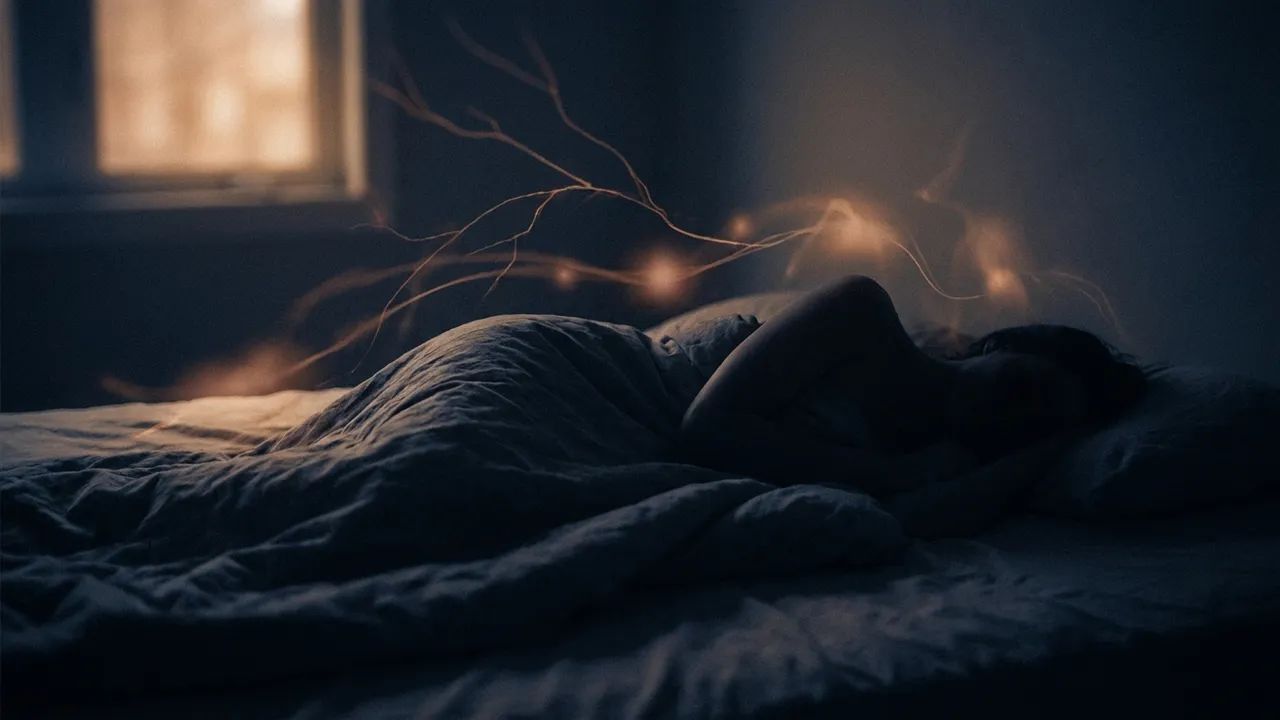
Ever wonder why you get a burst of energy at night just when you want to sleep? Understand nighttime cortisol, circadian rhythm, and how to work with your body’s rhythm instead of fighting it.
The afternoon can feel like walking through wet wool. Your eyes sting. Your shoulders carry the day like grocery bags cutting into your fingers. You promise yourself that tonight will be different. Tonight you will go to bed early. You will become one of those people who simply turns out the light and disappears.
Then night arrives.
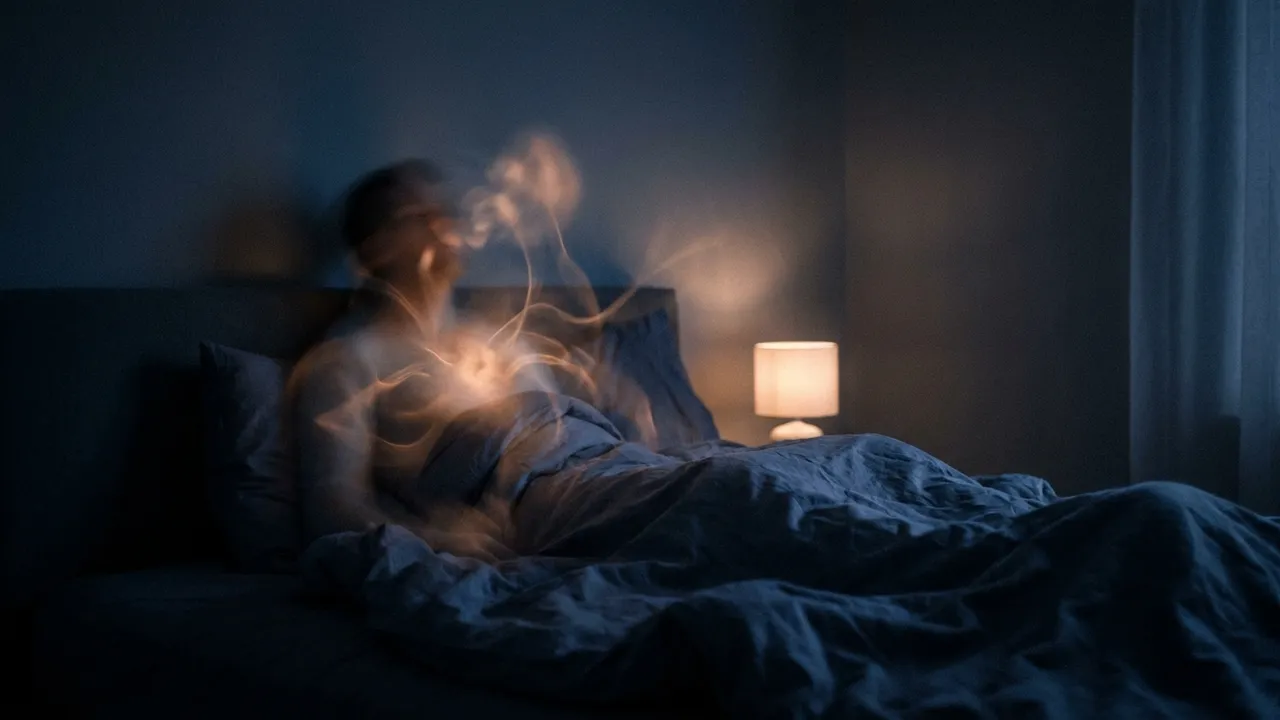
The dishes are quiet in the sink. The hallway has gone blue. You brush your teeth, pull back the blanket, and something in you opens its eyes. A little lamp clicks on inside the skull. Thoughts begin to move with clean shoes. Your body, which could barely answer an email at four o'clock, now wants to reorganize the closet, start a project, send the message, solve the old conversation, make a plan for your life.
It’s often a biological signal—a late-day spike in the energy hormone cortisol, driven by stress, evening light, or a misaligned body clock.
This frustrating paradox isn't a personal failing. The good news is that you can learn to work with this energy, not just fight it, to find your way to rest.
Tired All Day, but Suddenly Wired for Sound at Bedtime?
Asking From the Edge of the Bed
If you have searched "why do i get a burst of energy at night," you are probably not asking out of curiosity. You are asking from the edge of the bed. You are tired enough to ache, but not sleepy enough to surrender. You can't sleep, feel wide awake, and the contradiction starts to feel cruel.
Not Insomnia, Not Laziness
This is the particular frustration of being out of sync with yourself. It is not simple insomnia. It is not laziness. It is not proof that you secretly function better at midnight. It can feel like your body missed the meeting where the day was supposed to end.
Second Wind, or Revenge Bedtime Energy
Some people call it a second wind at bedtime. Some call it revenge bedtime energy, as if the self has been waiting all day for one unsupervised hour. Sometimes it feels creative. Sometimes it feels almost electric. But beneath the sudden brightness, there is often a body trying to regulate stress, timing, light, and demand.
The good news is that this pattern makes sense. And what makes sense can be met more gently.
The Science of Your 'Second Wind': Meet Nighttime Cortisol
Your body keeps time in chemicals. One of the main timekeepers is cortisol, a hormone often flattened into the word "stress," though it does more than that. Cortisol helps you wake up, mobilize energy, respond to pressure, and stay alert when something needs your attention. In a steady circadian rhythm, cortisol rises in the early morning, helping pull you out of sleep. It should gradually lower through the day, making room at night for melatonin, the hormone that helps signal darkness and sleep.
Morning Cortisol, Evening Melatonin
Morning cortisol says: open the curtains. Evening melatonin says: lower the lamps.
When the Body Won't Follow the Script
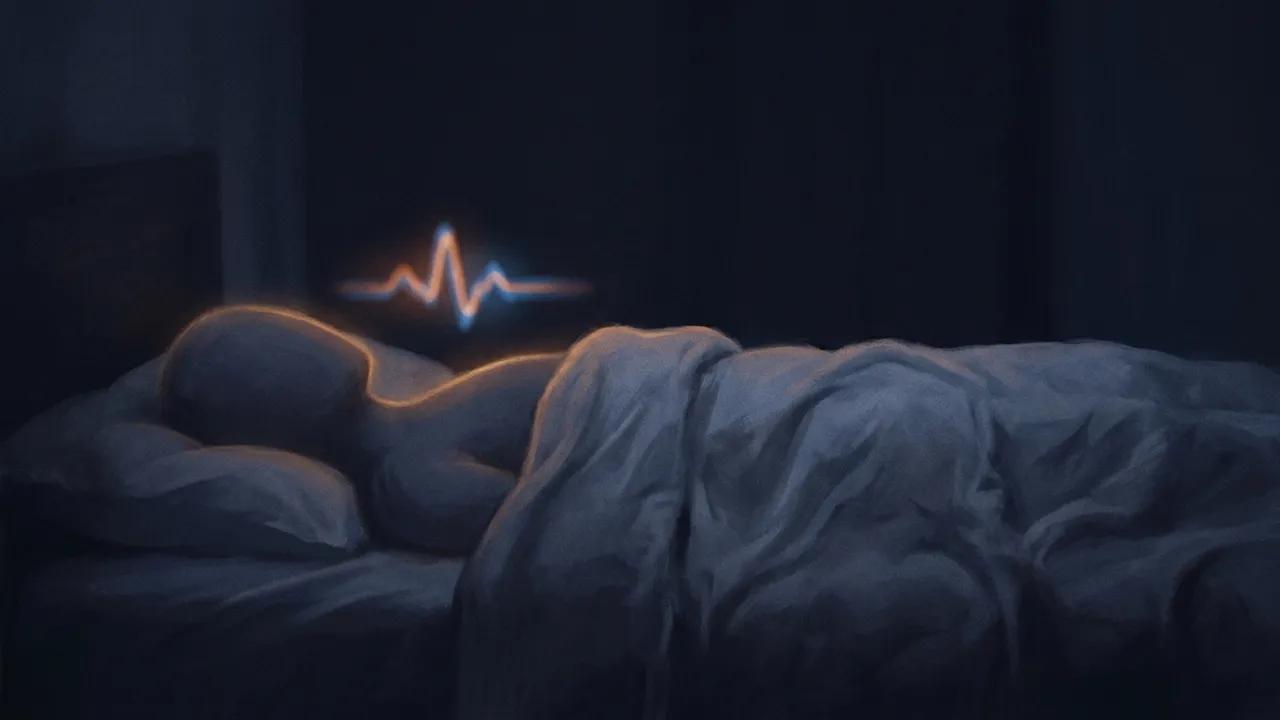
But the body does not always follow the script. The Hypothalamic-Pituitary-Adrenal Axis, or HPA axis, is the system that helps manage stress signals between your brain and body. When your HPA axis stays activated late into the day, cortisol may remain higher than you want it to be. A cortisol spike at night can feel like a sudden burst of energy before bed: clear thoughts, restless limbs, a bright pulse in the chest, an odd conviction that now is the time to do everything.
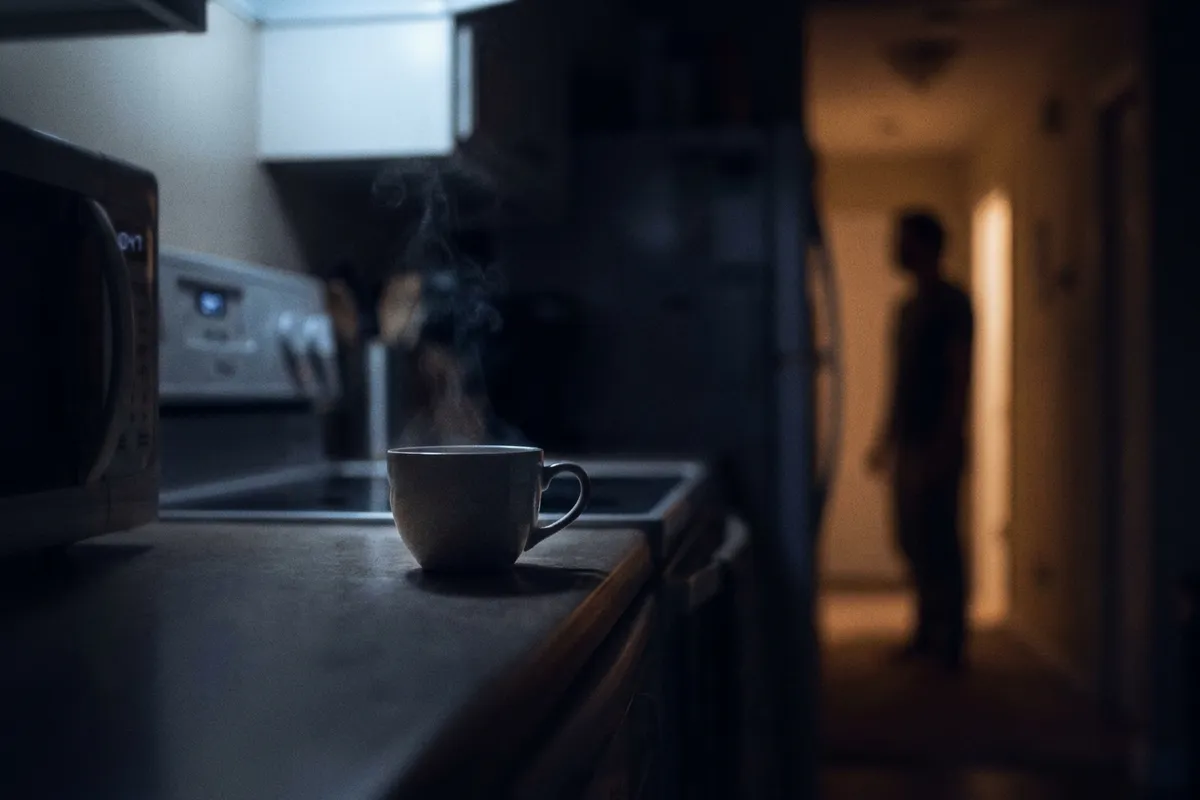
Chronic stress can do this. So can late-day caffeine, even if you swear coffee does not affect you. Caffeine can linger for hours, like a guest who keeps talking at the door. Intense evening exercise can also raise alertness in some bodies, especially if it happens close to bed — a finding confirmed in a meta-analysis published in Sports Medicine (Stutz et al., 2019). Bright screens, overhead lights, emotionally charged conversations, work messages, and the blue-white glow of the kitchen at 10:47 p.m. can all tell the brain that the day is not finished — a Harvard study in PNAS found that evening light-emitting screens suppressed melatonin and delayed the circadian clock.
Are You a Night Owl, or Just Wired?
This is different from being a natural night owl. Your sleep chronotype is your body's preferred timing for alertness and sleep. Some people truly lean later. Delayed Sleep Phase Syndrome, or DSPS, is a more pronounced circadian rhythm delay, where your body's sleep window is shifted late enough to interfere with ordinary work, school, or family schedules. If you have always become most alive after midnight and feel awful with early mornings, chronotype or DSPS may be part of the story.
But many people are not simply night owls. They are tired people with a nervous system that gets loud when the house gets quiet.
Why Fighting Your Energy Only Makes It Worse
There is a particular kind of panic that comes when sleep does not arrive on command. You lie still and try to perform rest. Your face softens. Your breathing becomes deliberate. You tell yourself not to think, which is a reliable way to begin thinking with great intensity.
The Clock Becomes a Small Enemy
The clock becomes a small enemy. Each glance adds arithmetic. If I fall asleep now, I can still get six hours. Now five and a half. Now tomorrow is ruined. The body hears this as danger, not discipline.
When you fight a cortisol-fueled energy spike, you often feed it. The mind says, sleep now, sleep now, sleep now. The body hears, something is wrong, stay alert. More stress can mean more cortisol. The vagus nerve, which helps your body move toward calm and recovery, does not respond well to being shouted at from inside your own head. It responds better to cues of safety: warmth, slowness, repetition, a voice that does not demand.
Why Forcing Sleep Backfires
This is why forcing sleep so often backfires. Sleep is not a door you can shoulder open. It is more like an animal that comes closer when the room is quiet and you stop staring.
If your mind becomes especially busy at night, you may recognize the loops described in why you can't shut your brain off at night. The default mode network, a set of brain regions that lights up when you are not focused on an external task, can become very active in the dark. It sorts memory, identity, regrets, unfinished plans. At midnight, it can turn a stray comment from Tuesday into a courtroom drama.
When the Second Wind Becomes a Weather System
So the problem is not just the energy. It is the relationship to the energy. When you treat it as an intruder, you brace. When you brace, the body believes the night contains a threat. And then the second wind becomes a weather system.
You do not have to like it. You do not have to pretend it is convenient. But you can stop making it prove itself.
A New Approach: Channel That Energy Into a Closing Ritual
The gentler move is to reframe the burst. Not as failure. Not as proof that sleep is impossible. A cue.
A Low Bank for the River
If energy arrives at night, it may be asking for a place to go. Not a screen. Not a work sprint. Not a three-hour excavation of your future. A quiet channel. A low bank for the river.
A Closing Ceremony for the Day
This is where a wind-down routine becomes more than a wellness phrase. A real wind-down routine is not a list of perfect habits performed by a perfect person in linen. It is a closing ceremony for the day. It tells the body, over and over, we are not beginning something now. We are ending something.
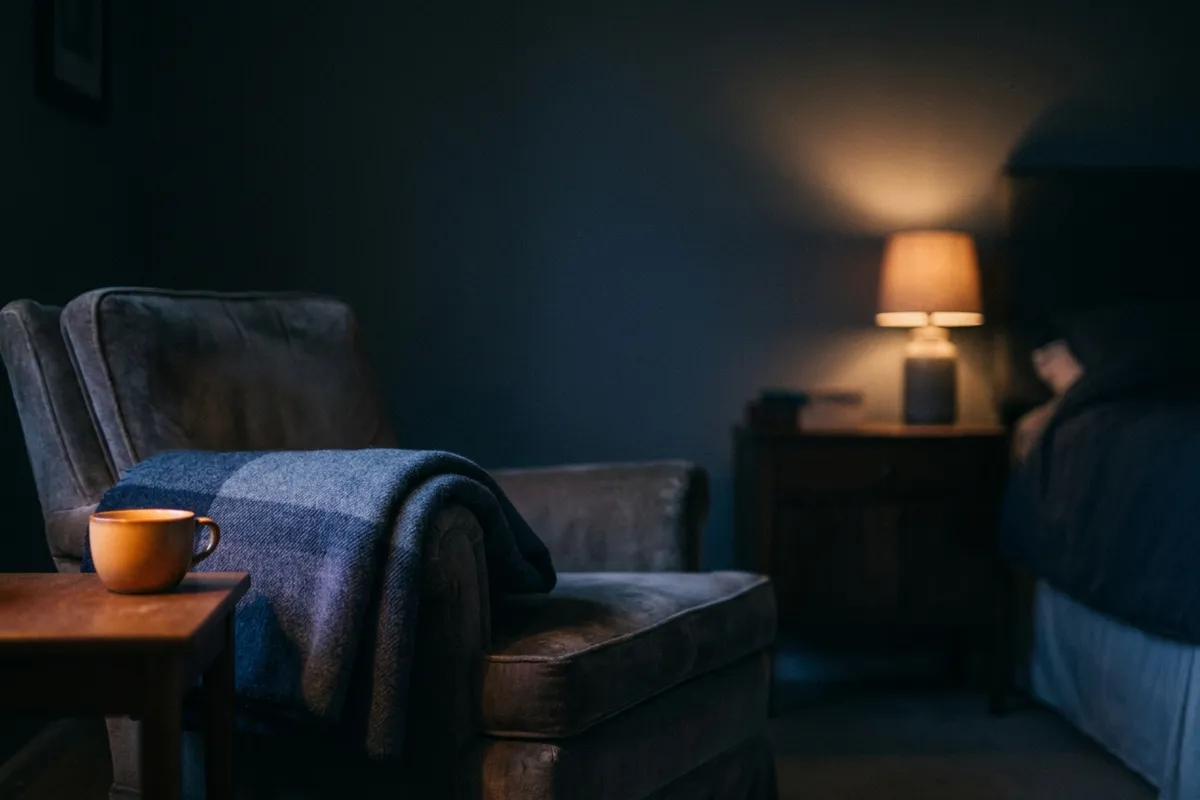
Ritual works because the nervous system learns through repetition. The same small sequence, done in the same gentle order, becomes legible. Your brain begins to associate the steps with descent. Dim the lights. Put the cup in the sink. Fold the blanket over the chair. Let the room become less interesting. Let the day have a shoreline.
Give the Energy the Right Assignment
This matters because late-night energy often becomes dangerous only when it is given the wrong assignment. If you hand it your phone, it will scroll. If you hand it your work inbox, it will hunt. If you hand it a painful memory, it will polish the edges until they shine. But if you hand it a soft, finite task, it can spend itself without becoming a blaze.
A closing ritual does not force sleep. It prepares the conditions where sleep can return. It gives your body something to do besides argue. The ritual says: there is no emergency here. There is only a body, a room, a night, and a way through.
We wrote more about this kind of patterned tenderness in on ritual and rhythm, because rhythm is one of the old languages of the body. Babies know it. Animals know it. Tired adults forget, then remember.
Your second wind does not need to be destroyed. It needs to be led home.
How to Ride the Wave of Your Second Wind
Begin With Acceptance, Not Resignation
When you feel the midnight electricity arrive, begin with acceptance. This is not the same as resignation. You are not saying, fine, I will never sleep. You are saying, this is what is happening in my body right now. The energy is here. I do not need to turn it into a fight.
You might even name it plainly: cortisol, maybe. Stress, maybe. A late circadian rhythm, maybe. A body that has been holding itself together all day and is finally releasing its grip. Naming is not magic, but it can lower the temperature. The brain likes a map.
Give the Energy a Quiet Task
Then give the energy a quiet task. Not an open-ended task. Not something with a glowing rectangle or a possible rabbit hole. Something small enough to end.
Try this as a short sequence, not a self-improvement project: 1. Accept the wave without judging it. Sit on the edge of the bed, feel your feet on the floor, and say, "My body is alert right now." 2. Spend the energy on one quiet thing: tidy the top of the dresser, pack your bag for tomorrow, put clothes in the hamper, or do five minutes of slow stretching with the lights low. 3. Follow immediately with a clear sleep signal: change into pajamas, sip herbal tea, wash your face in warm water, turn on a calming audio experience, or pull the blanket up in the same way each night.
The order matters. First, stop wrestling. Then, discharge the extra charge without feeding it. Then, offer the body a recognizable signal.
A Landing Strip for Leftover Momentum
Light is part of the signal. Lower it early if you can. Darkness helps melatonin rise. Even one bright bathroom mirror can feel like noon to a sensitive brain. Sound is part of the signal too. A familiar voice, a soft cadence, the absence of sharp content. Your body listens to the whole room.
If you are wondering how to calm down when you have energy at night, the answer may not be to become perfectly still right away. For some people, stillness comes after a small ritual of movement. A nervous system with leftover momentum may need a landing strip.
This is especially true if your day gave you no real transition. If you worked until the last minute, parented until the last dish, studied until your eyes blurred, or spent all evening answering everyone else's needs, your body may claim the night as the first unscheduled space. No wonder it lights up. It is not trying to sabotage you. It is trying to exist.
The skill is learning to let it exist without letting it take over.
A Ritual to Guide Your Energy Toward Rest
Why 'Just Meditate' Can Feel Insulting
There is a reason "just meditate" can feel almost insulting when you are wired at night but tired in the morning. The instruction asks you to leap from static to silence. From a body full of signals to a blank white room. Many tired people do not need another performance of calm. They need companionship through the last bend of the day.
A Ritual With a Beginning, a Middle, and an End
A good nighttime ritual has a beginning, a middle, and an end. It does not ask you to stare into a screen. It does not flood you with choices. It does not treat sleeplessness like a flaw in your character. It meets you where you are: on the floor beside the bed, in yesterday's T-shirt, with a mind still flickering.
This is the shape Tonight is built around. Not as another meditation app. Not as a library of productivity tools wearing moonlight colors. Tonight is an AI-guided evening ritual with carefully crafted voices, shaped by humans for warmth, made to be screen-free and low-light, so your body is not pulled back into the day while you are trying to leave it.
The point is not to knock you out. The point is to give your wayward energy a path. A voice can mark the threshold: the day is done. A sequence can hold you when your own thoughts feel too slippery to hold themselves. A familiar ritual can help your nervous system recognize that nothing more is required from you now.
If your nights often become loud inside, you may also relate to when the brain is too active to sleep. That active brain is not your enemy. It is part of you trying to finish, protect, remember, prepare. The ritual does not shame it. It gives it a softer job.
Over time, this is how a pattern can change. Not by one heroic night of perfect sleep, but by many small evenings where the body learns the same message. We are closing. We are safe enough. We can set the load down.
When a Second Wind Deserves Extra Care
Of course, some sleep patterns deserve extra care. If your second wind is severe, long-standing, or paired with extreme morning exhaustion, it may be worth speaking with a clinician or sleep specialist, especially if Delayed Sleep Phase Syndrome seems possible. Support can include light timing, melatonin timing, behavioral changes, and medical guidance. Tenderness and science can sit at the same table.
For many people, though, the first step is simpler. Stop meeting nighttime energy with panic. Stop turning the bed into a courtroom. Build a small closing ritual and repeat it until the body begins to trust the path.
The night does not need you to conquer it. It asks, more quietly, to be entered with care.
If you want help finding that path, you can join the Tonight waitlist. Tonight is an AI-guided evening ritual with carefully crafted voices, shaped by humans for warmth, screen-free and low-light, made for the hour when you are tired but somehow still awake. Not another meditation app. Just a softer way to end the day.
A burst of energy at night often comes from a late spike in cortisol, the hormone that helps you feel alert. After a demanding day, stress, evening light, or a misaligned body clock can keep cortisol higher than it should be at bedtime, leaving you wired just as you hope to rest. It is usually a sign of timing and stress, not a personal failing.
What causes a second wind at bedtime?
A second wind at bedtime tends to appear when your nervous system is still running a daytime alertness program after the house finally goes quiet. Caffeine, late exercise, bright screens, and emotionally charged evenings can all tell the brain that the day is not finished. The result is a body that feels exhausted underneath and oddly electric on top.
How do I calm down when I have energy at night?
Calming a wired body is less about forcing stillness and more about offering cues of safety. Lowering the lights early, slowing down, and following the same gentle closing sequence each night can help the body recognize that nothing more is required. For some people, a small quiet task before bed gives leftover energy somewhere to land.
Is a burst of energy at night the same as being a night owl?
Not always. A true night owl has a sleep chronotype that naturally leans later, while many people who feel wired at night are simply tired people whose nervous system gets loud when things go quiet. If you have always felt most alive after midnight and struggle painfully with early mornings, a delayed body clock may be part of the story.
What is Tonight?
Tonight is a digital sleep ritual that helps you clear your mind and decompress. Through structured reflection and personalized, synthetic audio guidance, we provide a quiet, private space to help you find closure before you sleep. Private, ephemeral, and designed to help you rest.
The quiet list
Notes for a quieter mind.
Join the newsletter for occasional, thoughtful notes on sleep, emotional regulation, and building a calmer life. We only write when there’s something genuinely worth your while.