Heartbeat Loud When Trying to Sleep: Listening to the Drum in Your Chest
10 min read
In the hush after lights out, heartbeat loud when trying to sleep can swallow the room. This essay wanders from dread toward a softer way of hearing the body's small drum.
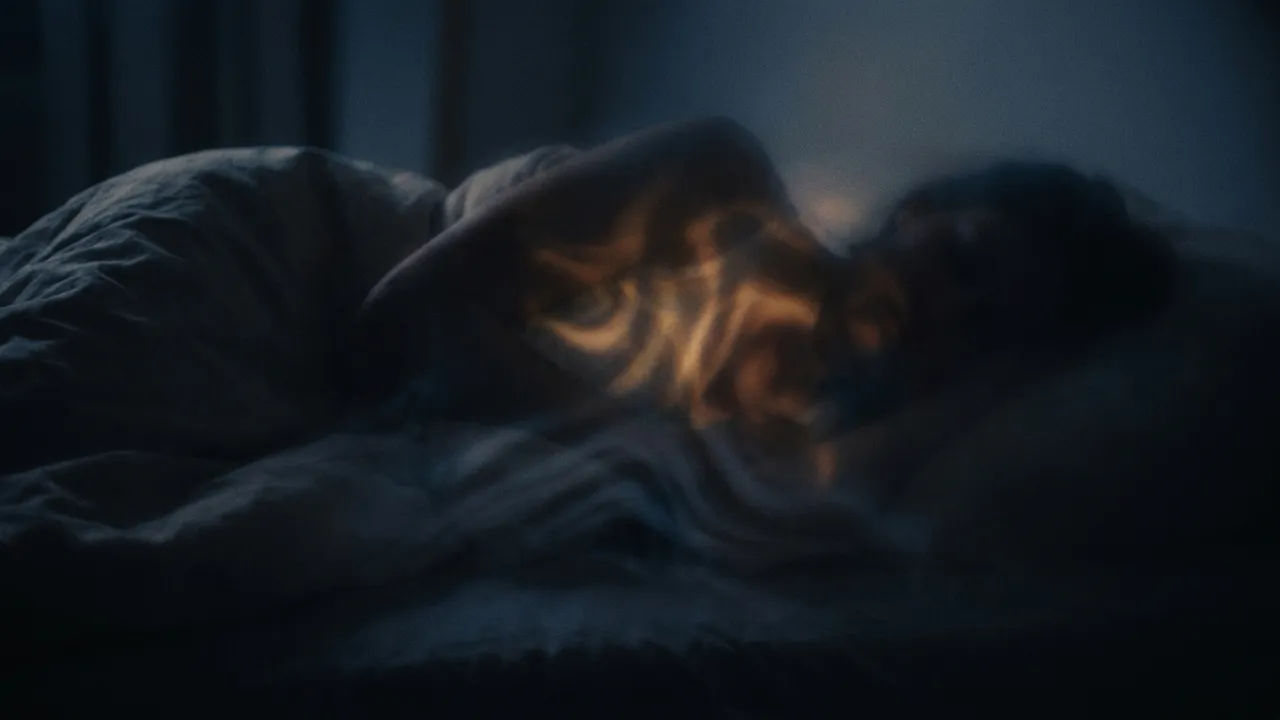
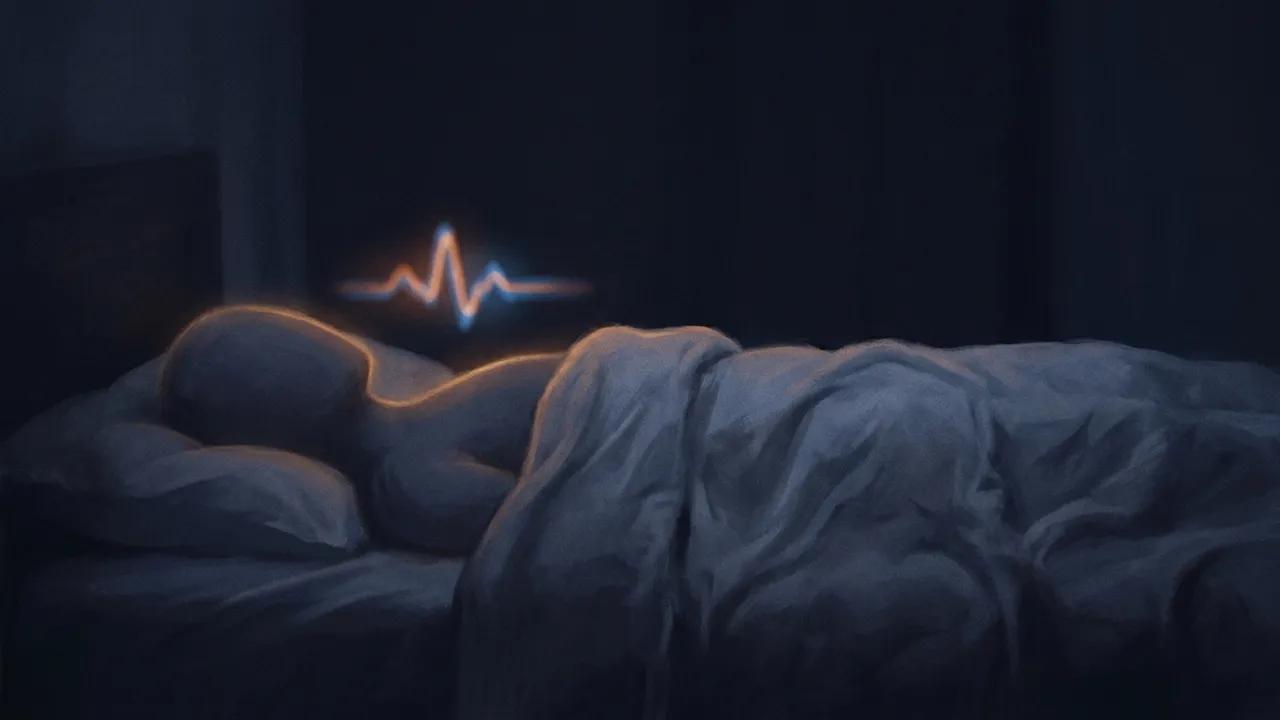
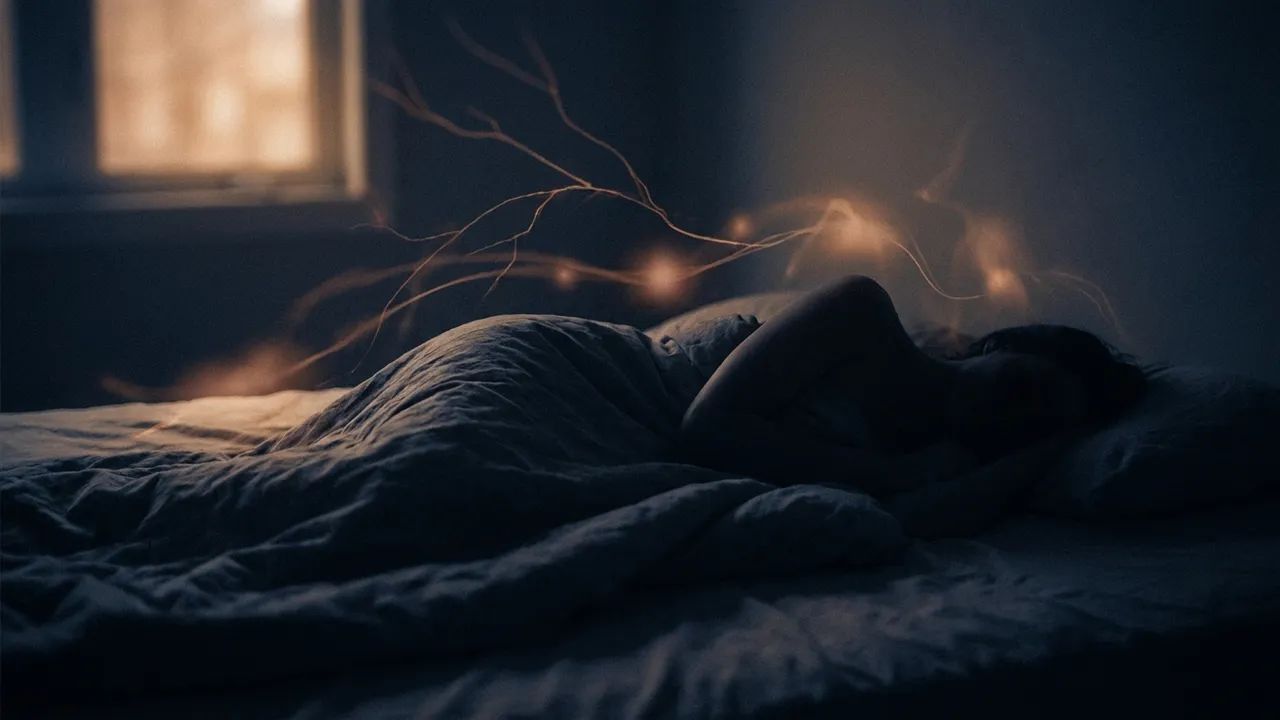
You notice it first like a moth in the wall: heartbeat loud when trying to sleep. The bedframe has settled, the neighbor’s television has drowned in its own blue light, the hum of the refrigerator feels miles away—and then there it is, steady as a tap against glass. You didn’t ask for it. You didn’t invite it. But quiet, like water, fills any shape it’s given; it pours into the thinnest places until even the air seems to listen. In that stillness your chest becomes a chamber, your pillow a stethoscope, and the drum that kept you all day without thanks is suddenly the loudest sound in the room.
There’s a strange shame in hearing your own machinery. As if having a beating heart were a secret you failed to hide. You shift your head and the rhythm follows, amplified through cotton, into bone. The syllables of it walk the hall like someone pacing. And the pacing becomes a message, and the message resolves, as messages do at night, into a warning you can’t quite read but still obey. Stay awake, it says. Watch.
The body isn’t yelling; it’s just the only voice left in the dark.
But a rhythm is rarely an indictment. It is an inventory. It is the world’s oldest list: thud, thud, thud. Not because the body is shouting, but because the quiet has become the right size to hold it.
When the Room Becomes a Stethoscope
When the Pulse Moves In
On some nights the pulse is a visitor who clears its throat and leaves. On others it moves in, hangs its coat, and drops its keys in the bowl. The cadence lives in your neck, then your ear, then your fingertips. If you press those fingertips to your wrist, you can pretend you’re the one taking attendance, but the body knows what role it’s playing. You are being taken to task by the thing that proves you are alive.
What Changes When You Lie Down
You try logic. Lying down changes the geometry of blood—a shift in circulatory distribution that physiology textbooks describe in calm diagrams. Gravity is different when you are horizontal; the head becomes a basin, the veins a set of small rivers calmed but louder against the shoreline of skin. All day, your attention was a storm—emails, crosswalks, conversations about nothing at all. Of course you didn’t hear the river in a storm. But storms pass, and rivers keep on saying what rivers say.
The Ear, That Gullible Conch
The ear, that gullible conch, carries other truths. Any rhythm touching bone becomes a concert. There is cartilage at work, a thin lake of fluid, a cave where tiny bones tilt toward song. No wonder the body makes itself the only orchestra in town when the town goes quiet.
The Spiral of Noticing and Fearing
A Thought About the Thought About the Pulse
But then the noticing collects its own weather. First, a pulse. Then a thought about the pulse. Then a thought about the thought about the pulse—glittering ringlets breeding in the air, every one a mirror. You know how this works. You’ve read about feedback loops and sympathetic arousal—what Clark called a cognitive approach to panic—and all those careful terms that try, very gently, to name the way the mind grabs a sound and clangs it against the pot, a child marching through the apartment with two spoons and nowhere to go. Attention turns the dial; fear adds a speaker.
Night Is an Amplifier
Night is an amplifier even for light. A phone screen hardens into a lighthouse. The blink of the router looks accusatory. So it follows that a beat, any beat, becomes a bassline. What we do not meet in daylight often meets us after dark. The unreturned text, the question with no answer, the decision we have flip-booked all day until it became a blur. The body has its archive too. Sometimes it opens the drawer the minute we lie down.
The Room Without Witnesses
There is also this: the room at night is bereft of witnesses. You are the only one listening to you. That solitude is a freedom and a danger. Without a second voice to split the echo, the mind takes everything it hears—heart, breath, house-heat—and asks whether it should be worried. Worry is, after all, a form of care. It is the mind-sparrow hopping from sill to sill, keeping watch.
If you have read about the body’s vigilance, you may have seen the graphs and words that explain how long-ago alarms can keep ringing in our ribs. We carry doorways inside us that expect a gust of wind. We carry a drumline that learned once to be very loud. The night rehearses what the day refuses to stage. And when the house goes still, the old rehearsals return with their drums well-tuned. (There’s more, if you want the science of it, in the body’s own archive: the watchful system that hums whether or not you ask it to.)
What the Body Remembers at Night
The Drum You Learned as a Child
There are gentler names for the drum. Some people call it the metronome, the clock, the ferry that never turns around. In childhood you might have learned to press an ear to a parent’s chest and wait, as if the answer to a question you couldn’t ask lived in the soft percussion behind their ribs. That rhythm told you, in a language without nouns, we are here. We are here.
The Detective and the Suspect
As adults, we don’t often put our ears to anything except a pillow. We don’t lend our full faces to another body and entrust ourselves to its rhythm. And so when our own speaks up, we worry that it is speaking against us. That it is the detective, and we are the suspect, and the flashing red light above the table means trouble.
The Drum That Kept Tempo All Day
All day the drum kept tempo for errands and sentences. It opened doors you didn’t notice opening. It fit winters into spring, walked you up a flight of stairs, steadied your finger on a thread. It delivered sugar and oxygen like letters to the right addresses. It missed a few houses and no one filed a complaint. At night, it might want to be noticed—no, not in a grand way; not a solo; just the small courtesy of an aisle seat.
You are not a malfunction, but a metronome inside a room too still.
The mind, given a beat, will still sometimes score a movie. And the movie tends toward suspense. This is why a racing mind so easily braids itself through the chest, why a plotline written on the ceiling at 2 a.m. will seem elegant and dangerous at once. If you need solidarity there, there are others awake in their rooms tracing similar spirals, asking why the brain won’t shut off when the lights do. Knowing that the club exists doesn’t turn down the volume, but it can make the bassline feel less like a threat and more like a message passed along under the table, a companion’s foot tapping the same anxious song.
The Ear Against the Pillow
The Pillow Is Not Neutral
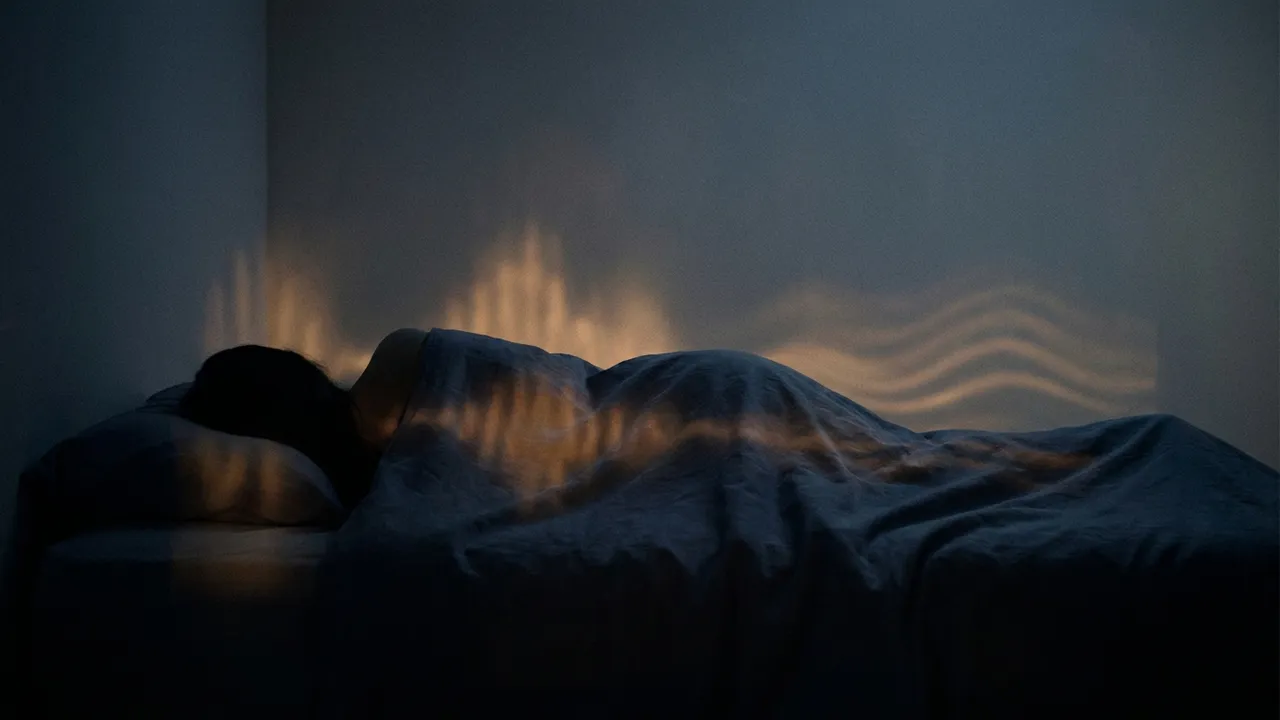
A pillow is not neutral. It carries the day in it—your hair, the smell of a room, a little of the city’s breath. Press your ear and the drum spills upward, its tide meeting the fabric. Your jawbone, tender hinge of speech, becomes a harbor. The sound enters there and swells.
Turning to Map the Sound
Some nights you try to appease it: new pillow, cold side, turned-around, angle of neck altered just so. You shuffle into a new position like changing the station. And for a few beats the song fades. But the ear still wants a handrail. If it can’t have one, it will invent one; the heart obliges.
It is human to reach for meaning. To map coincidence into cause. You turn to your back—louder. You turn to your side—quieter. A chart blooms in the mind like moss. This is the slope of it: as soon as you decide a sound will be louder in one posture and quieter in another, the mind climbs the ladder and starts painting signs. No shame in this. We are any-animal with a nervous system, we notice patter and pattern and we build little altars to them without even wanting to.
When Meaning Becomes a Softening
But meaning can be a softening, too. The ear can learn new ways to hold the drum. The night can become a field where the sound is not a fence but wind in the grass, and you are tall enough to see over it.
Learning the Drum
Lean Against the Knock
Imagine, for a moment, that the heart is a hand knocking on a door it has always owned. Imagine that the quiet is not a court but a foyer. Instead of arguing with the knock—Go away, not now, wrong house—what if you simply walked to the door and leaned against it from the other side, palm to palm through wood, and felt the warmth of it decrease by degrees.
Let the Beat Be Specific
This is not a trick; there is no trick. It is a way of being with the fact of your animal, which is an old and lovely animal, built of tides and time. If you can, let the beat be specific: not a boom but a brush, not a siren but a tap. Is it high or low? Closer to the left ear or the right? Does it change when the lungs flower and fold? You aren’t collecting data to prove a point. You’re letting the edges blur, letting the sound become a place you can walk around in without language.
If this is hard, so be it. The night is not a test. A rhythm may be just a rhythm, and some nights you will want nothing to do with it. Other nights, perhaps, the drum will be steady and forgiving, like a person humming while folding shirts. You might return to the smallest parts of things: the corner of a sheet, the whisper of air under the door, the particular shade of dark inside the glass of water on your nightstand. The world will not punish you for resting your gaze on details.
Listening Outward and Inward at Once
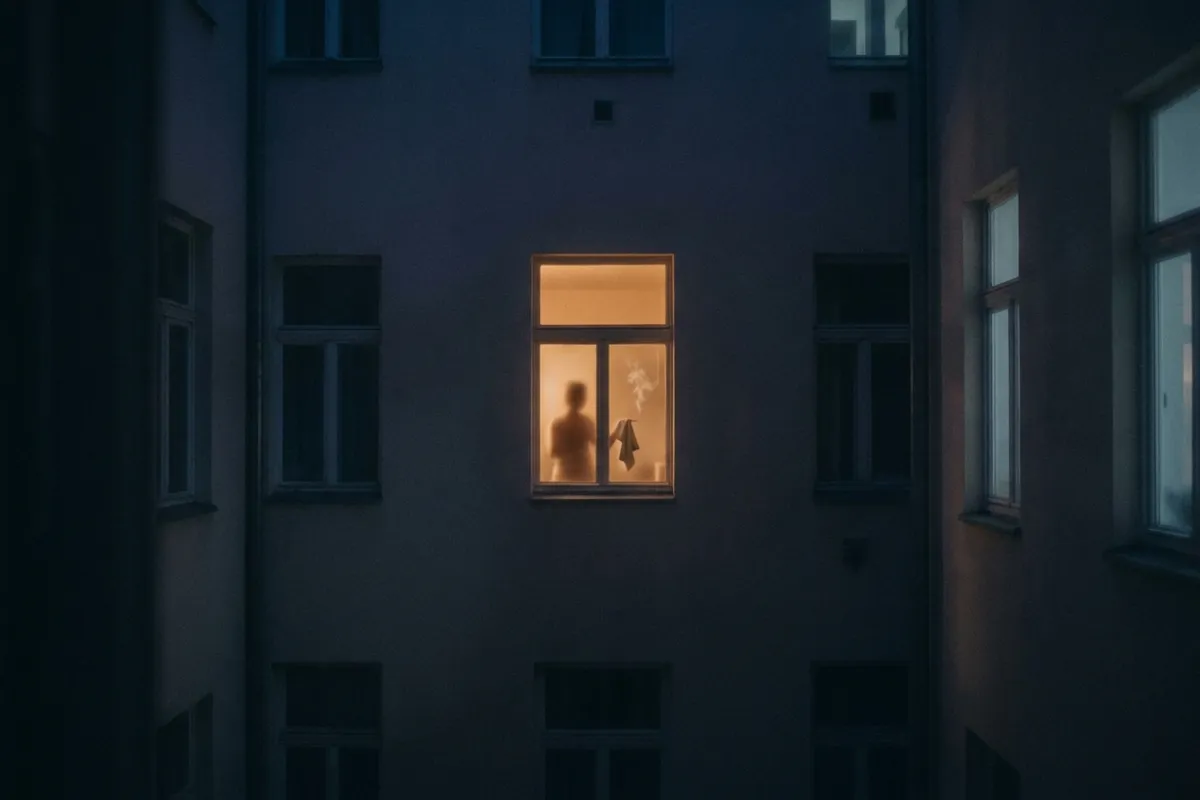
There will be nights when a beat in the head sets off fireworks in the mind. On those nights you might remember that you are a room in a house in a city; that beyond your window, the late bus breathes; that in the building across the way, someone burns toast and waves at the smoke alarm with a dish towel; that a dog is awake and listening to you the way your ear listens to you now. To listen outward and inward at once is a way of returning to scale. Not smaller, not larger. True-sized.
Sometimes, the old alarms wake and reach for you. That is their job. If the body has learned to keep you ready, it will keep you ready longer than you require, like a friend who insists on walking you home even when the street is bright. You don’t have to fire that friend. You can thank them, and you can let them do their rounds while you settle. The street is bright enough. The evening is over. You can go upstairs now.
A Note in the Key of Kindness
The Posture You Take Toward It
All language is approximate, and you can find better words for all of this if you want to. You can call it vigilance, you can call it old habit, you can call it counting. You can assign it to the heart or to the mind or to the page turning inside the ear. The names matter less than the posture you take toward them. A hard stance hardens what it faces. A soft stance, like breath on a window, blurs the view until the outline gentles.
If you find yourself, at some hour that is nobody’s hour, conducting the drum with two fingers because you have tried every other argument, you are not alone. A thousand rooms across the city tap the same pattern into their linen. That doesn’t fix anything, but it loosens the floorboards. The house lets you through.
A Warm Voice in the Dark
There are times, too, when a warm voice in the dark — one that does not pretend to be a cure or a clinic — can make the room feel less strict. Tonight was made to sit with you in those minutes, a companion who knows the difference between fixing and keeping watch, who will simply keep you company until your own drum tucks itself back into the rest of the band.
When the Room Forgets Itself
What you do not have to be is heroic about the night. You don’t have to wrestle the drum into quiet, or earn daylight by out-staring the ceiling. You can let the rhythm be exactly as it is for a while—ordinary, even—to see whether it grows bored with your lack of argument and wanders off to inspect the corners of the house instead. As if all this time, the sound wasn’t demanding anything from you but permission to pass through.
There’s a moment in every night when the room forgets itself. The clock stutters; the curtain breathes; even the little lights consent to be nothing but their small colored selves. The beat drifts into the dark like a boat slipping its rope. You don’t follow it; you don’t hold it back. It goes where boats go when the water goes smooth. And the dark, finally, is wide enough to hold both of you.
Frequently asked questions
Why is my heartbeat so loud when I'm trying to sleep?
A heartbeat loud when trying to sleep is usually less about the heart changing and more about the room going still. When the day's noise falls away, there is little left to mask the steady tap of your own pulse, and a chest against a pillow can carry that rhythm into the bone of the jaw and ear. The quiet has simply become the right size to hold a sound that was there all along.
Is it normal to hear your own heartbeat at night?
Noticing your heartbeat in the hush after lights out is a common experience, especially on nights when the mind is already alert and listening for something. It tends to feel louder because attention turns the dial and a quiet room offers nothing to compete with it. If the pounding feels new, persistent, or comes with symptoms that worry you, it is always reasonable to mention it to a doctor for reassurance.
How can I stop focusing on my heartbeat when trying to sleep?
Trying to force the awareness away often makes it brighter, because the effort itself reads as urgency. Many people find it gentler to let the beat be specific and ordinary, to widen their attention to other small sounds in the house, and to follow a slow, unhurried breath rather than chasing sleep. The aim is not to silence the drum but to loosen your grip on it until it can pass through.
Why does my heartbeat feel louder when I lie down?
Lying down changes the geometry of blood, so the body's quiet rivers can feel a little closer to the surface and easier to hear against the skin. Pressing an ear to a pillow adds to this, turning the bedding into a kind of harbor that gathers and swells the sound. This shift in posture is a familiar reason a heartbeat loud when trying to sleep seems to arrive the moment your head touches the pillow.
What is Tonight?
Tonight is a digital sleep ritual that helps you clear your mind and decompress. Through structured reflection and personalized, synthetic audio guidance, we provide a quiet, private space to help you find closure before you sleep. Private, ephemeral, and designed to help you rest.
The quiet list
Notes for a quieter mind.
Join the newsletter for occasional, thoughtful notes on sleep, emotional regulation, and building a calmer life. We only write when there’s something genuinely worth your while.