When partner's breathing keeps me awake, the dark grows crowded. You love the body beside you, and still the smallest sound becomes a metronome against your ribs.
It wasn't always like this. Once, you curled into the gentle rise and fall as if it were the tide, a lullaby with salt on it, a proof of life you could trust without thinking. But lately the sound has edges. It finds the tender parts of your attention and taps.
You lie there feeling rude for noticing, then ruder for resenting it, and then the guilt comes, the hot kind that has no place to go. You listen harder. The room makes its other noises: the old vent muttering, a streetlight hum seeping through the blinds, the house settling into its bones. In that orchestra, your beloved breath is the soloist who won’t step back from the microphone.
You think of the morning face you adore, the kindness there, the easy cups of coffee, the way their hand finds yours under the table without checking first. But this isn’t morning.
Some nights, partner's breathing keeps me awake.
The night has a way of sharpening what the day blurs. Even our kindnesses.
When Your Partner's Breathing Keeps You Awake
Rehearsals for a Conversation You May Never Have
You try phrases in your head, rehearsals for a conversation you may never have. I’m not mad at you. I’m just restless. It’s not your fault. These sound like apologies asking to be forgiven for existing. You don’t want to be the one who polices the air. You don’t want to become a person who measures their love in decibels.
The Shapes of Breath You Never Noticed
There are shapes to breath you never noticed before—whistle, hitch, soft snore, ocean, chimney. Tonight it is a small saw through soft wood. Then it is a river under ice, coming and going in a wavering ribbon. It is a metronome you didn’t wind. You think I should be able to love this too, to baptize even this friction as intimacy. Another thought elbows in: I just want to sleep. Both are true at once, and it aches to hold them together.
The Choreography of Staying
You consider waking them and then you don’t. You consider the couch and then stay. The choreography of staying, it turns out, is one of the most acrobatic things love asks. You turn your pillow to the cooler side as if that could change the scale of the sound. You practice the old trick of counting backward from a large number. By ninety, you have named five species of clouds you barely remember from school. By eighty-two, you’ve replayed a joke from dinner and found a new reason to wince. By seventy, you want to cry.
The night has its own arithmetic, where what is small becomes large and what is large is suddenly immeasurable.
Permission That Isn't a Resignation Letter
A friend once whispered to you across a heavy brunch that they had started sleeping in separate rooms sometimes, and the relief in their face scared you. It sounded like a kind of giving up, like moving a glass figurine to a higher shelf. You wanted a tutorial for how to keep everything close while keeping your eyes open in the morning. You wanted permission that didn’t feel like a resignation letter to the childhood idea of forever.
The Soft Ethics of Quiet
The Etiquette No One Teaches
There is an etiquette to bed-sound no one teaches. As children we learn about library whispers and church murmurs and the theater hush before the curtains lift. But the bed is another sanctuary entirely, its rules not written on a sign. What is too loud? What is reasonable complaint? Where do you put a boundary that is shaped like air?
Annoyance Is a Weather Report, Not a Verdict
Intimacy loves to claim credit for every sweetness and none of the irritations. But the small irritations are part of the fabric too—sand clinging to beach towels you will shake out together, the dish clink that is always a little louder than you’d like, and breath that moves through a sleeping throat like weather. The morality of it feels slippery: how can you be annoyed at something someone is doing without knowing, without choosing? The answer, if there is one, is that annoyance is not a verdict. It’s a weather report. It tells you about your sky tonight; it doesn’t rewrite the map.
Making Space as an Offering
You can love someone and still wish for a pocket of quiet. You can ask for that pocket not as retreat but as devotion: I want to bring my rested self to you in the morning. I want to be kind to tomorrow—you, me, and the parts of us that ache when they are tired. This is a different grammar of closeness, where making space is an offering.
Love is not silence; it is the promise to listen without shrinking from the truth of what we hear.
Asking Without a Courtroom in Your Tone
There will be nights when you practice asking for what you need without a courtroom in your tone. You will try words like: I’m tender tonight. My ears feel skinned. This is no one’s fault. Can we make the room a little softer? You’ll learn that the question you’re really asking is not about noise at all; it is Can we be on the same side of this problem? Some nights, the answer will arrive in a sleepy nod, a hand offering earplugs you keep in the drawer, a smile you can feel in the dark. Other nights, there will be a flinch. You will weather that together too.
Building the Bubble
A Sound Bubble, Not a Fortress
There is a way to make a sound bubble that is not a fortress. On certain nights, you build a small island for your attention. Nothing dramatic. A throw blanket pulled up over the more sensitive ear. The soft edge of a pillow leaned as a breakwater. Fabric becomes a canopy. You discover that proximity can be filtered without being refused.
Devotions to Tomorrow's Version of You
You remember the door cracked in a childhood bedroom, how the hall light was not the enemy but a guard. You borrow that feeling. A fan humming like distant rain. A low ocean from a phone tucked under the bed, turned down to a private shoreline. Cotton placed like a hush in the outer ear, not to banish the world but to give it a fog bank to sail through. These are not betrayals. They are devotions to the next day’s version of you—the one who will make tea, who will listen well, who will not be startled by the wrong things.
The Dark Is a Magnifying Glass
It helps to watch how your body amplifies at night. The dark is a magnifying glass; it makes the nervous system eager, ears like cupped hands. There are reasons for that — darkness literally heightens the startle reflex, old animal reasons about safety and watchfulness that make every creak read as news. If you want to read more about the way our systems stand sentry after sundown, there’s a gentle essay here, a kind of lantern for that understanding: the science of hyper-vigilance.
A Room Within a Room
The bubble is not an exile. It is a room within a room where you can keep being with the person you chose. You learn to build it without huffing, without the theater of martyrdom. That is part of the etiquette too—resisting the performance of injury when what you need is invention. On rare nights, you will sleep back to back, twin moons in the same sky. On others, you will braid your ankles together and let the sound blur into the theater of rain.
When the Mind Turns the Dial
When the Sound Is Just a Handle
You know the nights when even the neighbor’s cat stepping on a twig would feel like fireworks. The brain makes a setting and sticks with it. The ticker-tape of worries you thought you had filed rises up without invitation, and even a loved one’s breath recruits as percussion in the march. Sometimes it isn’t about the sound at all; the sound is just a handle the mind grabs to hold itself upright.
A Name for That Racing
There is a name for that racing—one many people whisper about, a common spell that breaks just as the sun begins to soften the sky. If you’ve ever wondered why the mind won’t “shut off” when you ask it to, why it becomes a haunted factory exactly at the hour you can’t afford it, you might like this reflection: why you can’t shut your brain off at night. Not a cure, not even a solution, but a companion to the strangeness of it.
The Breath You Can Control
The nights like that, you practice kindness on yourself the way you would on someone you love. You lower your shoulders inside your thoughts. You let the breath you can control—the one inside your own ribs—become a quieter drum. You notice that sometimes the breath beside you begins to harmonize when you stop auditioning it for every role. You do not force. You do not win. You just go on.
A Small Pilgrimage to Another Room
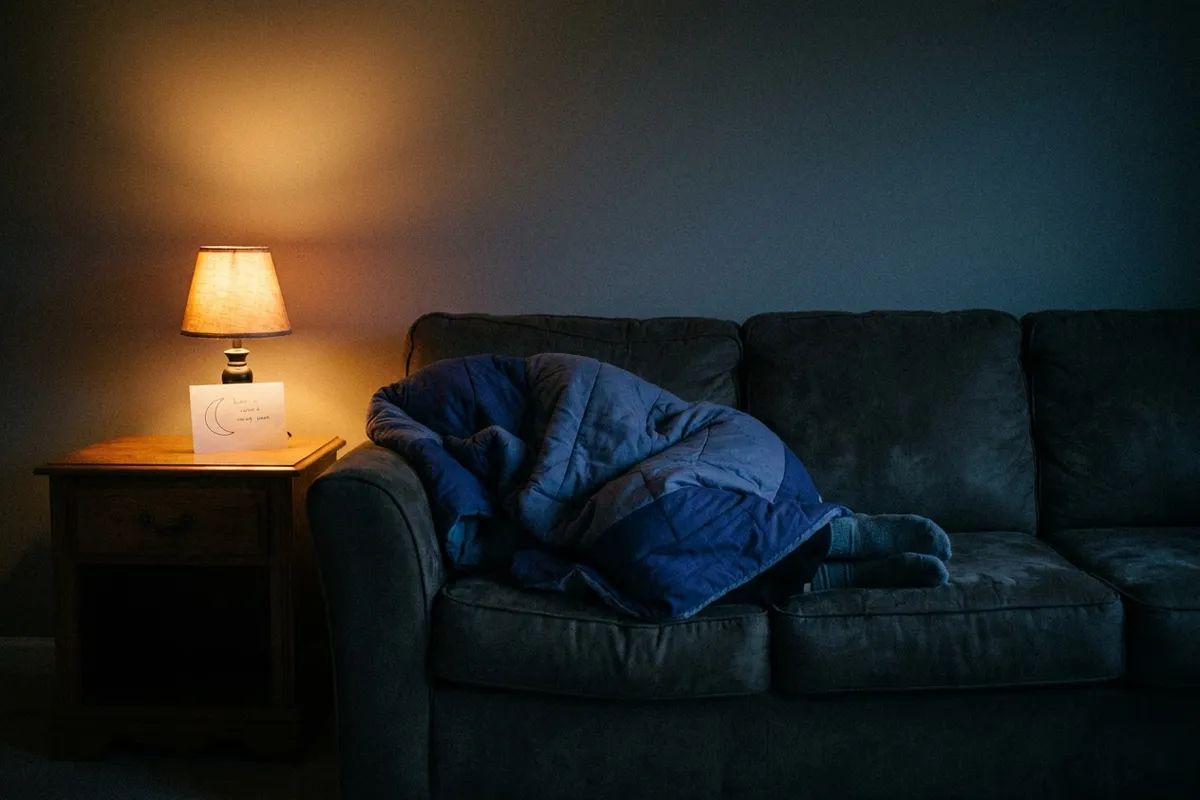
There will be nights when you slip out to the couch and tuck your feet under you like a fox. Not a punishment, not a declaration, just a small pilgrimage to another room where your ears can reset. You leave a note on the nightstand—a silly drawing of the moon, a heart like a single quotation mark. In the morning, you return with pastries, with a kiss to the shoulder, with the simple report: I slept. That word is a sacrament. It is a way back to the day where the measurements are kinder.
A Quiet Pact
Talking About It in Honest Light
It turns out you can talk about it. Not in the middle of the night, perhaps, when every sentence wears teeth, but under afternoon light when the room is honest. You tell the truth the way you’d set a delicate object on the table: careful, visible, free of accusation. I love sleeping next to you. Sometimes the sounds wake me. I’m trying to make a little sound bubble so I can stay close. The response you’re hoping for is not permission but partnership.
A Museum of Small Mercies
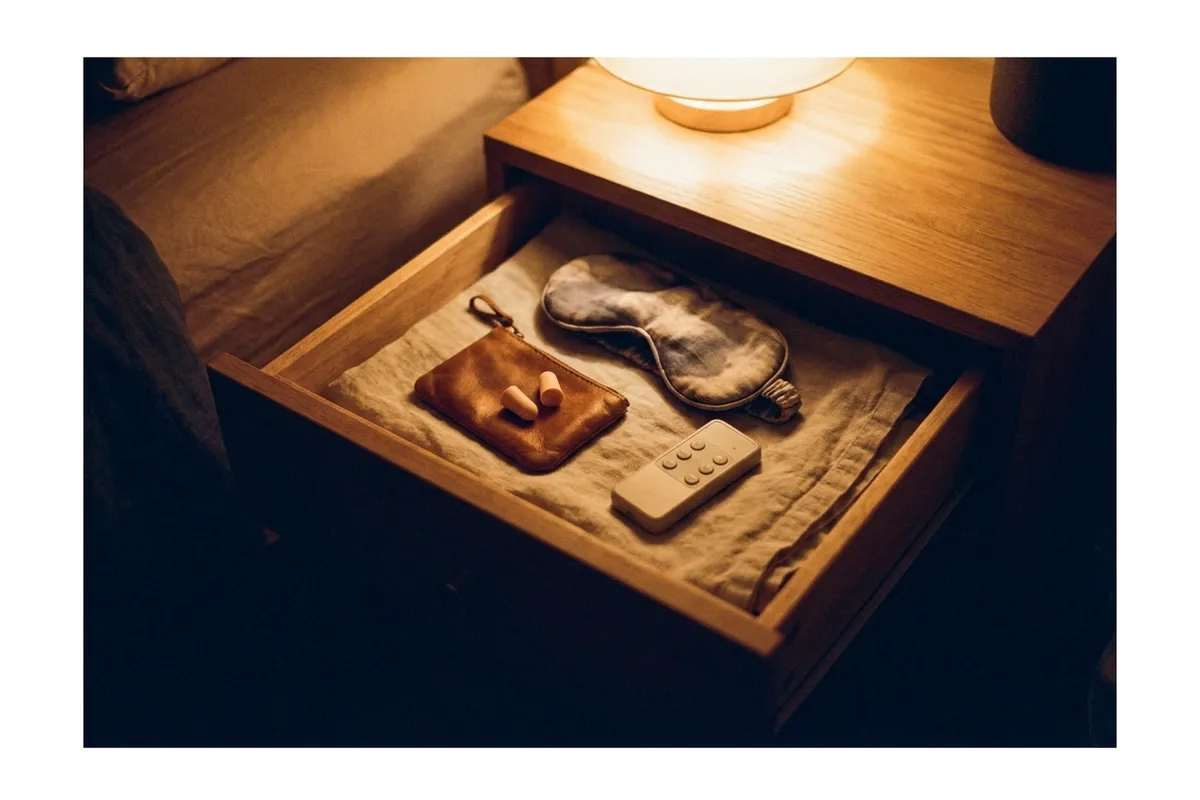
You make a small pact that is less about rules and more about gentleness. A spare quilt lives at the foot of the bed, a talisman of options. A place on the couch is kept open of clutter, a friendly exile if one of you needs to wander. The bedside drawer becomes a museum of small mercies—soft foam, a sleep mask that smells like clean laundry, a fan’s remote. These are not secrets held against each other but promises kept for each other.
The Other Side of the Conversation
You also practice the other side of the conversation, the one where you’re the sleeper and your breath is louder than you meant it to be. There is tenderness here too: the willingness to let your partner reach for their measures without shrinking into shame. No one is the villain. The villain is the idea that love means tolerating what hurts when there is another way.
The Question You Were Never Taught to Ask
And on certain nights, you try something old-fashioned and radical. You ask: How did you sleep? Then you listen to the answer without defending your part in it. This is the etiquette you were never taught. It’s made of pauses, of shared glances, of the common project of being human beside another human with all our unruly animal noises.
You Are Not Alone in This
Somewhere deep in the night’s ravel, you remember you are not alone in this strange task. There are so many beds like yours right now—someone’s elbow flung across a pillow like a flag, someone listening to the tide of another’s lungs and wondering how to make the night make sense. If you like having a warm voice in the dark, a hand on the bannister as you move through the hours, Tonight can sit with you awhile, not with answers but with calm.
The Light Behind the Curtain
The Ordinary Holiness of Morning
Morning eventually reveals the ordinary holiness of what you’ve built. Two mugs breathing steam. The smudge of a dream you almost caught. The bed a little wild, evidence of sleep as a journey taken, not a performance graded. You do not tally the decibels from the night before. You tally the small ways you stayed kind.
None of It Is a Verdict
There will be another night when the room presses in and every sound is a pebble in your shoe. There will be a night when the same breath you resented feels like a sermon on safety. You are allowed to be all the versions of yourself the dark invites. You are allowed to change your mind about what you can live with. None of it is a verdict on your love. None of it is a prophecy.
Choosing Which Part to Listen To
You will lie down again. The bed will gather you like a low lake. A respirating world will come up through the floorboards and through your own chest, and from the body you chose, and from the street beyond that body, and the wind beyond the street, a whole chorus, and you will practice the subtle art of deciding which part to listen to now. The rest can be weather. The rest can be rain on a far roof.
And some night—tired, honest—you will turn your head on the pillow and hear it as you first did: breath like surf, return and return and return.
Frequently asked questions
Why does my partner's breathing keep me awake?
When your partner's breathing keeps you awake, it is often less about the volume and more about how the dark works on your attention. At night the nervous system grows eager and the ears turn into cupped hands, so a sound you once slept through can suddenly read as news. It is rarely a verdict on your love, and far more often the body simply standing sentry after sundown.
Is it normal to be annoyed by your partner's breathing at night?
It is very normal, and the annoyance is not a sign that something is wrong between you. Annoyance is more like a weather report than a verdict: it tells you about your own tender sky tonight, not about the worth of the person beside you. You can love someone deeply and still wish, on a given night, for a small pocket of quiet.
How can I sleep when my partner's breathing keeps me up?
Many people build a soft sound bubble that filters the noise without shutting the other person out. A fan humming like distant rain, a blanket drawn over the more sensitive ear, or a little cotton placed as a hush can give the sound a fog bank to sail through. The aim is not a fortress but a room within a room, where you can stay close and still rest.
Should couples sleep in separate rooms because of noise?
Slipping to the couch or another room for a night is an option, not a failure, and for some people it is simply a way to let the ears reset. Many couples make a quiet pact instead of a rule, keeping a spare quilt at the foot of the bed and a clear spot on the couch as friendly options. What matters most is being on the same side of the problem, rather than treating space as a betrayal.
What is Tonight?
Tonight is a digital sleep ritual that helps you clear your mind and decompress. Through structured reflection and personalized, synthetic audio guidance, we provide a quiet, private space to help you find closure before you sleep. Private, ephemeral, and designed to help you rest.
The quiet list
Notes for a quieter mind.
Join the newsletter for occasional, thoughtful notes on sleep, emotional regulation, and building a calmer life. We only write when there’s something genuinely worth your while.