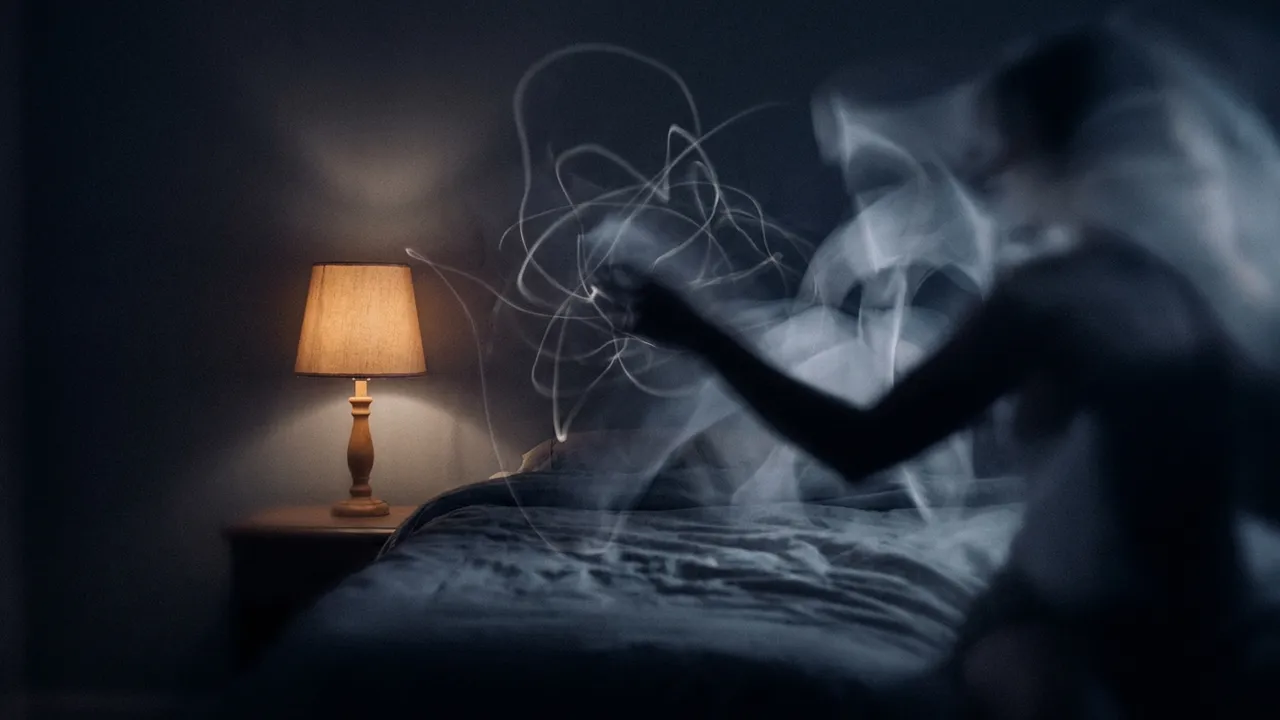
Replaying Embarrassing Moments at Night: Why the Mind Won't Let Go
8 min read
If you keep replaying embarrassing moments at night, you are not broken — you are awake to a very old reflex. A tender essay on the nightly cringe and how to set the scene down for a while.
There is a certain hour when the house becomes a held breath. The hum of the fridge seems louder. Pipes settle. Streetlight bleeds through blinds in thin ribs.
In that small hush, the body realizes there is nothing more to lift or carry. So the mind, dutiful in its own way, picks something up instead. A scene. A sentence. A stumble at noon replayed in the theater of two a.m.
If you find yourself replaying embarrassing moments at night, you are not failing at sleep — you are awake to a very old reflex.
There is tenderness tucked inside the cringe. The night magnifies it, but the root is simple: a wish not to have caused harm or looked foolish. That wish is a human kind of love.
Why You Keep Replaying Embarrassing Moments at Night
It rarely chooses the bright parts. Not the doorway where a friend laughed. Not the moment a stranger said thank you. The mind finds the scene with a wince built into it like a seed. The word that landed wrong. The laugh that died too soon. The hand waved back at no one. The body, now motionless, flinches anew.
Of course you wince. You care.
When the Mind Becomes Archivist and Prosecutor
But the loop that follows can harden love into judgment. The mind becomes archivist and prosecutor at once, pointing out angles, pausing on frames, rehearsing alternate lines for a trial that will never be held.
The Loop Has Reasons Besides Cruelty
It helps to remember that the loop has reasons besides cruelty. Focus narrows when external noise quiets, and the social brain is sensitive to out-of-step rhythm. Alone in bed, it listens for discord, as if the group were still gathered around a fire. There is a page about this late-hour awakeness, the sense that the switch will not click off, no matter how gently it is toggled. If that feels familiar, you might find a companion in why you can’t shut your brain off at night.
Why Cringe Attacks Hit Harder at Night
Night alters proportions. A small misstep in daylight grows into a monument at midnight. Without faces nodding and forgiving, without new conversations to overwrite the old, the awkward moment glows. Its edges sharpen. The bed becomes an auditorium. The mind runs spotlights and cues the same entrance.
The Loneliness of the After-Sunset Hour
There is also loneliness in the setup. Not the broad, existential kind. The specific, after-sunset kind. When the chorus of ordinary reassurance fades, the private critic steps deeper into the role. The stillness can make the self feel singular and separate in a way that daytime blurs. The hours after dusk have always been a little more tender. There’s more about that in why we feel lonelier after the sun goes down.
A Different Seat in the Theater
What to do with the stage, then. Some people try to dismantle it. Tear down the set. Argue with the script. What if the mind is not an enemy but a clumsy friend who shows the same photo because it thinks the photo matters. In that reading, the work is not to force the projector off, but to change how we sit in the theater.
Imagine there is a chair against the back wall. Not the aisle where the committee of judgment keeps ushering past. Not the very front where the picture overwhelms. A chair under the red exit sign. Sit there, metaphoric as it is, and watch the scene with the distance available.
The Spotlight Effect at Midnight
The cringe is often about proportion. The mind magnifies your part and minimizes everyone else’s attention. The spotlight effect—a term Gilovich and colleagues gave it in the Journal of Personality and Social Psychology (2000)—is an old human trick. In the quiet, it feels true that every eye turned. In the morning, it is truer that most people were editing their own lines, listening for their own cues. The scene can be layered with this knowledge without canceling the sting.
Widen the Lens, and Name the Weather
A person might also change the lens. If the loop insists on returning, let it return as a different camera angle. Instead of seeing through your face, let the view widen. See a room with many small concerns moving at once. A cough in the corner. A thought about dinner over near the door. A phone buzzing beneath a sleeve. Your misstep is there, yes, but it is not the only event in the frame.
Sometimes what eases the muscle is stranger and simpler. Describe the scene as if it were weather. "Brief squall at 3:10 p.m., gusty apology, clearing by dusk." Labeling can be a way of loving the self that stumbled, rather than prosecuting them. The mind, hearing the tone soften, often softens too.
The Gentle Use of Humor
There is a flavor of laughter that is not at your expense but at the human predicament. A laugh like a hand on the shoulder. It admits that everyone has walked into a glass door at least metaphorically, if not literally. This kind of humor doesn’t deny the flush in the cheeks. It brings air into it.
If the loop insists it is keeping you safe, answer that safety sometimes comes from perspective, not rehearsal. No amount of re-running the line will rewind time. But a lightness can make the next similar moment easier to meet. Not with a perfect sentence. With mercy.
What the Night Can Hold Without Fixing It
There is a thought that some nights do not need intervention. They need witness. The cringe will fade the way any weather fades, especially if you resist building scaffolding for it to cling to. There is comfort in reading about that gentler posture, the one that does not insist on repair. You’ll find it in why some nights don’t need fixing.
Witness can be quiet and personal. It can also be shared. The ritual that birthed this brand is a small one: at night, choose one looping thought, write it plainly, let a carefully crafted AI voice read it back with soft acknowledgment, and let it be carried to morning, where nothing is saved. The whisper doesn’t solve the past. It sets down the pack for a few hours.
There is relief in the boundaries of a ritual. The thought does not have to be polished. It is not a confession to a database. It is an offering to the hour. A way of naming the cringe without letting it define the entire night.
The Body’s Memory of Care
It is possible that the loop is a body memory, not only a mind habit. A rush of heat to the face. A turn in the stomach. The bed remembers the blush from long ago and prepares for it again. If this is so, then perhaps what helps most is something that touches the body gently too. Cooler sheets. A window cracked. A breath where the hand rests on the ribcage and notices lift and fall. Not as a cure. As company.
With company, the scene loosens. Not because new facts appear, but because the nervous system is reminded that no tiger is crouched behind the sentence. The critic lowers the gavel. The archivist files the photo in a drawer rather than on the mantel.
Think of the self who erred as a younger sibling. They tried something. It did not land. They need someone to walk them home, not someone to knock on every door of the neighborhood and explain the misstep once more. Night can be the walk.
What Morning Knows and Forgets
Morning brings people back into their shapes. Coffee is poured. Doors open. Streetlight ribs replaced by actual streets. Even the most persistent loop releases a notch when the sun rises, not because dawn forbids embarrassment, but because the body regains a thousand small contexts. The auditorium dims. Other plays start.
There is something tender about honoring both facts: that the cringe feels enormous at night, and that its scale is partly a trick of shadow. In the dark, an object looks larger because there is less around it to measure against. Call it an optical illusion of the heart.
Choosing What to Watch When Night Returns
You will keep making small errors. Everyone does. Some will matter. An apology may be needed and offered and accepted. Some will not. The self will go on, making more weather. The night will arrive again and ask what you want to watch. Some nights you will choose the comedy. Some nights the old scene will try for an encore. If it does, there is that chair under the exit sign, and a kinder voice waiting to say, yes, that happened, and also you are allowed to sleep next to it.
There is a quiet place for this. We made Tonight for nights like this—a small AI-guided ritual to meet the loop and set it down until morning. If the hour is asking for company, you can join the waitlist.
Frequently asked questions
Why do I keep replaying embarrassing memories at night?
Replaying embarrassing moments at night usually means your focus has narrowed once the day's noise quiets, leaving the social brain free to listen for any moment that felt out of step. The need to have not looked foolish is a tender, very human reflex rather than a flaw. In the stillness, that reflex simply has more room to play the scene back.
What are cringe attacks at night?
Cringe attacks at night are those sudden, full-body flinches when an awkward memory surfaces in the dark and the face goes hot all over again. They tend to arrive after the lights are off because there are no new conversations to overwrite the old ones, so a small misstep can feel like a monument. The body is often remembering an old blush, not facing a present danger.
How do I stop replaying embarrassing moments at night?
It often helps to change how you sit with the scene rather than trying to force the projector off, since the spotlight effect makes your part feel far larger than anyone else noticed. Widening the lens, naming the moment gently like passing weather, and letting a slower breath remind the body it is safe can all loosen the loop. Some nights simply need witness instead of repair.
Why do embarrassing memories feel worse at night?
Night alters proportions, so a small misstep in daylight can grow into something that glows in the dark. Without faces nodding and forgiving, the private critic steps deeper into the role and the bed becomes an auditorium. By morning the body regains a thousand small contexts, and the same scene usually releases a notch.
What is Tonight?
Tonight is a digital sleep ritual that helps you clear your mind and decompress. Through structured reflection and personalized, synthetic audio guidance, we provide a quiet, private space to help you find closure before you sleep. Private, ephemeral, and designed to help you rest.
The quiet list
Notes for a quieter mind.
Join the newsletter for occasional, thoughtful notes on sleep, emotional regulation, and building a calmer life. We only write when there’s something genuinely worth your while.