An Ode to the Nights When Sleep Apps Don't Work for Me
11 min read
Some nights, after dutiful breaths and a polite bell, I admit it plain: sleep apps don't work for me. The blue light lingers, and with it a hush that says nothing is wrong with you; you can stop trying so hard.
There are evenings when I do everything the way I was told: phone on the nightstand, voice like warm rain counting my breaths, a chime soft as a moth. And still the body refuses. I feel it in my chest—a restless tide—and I think, quietly, sleep apps don't work for me. Not tonight. Maybe not for a long streak of midnights, the blue square of the screen a tiny lighthouse I keep hoping will guide me inland, and instead it keeps me bobbing in open water.
The room is not unkind. The fan’s purl, the street’s small hush, a neighbor’s late laughter traveling the length of drywall as though it were a string between two tin cans. In a poem, these would be the preludes to drift. In a commercial, they’d be the little soundless reels they loop when the program promises you rest. But the promise itself can snag like a zipper. The thought that something will fix you—if only you listen better, breathe better, submit to the gentle bell—turns the body into a project. And projects do not sleep.
I say the sentence out loud sometimes, like a small white flag: sleep apps don't work for me.
You are not broken; you are awake. The body is a house with the lights on.
The Bright Blue Shrine to Trying
A Holy Wafer of Glass
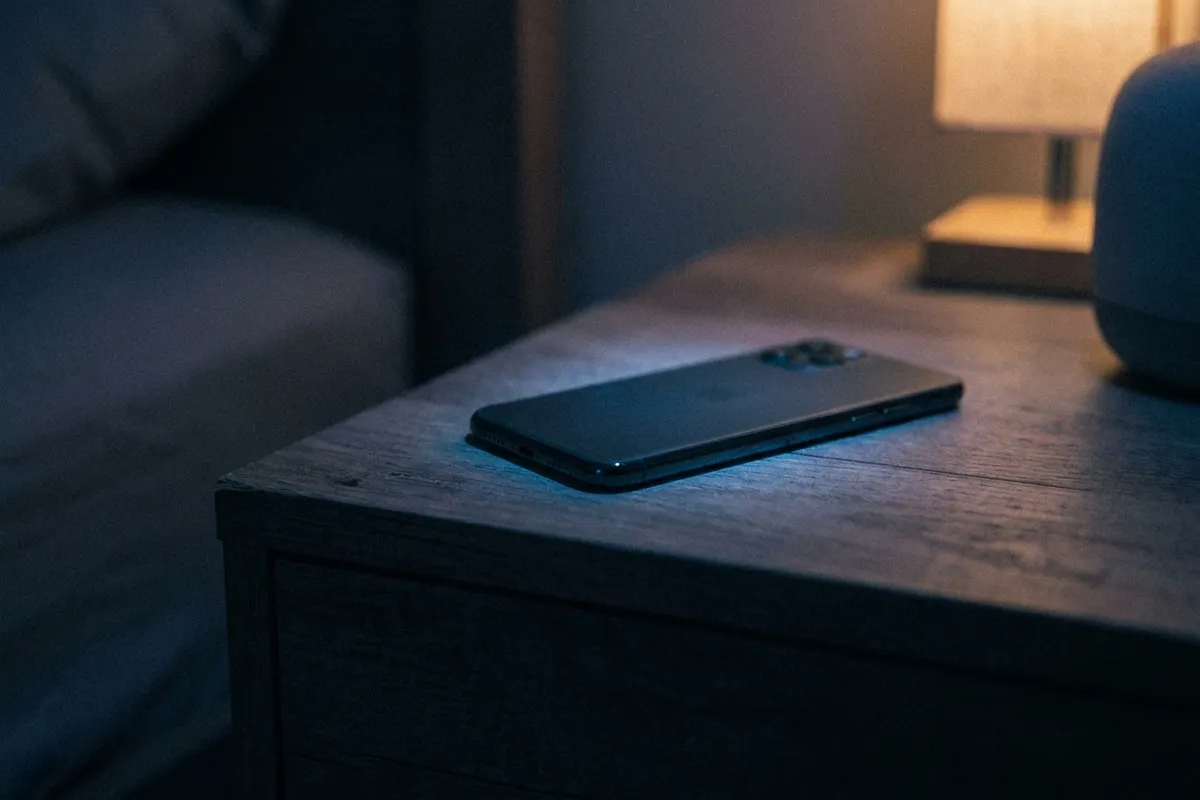
When the session ends, the room has a new altar: a rectangle glowing like a tiny aquarium where we keep our concentration fish. I have followed, obediently, the guided instructions. I have not checked my messages. I have placed the phone, facedown, a holy wafer of glass. And in the dark, the wafer radiates guilt. If I were good, the thinking goes, I would already be asleep. If I were better, I would be a cathedral of stillness by now.
The Failure Isn't in You; It's in the Premise
Let me say what I wish someone had told me years earlier: the failure isn’t in you; it’s in the premise. Sleep will not arrive because you tried hard enough. It will not arrive because you optimized the settings or upped your streak. The night is not a spreadsheet. It is a river at the edge of town, and sometimes the ferry is on the other side for a while.
There are nights when discipline feels like a wool sweater with the tag left in. Well-meaning, but scratchy. The more you adjust, the redder your neck becomes. The more you move around a rule, the rule grows larger in your skull. Even the blankness of a dark screen can carry the afterimage of improvement, which is to say, pressure.
Tools and Presence
When Practice Gives Way to Presence
There is a school of sleep that is about practice. Like any instrument, we return and return until the hand knows the chord in its bones. Calm and Headspace live in that neighborhood: patient teachers, good metronomes, fine company on evenings when rhythm helps. But there is another neighborhood, a cul-de-sac of porch lights, where practice is less important than presence. The night doesn’t always ask for a curriculum; sometimes it asks for a body in a chair beside yours, quiet as a creek, refusing to correct you.
The Only Window Still Lit on the Block
When I am most awake, what pains me isn’t the absence of a technique. It’s the sensation of being exiled from the world of sleepers, the sudden conviction that I am the only window still lit on the block. We know this isn’t true, and still the mind insists on singling itself out like a soloist no one asked for. If you’ve felt that throb of separateness, you might like to wander, sometime, through our reflection on why we feel lonelier after the sun goes down. There’s a reason the dark rearranges our furniture.
When Sleep Apps Don't Work for Me
A Small White Flag
Not as a complaint, more like a door key. Because when I name it, I’m released from the quarrel. I don’t need to keep matching my body to an idea of obedience. I don’t need to bully myself into drowsiness. My mouth loosens around the syllables, and the room returns to being a room, not a testing site for my willpower.
Consider the old animals settling into hay. Consider the way a lake refuses to be hurried into ice. To watch the slow formation of frost is to remember there are clocks older than ours. No one asks the deer to meditate. No one offers the koi an eight-session program for stillness. We extend that mercy to everything but ourselves.
Scores, Rings, and Graphs
The little numbers that rate our nights—scores and rings and graphs—can feel like a victory parade or a tribunal, depending on their color. I am not here to outlaw them, only to ask who they serve. If every dawn begins with an evaluation, the heart tends to borrow worry from dusk. Then sunset isn’t a sky anymore; it’s a countdown to a performance review. The pillow, an interview chair. The eyes, two nervous candidates.
What happens if we let the review dissolve? The body was never an intern grasping after approval. The body is a field that wants rain. Lay there. Let the windmill turn without you.
The Problem With Solving Problems
Sometimes the Drawbridge Is Busy With Foxes
The premise that sleep is a riddle we can crack with enough earnestness gives us something to do with our hands. It is comforting, this choreography: breathe in four, hold seven, breathe out eight; repeat until the sternum becomes a drawbridge, and the castle of waking life lowers its gate. But sometimes the drawbridge is busy with foxes. Sometimes a late train hasn’t yet rattled through the skull’s station. Sometimes the hands are tired from all the counting, and what they really need is to stop counting and be held, even if only by the air.
When I cannot drop the thought of tomorrow’s tasks, I try to remember that I am not a clerk managing a ledger but a person in a night. The ceiling knows more about clouds than calendars. The moon is not a manager. The bed is not a project plan. There are nights when every metaphor fails and I simply lie there listening to the refrigerator grumble, the radiator knock, the neighbor’s keys perform a little xylophone on the hall table. It is not failure to be present to your own awake life.
I release the idea that sleep is something I earn. I release the idea that worth is measured in hours.
This is not a trick to make you drowsy. It’s an absolution. No one ever drifted off because they perfected their mercy, yet mercy is often what opens the window. Not the kind you slide on tracks—the kind carved into the stern logic of trying.
When the Mind Will Not Surrender
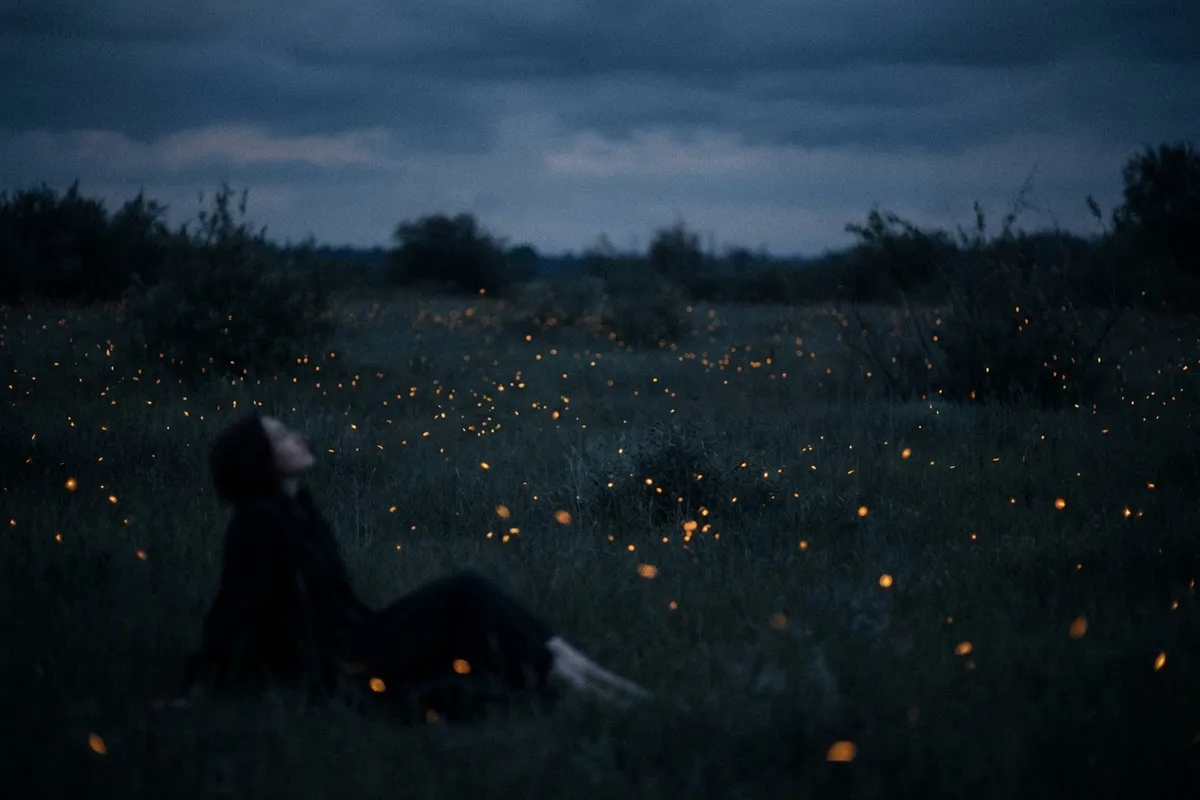
The mind is a devout archivist; it files everything, and at night it prefers open shelving. What could go wrong, what already did, what might. On those nights I picture each thought as a firefly. It blinks, it goes dark, it blinks again, refusing domestication. I’m allowed to admire the field without catching them in jars. I’m allowed to let the meadow be a meadow, to lie on my back and watch a hundred brief little lanterns in a sky where I am not needed as a custodian.
There is companionship in ordinary sounds: the elevator carriage like a distant drum, a car door soft as a book closing, the breath of a dog punctuating the room. If there is a person near you, the vast talk of their sleep. If you are alone, the wide company of distant lives, each tiny event a bead on the string of the night. You might not be able to stop thinking any more than you can stop the tide, but you can stop being the tide’s parent. You can be the shore. If you want another window to look through, we wrote about why you can't shut your brain off at night, which is to say, you aren’t alone.
A House That Receives
Noticing Textures
I like to imagine the bedroom as a small country with an open border. The night is allowed to enter and leave as it pleases. On the sill: a glass of water with its private star dissolved in it. On the chair: yesterday’s shirt, tired of pretending it was a skin. The room no longer asks me to achieve peace. Instead, it invites me to inhabit it—a subtle but tender difference. Like stepping inside your own ribcage and finding the lamps already on.
When I give up tasks, I notice textures. The pillowcase has a grain to it, faint as chalk. The sheet’s hem knows another language. The blankets are winter geographies, even in summer, full of caves and warm valleys where a foot can disappear and be found again. The window makes its own subtle weather, a rumor of trees. Nothing is being optimized. And then, sometimes, without ceremony, the tide tucks in.
A Note on Mornings After
The day after a restless night tends to wear the costume of blame. We seek culprits in coffee, in screens, in the late text, the skipped stretch. We promise to be better, by which we mean: more compliant with the system of fixes we have established. But consider the weather on a bad day—no one drags the sky to court for being churlish. We accept that clouds have their own business; perhaps the self does, too. Perhaps your wakefulness did something you cannot see yet. Perhaps it kept a vigil you didn’t know you’d been asked to keep.
There are people who wake at three and feel the air thin into another era, an ancient hour where villages believed the veil was aperture. If that’s you, it doesn’t mean you’ve failed a test. It means you stepped into a corridor that has been there for centuries. You are not the only key-holder. You might like to read about the uncanny feeling of waking up at 3am, not as a cure, but as a nod from the far hallway.
Taking the Hands Off the Clock
I think often of the phrase “falling asleep,” as if sleep were a well and we, too eager, keep bracing against the lip with our hands. What happens if we let the hands go slack? If we let the body lean? Some falls are, in fact, landings. The mattress is a field that has been waiting all day for hoofprints. The mind is a tall grass settling under its own dew.
The wonder is not that we cannot do it on cue. The wonder is that, year after year, the body returns us to a place beyond our plots and budgets, and we forget most of it. We do not catalogue the night’s grammar. We do not graduate from it. We are, each time, beginners again. How miraculous that we wake at all, boat pulled up to the shore with no memory of our oars.
And yet, some nights, sleep apps don't work for me. Saying so feels less like a complaint and more like hanging a wind chime: a little breath passes and makes a sound, and the sound is permission. I am allowed to stand on the porch of my own life and watch the dark collect itself into a shape I do not need to solve. The chime might stir ten times before any door opens. That’s all right. The porch was meant for standing.
Permission Without Program
Your Body, Your Barn
To accept that not every tool will be for you is not to scorn the tool. It is to be faithful to your season. Long ago we stopped listening to the barn and started listening to the calendar. Tonight might belong to the barn—the creak, the straw, the quiet arithmetic of hooves and hay. Your body, your barn. Your awake breath, a horse turning once in its stall.
What if success were not sleep itself but kindness during its absence? What if the measure were not how quickly you crossed over, but how gently you lived while you waited by the river? Put away the salt shaker of blame. The dock will not rise because you frown at it. Sit and name what you can hear. Sit and be named by the sounds in return.
Maybe the ferry’s lantern will appear. Maybe it won’t. You do not make a river move by staring harder. You do not summon dawn by citing studies to the dark. You are the citizen of a house living through another night, and there is honor in that.
Nothing needs fixing for you to deserve rest. You were never a malfunction.
Wakefulness as Terrain, Not Error
If you catch yourself whispering again, sleep apps don't work for me, let the sentence fall like a pebble into a pond. Watch the rings widen, then let them fade. The pebble is gone to depths you do not need to map. Above, dragonflies skim. A heron stands like a hinge in the reeds. The world, still here, making its small clockwork without your supervision.
Sometimes I think the most radical gesture is to treat wakefulness not as an error message but as a terrain. What do you see from this ridge you cannot see in daylight? The distant sodium lamps making galaxies of parking lots. The fox banded in shadow at the curb. Somewhere, a train mourning its own passage with a long iron vowel. Somewhere, a child’s steam radiator clicking like a knitting needle. All of it proof that the night continues whether or not we engineer our exits from it.
I cannot promise that relief follows anyone’s script. I can promise you are not alone in not sleeping. The comfort I know best arrives like a person sitting in the chair by the bed, not asking anything of you, keeping company with your uncompany, telling you softly that this, too, counts as living.
And if, in the wolf hour, you want a warm voice that isn’t selling you a ladder, Tonight is awake. Not a scorecard or a streak, not a fix—an AI-guided evening ritual, carefully crafted, willing to keep you company until the dark does what it will.
Frequently asked questions
Why don't sleep apps work for me?
Often it is not the app at all, but the premise underneath it: that sleep is something you can earn by trying hard enough. When a guided session turns rest into a task to complete, the body can read the effort as pressure and stay awake. If you find yourself thinking sleep apps don't work for me, it may simply mean your night is asking for presence rather than another technique.
Does it mean something is wrong with me if a sleep app doesn't help?
No. A restless night is not evidence of a malfunction, and a tool that fails to settle you is not a verdict on your worth. Bodies have their own weather, older than any program, and some nights they stay awake for reasons no setting can fix. You were never broken to begin with.
Are sleep apps like Calm and Headspace worth using?
They can be lovely company on evenings when rhythm and practice help, the way returning to an instrument can settle the hands. The point is not to outlaw them, only to ask who they serve on a given night. Some nights want a curriculum, and some nights simply want a quiet presence that refuses to correct you.
What can I do on nights when sleep apps don't work for me?
You might let the scores and streaks dissolve and treat wakefulness as a terrain to notice rather than an error to fix. Listening to the ordinary sounds of the night, feeling the weight of the blankets, and letting the room simply hold you can loosen the grip of trying. Rest is allowed even when sleep is slow to arrive.
What is Tonight?
Tonight is a digital sleep ritual that helps you clear your mind and decompress. Through structured reflection and personalized, synthetic audio guidance, we provide a quiet, private space to help you find closure before you sleep. Private, ephemeral, and designed to help you rest.
The quiet list
Notes for a quieter mind.
Join the newsletter for occasional, thoughtful notes on sleep, emotional regulation, and building a calmer life. We only write when there’s something genuinely worth your while.