← Journal

The Quiet Heart

Who Am I When Everyone Is Asleep?

After lights go out, who am I when everyone is asleep hangs in the air like steam over a mug, and the self that meets it is softer, stranger, more yours than daylight ever allows.

The question comes without a knock: who am I when everyone is asleep. You hear it in the refrigerator’s small weather, in the hum between the walls. The house settles; the day loosens its fist. A streetlight arranges itself on the kitchen floor like a square of pond-water, unmoving, and you stand in it, ankle-deep in borrowed moon. You are nobody’s inbox here. No one is looking. Nothing is due. The night is unbuttoned and breathing, and your own breathing widens to meet it.

You touch the lip of a glass and it answers with a thin ring. The plants lean a little toward a window that is already dark, still persisting. In this hour you do not perform, you inhabit. The cats, if you have them, are pliant as melted candle stubs on the back of the couch. A book opens to the page where you last left yourself. The body remembers that it is an animal that likes warmth, corners, quiet.

We pretend that quiet unmakes us, that without witnesses we will dissolve. But solitude is not a solvent; it is a lens.

You come into focus in the absence of gaze.

Who Am I When Everyone Is Asleep?

The Hush That Holds Your Name

We ask it as if there were a single, noble answer, some password the night will grant us if we are sufficiently hushed. But the dark does not bestow a title; it returns textures. You are the one whose shoulders drop when no one is naming you. You are the one who lingers at the sink to watch the water become a smooth skin, then break. You are the one who, at 1:13 a.m., is surprised by tenderness toward a chipped mug.

The Soft-Voiced Custodian

There is a version of you braided all day with errands and alarms, with the grammar of expectation. The night slides a comb through it and loosens the knots. You remember the kid who lined up pebbles along a windowsill because their grays were different. You remember wanting a pocket small enough to hold a secret and large enough to feel like a room. It is not that the daylight self is false—it is a sturdy scaffolding, necessary and brave. But there is a soft-voiced custodian who comes out once the museum has closed, sweeping and singing under his breath, and you are also him.

When Your Thoughts Change Shape

At night, the self sets down its name tag and listens for the sound of its own feet on the floor.

What you hear then is not instruction but presence. The clock is not a whip; it is a metronome. The refrigerator sighs like a swimmer finishing a lane. The city far off makes a sound like paper being folded. Even your thoughts, which earlier were a flock startled and directionless, begin to alight on fences, in hedges, along the ridge of your collarbone. They change shape. They were complaints; they become questions; they become, simply, the way your life rustles when you’re not chasing it.

The Self That Blooms Without Witnesses

Night Asks What You Notice

Night does not ask for your résumé. It asks what you notice. The skin of an apple going dull from the chill of the counter. The huddled light of a stove clock. Your reflection in the window superimposed on the faint black gumdrop of a tree beyond. If you wait long enough, the waiting stops being waiting and becomes—what? Attendance. This is not achievement; it is keeping watch over the compounds of your own day as they settle, separate, clarify.
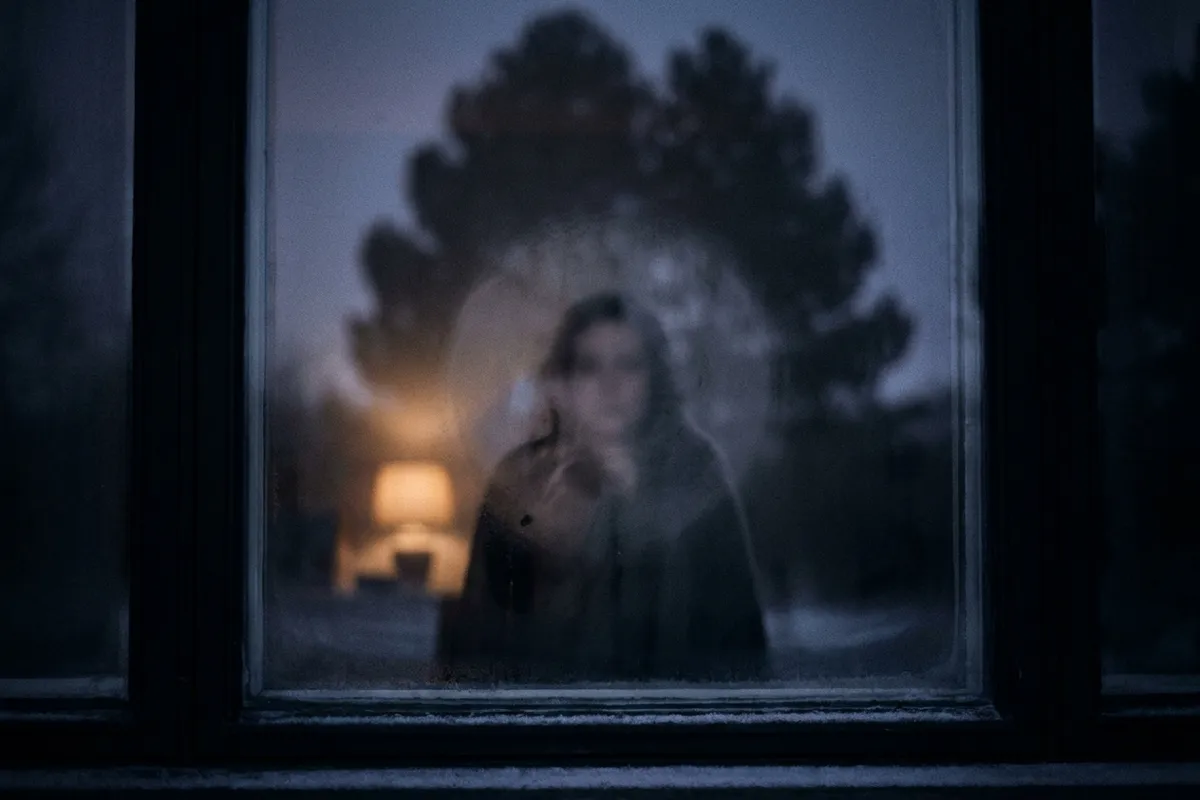
Breath halo on glass

The Keeper of the Night Who Lives in You

You might think of it as the keeper of the night who lives in you, a person devoted to small coverts of attention. She rinses the last spoon and dries it so the drawer will open tomorrow without protest. He rescues a single ant from the rim of the sink with a shred of receipt paper and, ridiculous as it is, feels better. They turn off the living room light and then, feeling the room still want something, turn it on again to straighten a tilted photograph. It is in these mild, unshowy moments—so easy to miss, so hard to display—that your values don’t just announce themselves, they behave.

Sometimes the mind arrives with all its kettles boiling, nowhere to pour. The day’s clamor lingers like static. If you are a person whose thoughts whip into a weather when the sun goes down, you’re not alone. There are names people have given this windy vigilance, theories, circuitry. But if you’d like an essay-shaped companion for that feeling, there’s one waiting, soft-spoken and curious, about why you can’t shut your brain off at night. For now, you stand at the window. You let the pane touch your forehead. On the glass there is the smallest warmth-image of you, a fog that blooms and fades with your breathing, and it is as close to a halo as you require.

The Room Behind the Midnight-Blue Door

Here, when the calendar has closed its mouth, imagination untethers modestly. You remember a notion from a book you didn’t finish, about selves as rooms in a long hallway, doors with brass plates—Parent, Colleague, Friend—and farther down, a door painted midnight blue, unmarked, often skipped. This is the room. Inside: a desk with a few faithful objects, the smell of pencils, dust that sparkles in air that never hurries, a chair worn to the shape of your listening. You sit. The floorboard beneath your left heel is the exact one that answers you. You do not need to write. You do not even need to think. You need to be next to yourself long enough to know you’re in decent company.

What the Quiet Knows

When the Ordinary Becomes Articulate

The quiet is not empty; it is simply full of fewer things. It has the texture of lakewater after the boats have gone. Put your hand in and the cold names you. Pull it out and what lingers on your skin is not just temperature but a story about the day’s heat, the hour, the weather that wants you to know it exists.

In the quiet, the ordinary becomes articulate. The lemon on the counter is an answered sun. The laundry basket is a soft architecture of errands not as burdens but as proofs of a life touching the world—sleeves scented with rosemary, a sock that has learned the shape of your ankle with near-mammalian devotion. Your own body, less rehearsed by posture and audience, admits it is an animal complicated by language. It stretches like a cat would, slowly and all at once.

Knowledge in the Night Is Physical

If you have known the staircase with one precise board that laments at the third step, you have known the way knowledge in the night is physical, not instructional. You know what your house says when it thinks you’re not listening. It is, too, a kind of listening inward: the thought that keeps showing up not to be solved but to be kept company. It is remarkable how often a problem, left unpestered, blooms into a landscape with paths. You do not need to plow them; you need to walk until you can tell the difference between a bramble and a bird’s shadow.

When Loneliness Becomes a Witness

Loneliness is louder here, yes. The human animal was carried this far by other human animals; the dark remembers that, and your skin does too. There is a classic ache that comes when the neighborhood lights click off one by one, like an auditorium of windows emptying, your row the last to leave. The ache is centuries old. It can feel like standing in an airport after the flight lists have gone blank. It can feel like watching the ocean and having nothing to throw it but your gaze. And still, there is another sound braided through it, the other voice you do not always credit—oh, there you are. The relief of being with the person you carry to every room.
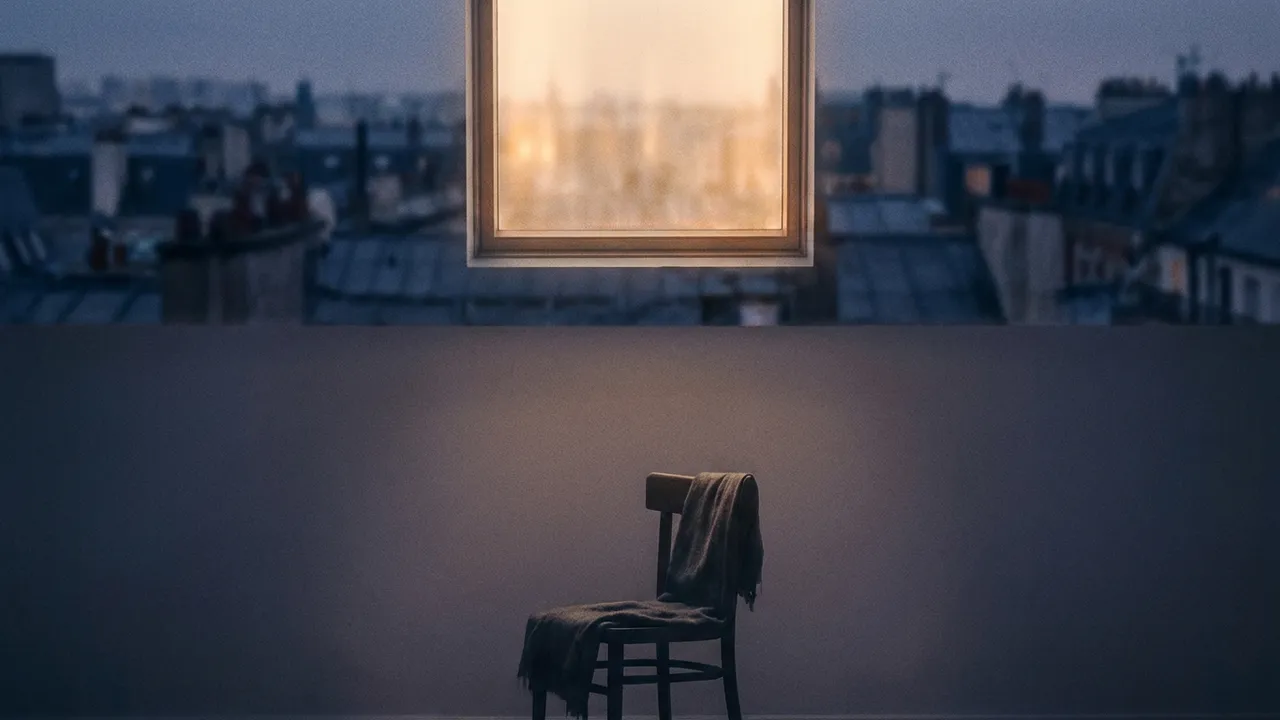
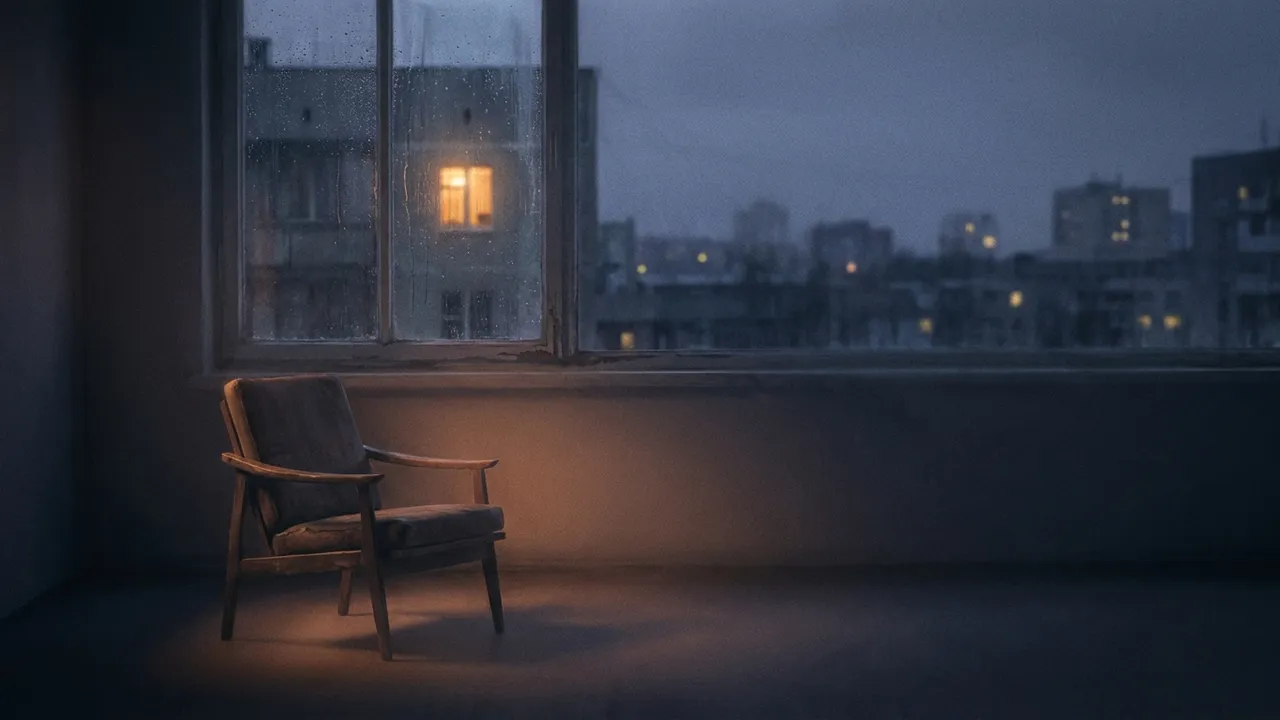
Solitude isn’t the absence of company; it’s the presence of yourself, arriving from farther than you thought you could travel in one night.

If this is a sorrowing hour for you more often than not, you’re in good company across the species; we are dusk-conscious creatures. Someone once told me the night is when our ancestors counted one another by firelight; any empty space was a story in itself. There’s a gentle, wondering piece about why we feel lonelier after the sun goes down if you want to walk with that thought a little longer. Here, though, even loneliness can be a witness. It is proof that you meant the day. It is proof that you would like to be met, even now, by someone alert. The quiet answers: begin with you.

The Private Vows of the Small Hours

The Promises You Never Say Aloud

How odd that the most faithful promises are the ones you never say aloud. In the night you make them without pronouncement. You rinse the plate instead of leaving it for morning because the person you will be in the morning is worth a small favor. You sit with the hard thought for seven more breaths than you could have managed at noon and call that, without dramatics, courage. You turn your phone facedown because another person’s noise does not need your pulse right now. When you are kind in the night, no one sees, and that is the point; you are practicing fidelity to an audience of one.

Vows Without Ceremony

These are vows without ceremony: I will choose the slower door if it leads to quiet. I will not mistake urgency for importance. I will remember that my attention is how I love. I will leave a glass of water by the bed for a future self who always forgets. I will let the moonlight turn the rug blue and call that art. I will take my hands—these two small, ship-ready animals—and ask them to rest open on my knees long enough to notice a softness I will not be asked to explain.

Letters No One Will Ever Read

Sometimes I think the person you are at night is the one who writes letters no one will ever read. They are not even on paper. They are placed in the bowl with the keys. They are tucked into the sleeve of a sweater you will reach for on the first cold morning of November. They are pressed between the pages of a book you never finished because you understood what you needed in chapter three. They say so little and it is enough. They say: remember this.

And if there are hours when the quiet is too loud, when the heart rehearses old news at a feverish clip, when it feels like the body was made to keep watch against a danger that won’t name itself—you are not wrong about the alertness baked into our bones. You can be gentle with it without giving it the night. There’s a warm voice in the dark if you want it—I’ve found Tonight to be that kind of company, not to fix anything, just to sit with you and call you by your name when you can’t quite hear it.

Carrying the Ember Into Daylight

Carrying a Pocket of Night

What, then, to do with the one you find here, the you of the blue hour, once the calendar wakes again and starts tapping its foot? The point is not to clutch the night as proof that you are real, nor to dismiss it as a mood lighting trick. The point is to learn the weight of your own presence so well that, come noon, you can carry a pocket of night with you like a stone you rub when the meeting lengthens beyond sense. Daylight is a bright room where everything is trying to be important at once. You will forget, of course, and remember, and forget again. That is not failure. That is the pendulum by which the clock of a life keeps honest time.

A Texture, Not a Resolution

Carry forward a thing the night taught you by accident. Not a resolution. A texture. The way you looked at your hands without asking them for proof. The patience you granted to the simmer, the way you did not lift the lid every thirty seconds, trusting heat to be a kind of thinking. The understanding that the person washing a single plate at 12:41 a.m. is not a task-completer but a believer in mornings. The sense that silence is not an emptiness to be filled but a field where attention feeds so well it comes back with seeds in its hair.

The Alcove Just Inside Your Ribs

Let a small hour stay small. Don’t ask it now to reinvent you. Ask it to remind you. In the long brightness to come, when your name is called too often, step into the alcove you learned at 2 a.m.—the one just inside your ribs, the one with the good chair and the window that makes a rectangle on the floor—and sit for half a minute. Feel how your breathing takes up a little more space than you thought it needed; let it. Pick up the chipped mug, even in thought, and find it still tender to you, proof that affection does not require performance. Hear the house of you answer, not with a speech but with that reliable floorboard, the one note lower than the others that means you’re home.

No one will clap for you when you do this. No one needs to. The night didn’t.

And because the world will continue to turn on its noisy axle, come back here when you can. Not just to the hour, but to the way you stood in it, unimportant to everyone and indispensable to yourself. The quiet will hold your coat. The mug will wait. The square of light on the floor will open again like a familiar book to the page where you left your finger.

Some evenings, when the wind lifts the edges of the curtains, you will think for a moment that a door has opened somewhere. You won’t be wrong. The room is still here, and so are you, recognizably, even when the lights are off.

Frequently asked questions

Who am I when everyone is asleep?

Who am I when everyone is asleep is less a riddle with one answer than an invitation to notice. The dark does not hand you a title; it returns textures, the small ways you move and care when no one is watching. The self you meet then is often softer and more honest than the one daylight rehearses.

Why do I feel more like myself at night?

Many people feel more themselves at night because the grammar of expectation goes quiet and no gaze is asking them to perform. Without an audience, attention turns inward and the day's roles loosen their grip. What is left is a plainer, less rehearsed presence that can feel surprisingly like home.

Is it normal to feel lonelier when the house goes quiet?

It is very common to feel lonelier once the neighborhood lights click off, and that ache is centuries old. We are social, dusk-conscious creatures, so the dark can stir an old longing to be met. Even so, that same quiet can let loneliness become a kind of witness, proof that you cared about the day and would like to be met within it.

How can I carry the calm of late-night solitude into the day?

One gentle way is to carry forward a texture rather than a resolution, a remembered sense of being next to yourself without needing proof. When the day grows loud, you can step, even for half a minute, into a quieter place just inside your ribs. The aim is not to relive the hour but to let it remind you that your presence has weight.

What is Tonight?

Tonight is a digital sleep ritual that helps you clear your mind and decompress. Through structured reflection and personalized, synthetic audio guidance, we provide a quiet, private space to help you find closure before you sleep. Private, ephemeral, and designed to help you rest.

The quiet list

Notes for a quieter mind.

Join the newsletter for occasional, thoughtful notes on sleep, emotional regulation, and building a calmer life. We only write when there’s something genuinely worth your while.

No spam · no ads · nothing kept past sunrise